
Reviewed · ARCHITECTURE & DESIGN TOURS
Danish Design Classic and Modern Style Self-Guided Audio Tour
Copenhagen can feel like a museum already, but this tour turns it into a design class you can walk through at your pace. I love the GPS-guided VoiceMap setup that tells you where to stand, and I love how the narration connects buildings to ideas you can actually picture. You start at Arne Jacobsen’s SAS Royal Hotel area and end at the Danish Design Museum, with a clean route that follows the classics into modern design.
One watch-out: you need your own smartphone and headphones, and you’ll need to handle any museum entry fees yourself if you want to go inside beyond what the audio covers.
Key things to know before you go
- Precise GPS timing: the audio cues are geolocation-based, so you are not guessing where you are.
- Offline by default: audio, maps, and geodata are included for offline use in the VoiceMap app.
- Design story, not just sights: you get explanations that connect architecture and objects to Danish design thinking.
- Classic to modern route: you will move from Neo-Classic and Art Nouveau style buildings toward design-focused institutions.
- Great for “no tour guide” days: it is private for your group, and you control the pace.
- Lifetime access: you can reuse the tour again and again after the first visit.
Danish design in one hour 10 minutes, starting at Arne Jacobsen’s SAS Royal Hotel
This is the kind of tour that works when you want two things at once. You want the freedom to wander, stop for photos, or linger at a church façade. And you also want someone to explain what you are looking at, so the city does not turn into random pretty buildings.
The price is $11.99 per person, which is refreshingly low for what you get: a guided walking route plus voice narration that ties Copenhagen landmarks to Danish design styles. You are basically buying a structured explanation you can replay later, which matters when design details are easy to miss on a first pass.
The tour duration is about 1 hour 10 minutes. That sounds fast, and in a good way. It gives you momentum, yet you still have time to pause at key stops. If you are the type who reads every sign, you may stretch it. If you skim and move, you will probably finish near the planned time.
You also get lifetime access, so this is not a one-and-done ticket. If you come back to Copenhagen, or if a friend asks what to do, you can re-run it without paying again.
More architecture and design walks in Copenhagen:
- Copenhagen: Guided Architecture and Sustainability Tour
★ 4.8 · 73 reviews - Copenhagen Architecture and Sustainability Tour with local Guide
★ 5.0 · 39 reviews - Urban Design and Livability E-bike Tour
★ 4.8 · 21 reviews
How the VoiceMap GPS audio works (and what to bring)
This experience uses the VoiceMap application with offline access to audio, maps, and geodata. That is a big practical win in Copenhagen. You can keep your phone in airplane-friendly mode if your connection is spotty, then rely on downloaded content.
You will still need two basics:
- Your smartphone
- Your headphones (not included)
When I use GPS audio tours, the best trick is simple: charge fully before you start, then keep the screen brightness down. Also, download the offline content before you walk too far. Once you are in the route rhythm, you do not want to stop and troubleshoot.
One more thing I like: the tour includes directions to the starting point. That reduces the common frustration of arriving in a new area, looking around, and trying to figure out where to begin.
The route, stop by stop: Copenhagen’s design story in real buildings
You begin at Radisson Collection Royal Hotel, Hammerichsgade 1 (Arne Jacobsen’s SAS Royal Hotel) and finish at Designmuseum Danmark, Bredgade 68. The walk ties together architecture, museums, and design institutions, so you do not just see objects, you also see the settings where design thinking shows up.
Below is what you can expect as you move through the route.
Arne Jacobsen’s SAS Royal Hotel, a practical modern starting point
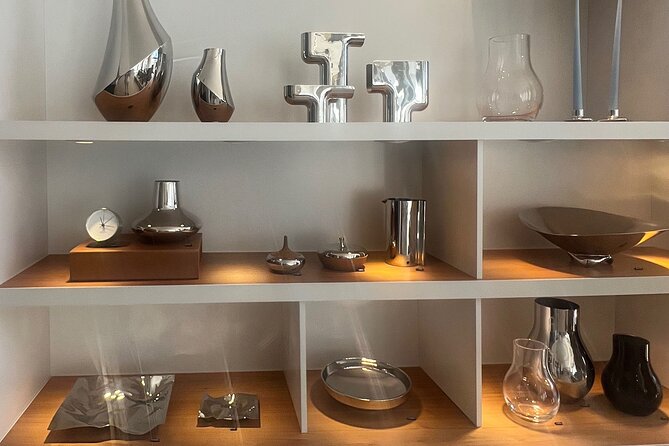
You start with the building that basically says Danish design in one breath: smooth, simple, organic, practical. Arne Jacobsen’s SAS Hotel was completed in 1958, and the audio frames it as a key origin point for what many people now call Danish design.
This is a smart opener. You get a modern anchor early, so when the narration later brings you to older styles like Neo-Classicism and Art Nouveau, you understand the contrast instead of just accepting it as history.
A few more Copenhagen options worth comparing
- Copenhagen Little Mermaid Exploration Game and Self-Guided Tour
★ 4.0 · 36 reviews - Half Day Self-Guided Audio Walking Private Tour in Copenhagen
★ 5.0 · 21 reviews - Monstour: A Self-Guided Audio Tour of Danish Folk Legends
★ 4.5 · 19 reviews - Copenhagen Self-Guided Murder Mystery Tour by the Round Tower
★ 4.0 · 11 reviews
Nyhavn, colorful waterfront energy with a long backstory
From there you head toward Nyhavn, the 17th-century waterfront and entertainment district along the canals. The key value here is perspective. Nyhavn looks like postcard Copenhagen, but the narration helps you see how urban design and public spaces connect to wider cultural taste, not just individual objects.
Practical tip: Nyhavn can be busy because it is famous. Use the audio moments to your advantage, and if you want quieter photos, time your stops around when you hear the next cue.
Tivoli Gardens, design meets public pleasure
Then you reach Tivoli Gardens, known for its elaborate neoclassical stone archway entrance and its place as one of the world’s first amusement parks, opening in 1843 and still operating today.
This stop is useful because it shows design outside of museums. Even when a setting is meant for fun, it can still express style choices. The audio puts you in the mindset of noticing form and atmosphere, not just rides.
The Glyptotek, art with a winter garden pause
Next is the Glyptotek, built for people who love pre-20th-century art. It also has a beautiful winter garden and a café, which means you can break the walking rhythm without fully ending the day.
If you want a short reset, this is a good place. You can stand, listen, and then decide whether to spend more time in the museum space. (Museum entry details are not included, so you control how deep you want to go.)
Danish National Museum, not much from outside, big moments inside
The audio brings you past the Danish National Museum building, which is described as not too impressive from the outside. The real payoff is inside, where Viking artifacts appear, including gold jewelry and early design examples.
This is where an audio tour earns its keep. Without guidance, you might walk past the façade and miss the point. With the narration, you know you are looking for material clues about early design thinking.
Frederik’s Church (The Marble Church), Rococo drama in stone
Then comes Frederik’s Church, commonly called the Marble Church. It is built in the Rococo style, and it is based on St. Peter’s Basilica in Rome.
This stop is a contrast lesson. Danish design is often linked to clean lines and practical shapes, but here you see how Europe’s broader artistic currents flowed into Copenhagen too. You can look at the church as a design story, even if your main interest is modern Danish style.
Danish Museum of Art & Design, where the designers get named
After that you reach the Danish Museum of Art & Design. The audio frames it as a museum for both Danish and international design and crafts, with works by notable Danish designers like Arne Jacobsen, Jacob Jensen, and Kaare Klint.
I like this stop because it gives you names to attach to what you have seen so far. If you care about design as a person-driven craft, this is where the tour shifts from styles to creators.
Again, you will likely want to decide on museum entry based on your time and budget, since admission is not included.
Copenhagen City Hall, National Romantic style in a Scandinavian Art Nouveau wrapper
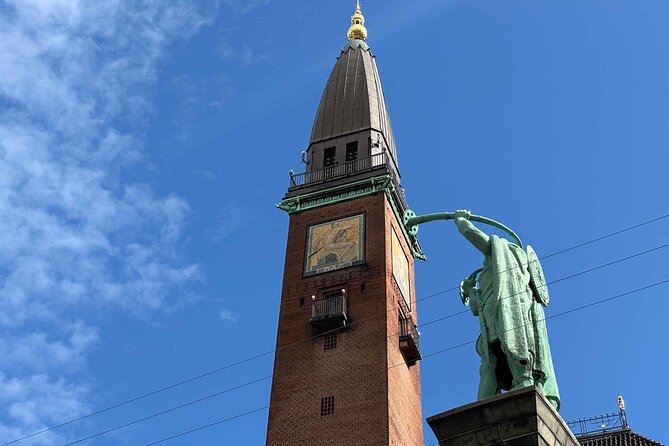
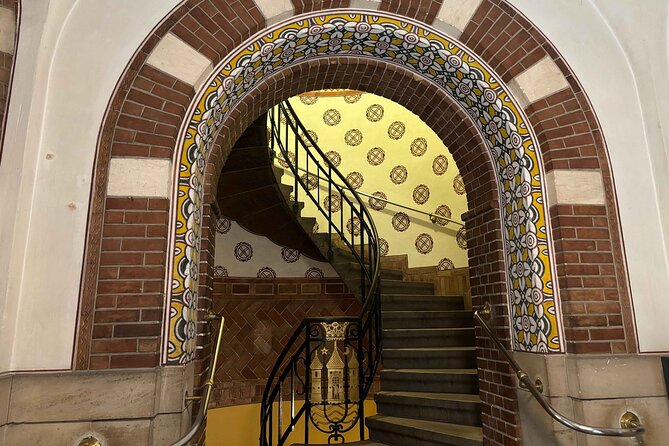
You then see Copenhagen City Hall, completed in 1905. The audio calls it a strong example of National Romantic style, basically the Scandinavian version of Art Nouveau.
This is one of those times where the narration helps you look smarter. Art Nouveau can feel abstract until you have a style label and a reason to watch for specific decorative choices. The audio gives you that framing.
Royal Danish Theater, Neo-Baroque and ballet energy
Next is the Royal Danish Theater, described as a lovely Neo-Baroque building. It is now mostly used for the Royal Danish Ballet, and it is hardly ever full.
This stop is for the architecture lovers and the people who like to notice proportions. Even if you do not go inside, the exterior can help you connect Danish design with the broader European theater tradition.
Alexander Nevsky Church, only Russian Orthodox church in Copenhagen
Then you hit the Alexander Nevsky Church, with its patterned façade and golden towers. The audio notes it is the only Russian Orthodox Church in Copenhagen.
This is another contrast stop. When you see such a distinct visual language in the middle of Copenhagen, you understand that design identity is not only about one style. It is also about how cities mix influences.
Kongens Nytorv, a major hub where design meets city flow
You move to Kongens Nytorv (King’s Square). This kind of stop matters even if you think you came for “buildings only.” A major square is where city layout and public life intersect, and good design shows up in how people move, pause, and gather.
Use this moment to reset your route focus. Let the audio finish one idea, then start the next.
Thorvaldsen’s Museum, Classic carving taste changes over time
At Thorvaldsen’s Museum, the audio explains the story of a Danish sculptor who went to Italy to learn the Classic style. Then it shifts to what happens when tastes change and later design directions take over.
This is a great mid-route stop because it gives you a reason for the transitions you are seeing. You are not just moving between points on a map. You are moving through shifting taste, and the tour keeps you aware of that.
Christiansborg Palace, state power in the design timeline
Next is Christiansborg Palace, used for state dinners and home of the Danish Parliament, the Folketing.
The practical value here is understanding how prestige architecture signals cultural priorities. Even if you care most about objects and interiors, the places where power gathers can teach you how nations present themselves visually.
Charlottenborg Palace, a private mansion now tied to training artists
You then reach Charlottenborg Palace, originally a private mansion for a King’s brother. Today it houses the Royal Danish Academy for the Fine Arts.
This stop adds a “future-making” angle. Design is not only what gets built. It is also what gets taught. Seeing a palace turned into an academy helps you connect institutions to long-term style.
The church restored in 1909 near Nikolaj Square, a reminder that use can change
Near Nikolaj Square, you see a church that was a 1909 restoration of an older church that burned down. The key detail here: the restored version has never been used as a church. The audio notes it served other public roles, including as a naval museum and a library, and that it later became a modern public use.
This is a subtle but important design lesson. Buildings do not always stay loyal to their original purpose, and the story of reuse is part of how cities evolve.
Odd Fellows Palace, from Masonic lodge to weddings and parties
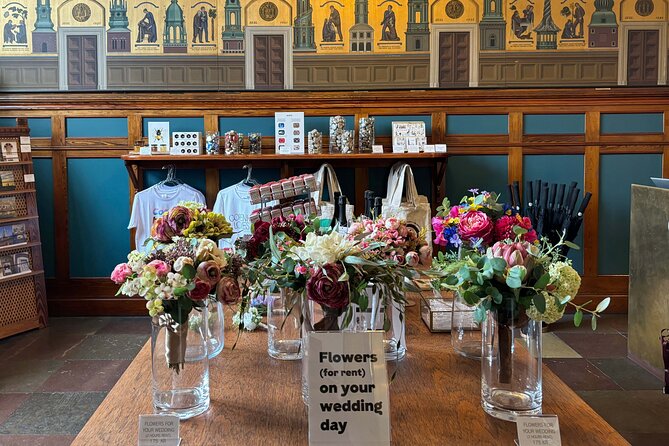
Then you come to Odd Fellows Palace. It got its name from housing a Masonic Lodge for years, and it is now mostly used for weddings and party venues.
This stop shows how interiors and exteriors can shift functions over decades. Design choices that served one community can become the backdrop for a different kind of celebration.
Ending at the Danish Design Museum, the finish line for your design questions
Your tour ends at Designmuseum Danmark. This is where the tour’s theme gets a final home base: a museum space specifically for Danish design.
If your brain is buzzing from the route, this is a satisfying place to land. You already saw how styles moved through Copenhagen, and now you can choose whether you want to spend more time with the exhibits.
Price, value, and who this self-guided Danish design tour is for
At $11.99 per person for roughly 1 hour 10 minutes, this is good value if you like structure but hate getting stuck with a schedule. It works especially well if your group includes people who do not want to be tied to a guide every step of the way.
It is also a great fit if you:
- Want design context but prefer to walk freely
- Like museums and architecture, but you need a narrative thread
- Plan to come back to Copenhagen and want a tour you can replay (lifetime access is a real perk)
The one mismatch is if you expect everything to be hands-on and fully included. Museum entry fees are not included, and you also need your own headphones.
Practical tips to make the audio shine
Here is how to get the most from the experience style you are buying.
First, treat the tour as a listening walk. Do not just glance at each building. Stand for a minute so the narration can land.
Second, use the offline maps and geodata. If you arrive with a dead battery or weak signal, the offline setup is the reason you can keep moving.
Third, plan your museum choices. The audio points out which stops are worth attention, like the Viking artifacts inside the Danish National Museum. Even if you do not go in, you will know what you would be looking for.
Finally, if you are traveling with family, this kind of self-guided tour fits neatly. You can pause for photos or snacks without asking permission.
Should you book it? My take
I would book this if you want a Danish design-focused route through Copenhagen that does not require a live guide. The route connects modern Danish design ideas starting at Arne Jacobsen’s SAS Royal Hotel with classic European styles and then carries you toward design institutions at the end.
I also like the technology angle. The GPS cues and geolocation precision make the experience feel efficient, so you spend less time figuring out where to start the next segment.
If you want an audio tour, bring headphones, decide in advance which museums you might pay to enter, and use the time to listen. You will come away seeing Copenhagen with sharper eyes, and you will be able to repeat it later thanks to the lifetime access.
FAQ
How long is the Danish Design Classic and Modern Style self-guided audio tour?
It takes about 1 hour 10 minutes.
Where does the tour start and where does it end?
It starts at Radisson Collection Royal Hotel, Hammerichsgade 1, 1611 København, Denmark. It ends at Designmuseum Danmark, Bredgade 68, 1260 København, Denmark.
How much does the tour cost?
The price is $11.99 per person.
Does this audio tour work with GPS and offline access?
Yes. It is a GPS-guided self-guided tour and includes offline access to audio, maps, and geodata in the VoiceMap app.
What do I need to use the tour?
You need a smartphone and headphones. The VoiceMap application is included, along with offline audio and maps.
Is free cancellation available?
Yes. You can cancel for a full refund up to 24 hours before the experience’s start time.
More Audio Tours in Copenhagen
- Explore Copenhagen: Self-Guided Audio Tour
★ 4.0 · 8 reviews - The Philosopher’s Last Walk: An audio tour on the life of Søren Kierkegaard
★ 4.5 · 5 reviews - Cool Nørrebro and Foodie Tips Self Guided Audio Walking Tour
★ 5.0 · 4 reviews - Copenhagen Scavenger Hunt and Highlights Self Guided Audio Tour
★ 4.5 · 3 reviews
Recently reviewed around Copenhagen
- The Forgotten Giants Private Tour★ 5.0 · 3 reviews
- Explore Copenhagen in 60 minutes with a Local★ 5.0 · 3 reviews
- E-Scooter guided tours in Wonderful Copenhagen★ 5.0 · 3 reviews
- Departure by Luxury Vehicule Copenhagen to Copenhagen airport CPH★ 5.0 · 3 reviews
- E Biking Adventure to Kronborg Castle★ 5.0 · 3 reviews
- Copenhagen: Self Guided Scavenger Hunt and Tour★ 4.0 · 3 reviews
- Mikkeller Tastings – The Unusual Story of Beer and Mikkeller★ 5.0 · 3 reviews
- Explore the Instaworthy Spots of Copenhagen with a Local★ 3.5 · 3 reviews
Architecture & Design Tours, compared.
Copenhagen Architecture and Sustainability Tour with local Guide
Read our review →

Copenhagen City, Old Town, Nyhavn, Architecture Walking Tour
Read our review →Browse the lists this tour appears in