
Reviewed · ARCHITECTURE & DESIGN TOURS
Copenhagen Architecture and Sustainability Tour with local Guide
Copenhagen’s buildings can look pretty from the canal, but this tour is interesting because it explains what is happening underneath, the choices that make a place work for people and the planet. You pedal through real neighborhoods where architecture is doing everyday jobs, housing, culture, and public space.
I especially like two things: the small-group pace with a cap of 15, and the way you cover about 11 km without feeling trapped on foot. The route is also very bike-first, so you see more city in 3 hours than you would on a typical walking loop.
The main drawback to consider is timing. In busy summer areas near the harbor, the streets and paths around the first canal stop can feel crowded, even with a guide steering you toward the right moments.
Key points you can count on
- Sustainability with examples you can see, from shared living rooms to water-handling parks
- Bike-friendly route planning, with special crossings built only for cyclists
- Free admissions at every stop, so you control your spending
- Local guide energy that stays practical and technical, with guides like Jörn and Julia mentioned for being friendly and well-informed
- 3 hours, about 11 km, ideal if you want architecture without giving up your whole day
Copenhagen by bike, with architecture that actually has a job
This is a Copenhagen architecture and sustainability tour that treats the city like a living workshop. You are not bouncing from postcard view to postcard view. Instead, you ride from one working example to the next, with a guide to connect the design choices to the daily reality of how Copenhageners live, move, and share space.
The vibe is relaxed. You are not racing. You are also not stuck in one spot waiting for photos. The bicycle is the point. It helps you stay curious while you move, and it keeps the tour feeling like Copenhagen, not a museum assignment.
More architecture and design walks in Copenhagen:
- Copenhagen: Guided Architecture and Sustainability Tour
★ 4.8 · 73 reviews - Urban Design and Livability E-bike Tour
★ 4.8 · 21 reviews - Urban Design and Livability E-bike Tour
★ 5.0 · 18 reviews
Value for about $72.57: what you get and why it matters
At around $72.57 per person for roughly 3 hours, the value is strongest if you want guided architecture, a bike you do not have to organize yourself, and multiple free-access stops.
Here is the practical breakdown: you get the bicycle, a local guide, and helmets are available on request. Each listed stop has free admission, so you are not paying entrance fees to follow the story. You also get a mobile ticket, which makes check-in easier than the old paper scramble.
The optional extras are where you can fine-tune your comfort. Phone holders and baskets can be added for a fee, and there are bike upgrades for specific needs like cargo or e-bikes. If you have never cycled in a new city before, that is where it helps to think ahead. A simple basket can be the difference between enjoying the ride and holding your phone for dear life.
Your route and pacing: 3 hours, about 11 km, and a group of 15
The tour runs in English and stays close to the schedule, with the stated hours being the time spent riding between stops. Expect to bike around 11 km in total, and plan for moderate physical fitness. If hills are a concern for you, Copenhagen is generally manageable by bike, but you still need stamina for continuous riding.
The group limit is 15, which keeps things smoother. You get a guide who can actually track the whole line, and you are not trying to squeeze onto bike paths in a crowd.
You start at Vester Voldgade 2, 1552 København and return there at the end. The meeting point is near public transportation, which is handy if you are using the metro or trains earlier in the day.
Weather matters here. The tour requires good weather, so if it is a washout day, you will be offered a different date or a full refund. That is not just “nice to have.” On a bike tour, rain changes everything.
Stop-by-stop: sustainable architecture and public space you can feel
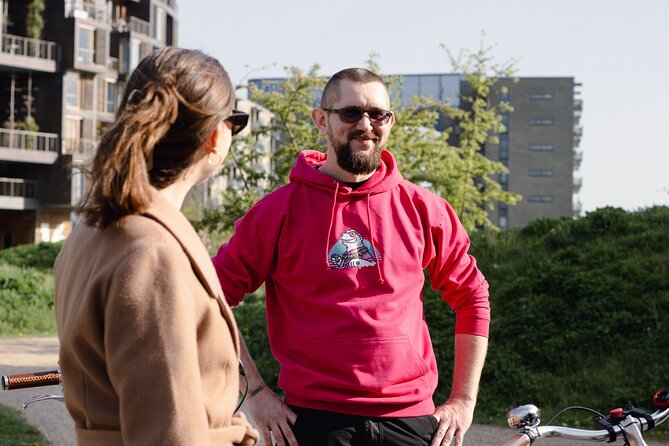
This route moves through Copenhagen like a set of answers to real questions. How do you build for community without losing privacy? How do you treat water like a neighbor instead of a problem? How do you create culture and housing with long-term thinking?
A few more Copenhagen options worth comparing
- Copenhagen Card-Discover: 80+ Attractions & Public Transport
★ 4.6 · 5,351 reviews - Copenhagen: Hop-On Hop-Off Bus Tour with Boat Tour Option
★ 3.9 · 4,122 reviews - Private Walking Grand Tour of Copenhagen
★ 5.0 · 3,953 reviews - From Copenhagen: Lund and Malmö 2-Country Tour
★ 4.7 · 3,807 reviews
Blox: sustainability in a mixed-use building
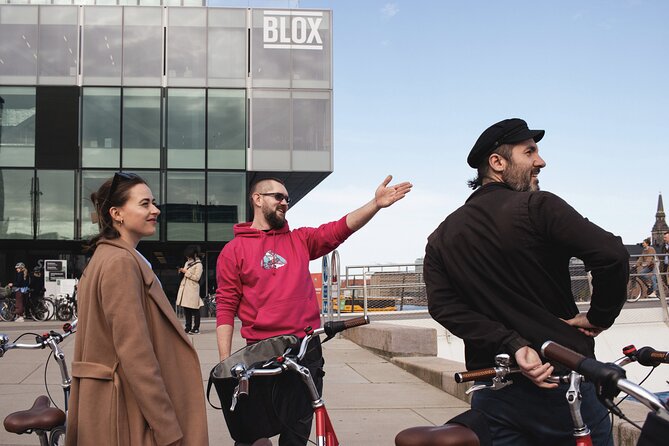
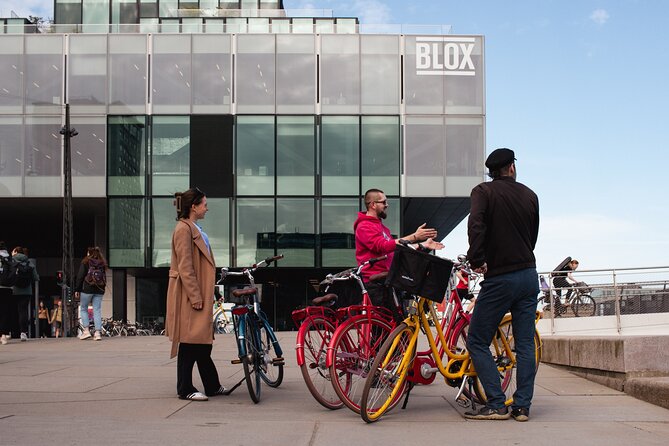
You start at Blox, a mixed-use building shaped by sustainability, both technical and social. One of the strongest reasons to stop here is that it is not just architecture as an object. It is also architecture as an ongoing conversation through exhibitions about Copenhagen’s architecture.
Practical tip: this is a good place to get oriented. If you want your head to understand what you are about to see, the exhibitions help you frame the day before you move on.
Lille Langebro: a newer bridge for people, not just through-traffic
Next is Lille Langebro, which connects across the harbor for pedestrians and cyclists. It is part of Copenhagen’s bigger harbor transformation, turning the old merchant and navy harbor into public space for leisure.
You also get a classic Copenhagen lesson here: infrastructure is not only about function. It is also about who gets to use the city, and when.
Havnebadet Islands brygge: the harbor bath that changed the relationship
At Havnebadet, you see one of the city’s most direct changes in how people relate to the harbor. When it opened in 2003, it marked a major shift, from working harbor edge to something residents can actually enjoy.
This is the sort of stop that makes sustainability feel human. You are not hearing about abstract goals. You are looking at a new kind of coastline use.
Cykelslangen: cyclist-only crossings over the harbor
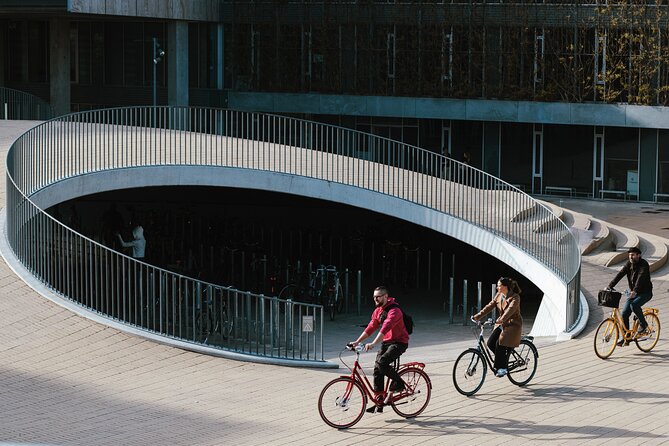
Copenhagen has embraced bike-first crossings, and Cykelslangen is part of that story. This is one of the bridges built exclusively for cyclists, designed to make biking feel safe and continuous rather than a risky detour.
If you have ever cycled and felt cars dominate the space, this stop is a relief. It is urban planning you can feel in your body.
The Tietgen Residence Hall: social sustainability through shared space
At The Tietgen Residence Hall, the architecture focuses on personal development and community. It houses 400 residents, and the key idea is balancing the individual with the collective.
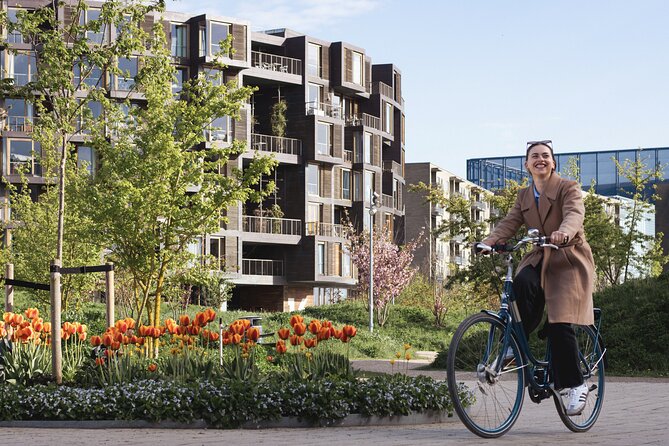
You see social sustainability in the details: shared common rooms, shared amenities, and smaller private rooms that include a washroom. Living rooms, kitchens, and many other spaces are shared by some or all inhabitants.
This is a stop worth slowing down for, because it is not a trend piece. It is a design model for how institutions can reduce wasted space while building a stronger community life.
Folkehuset Absalon: a church converted into a community center
Folkehuset Absalon is a former church that has been turned into a privately run community center. The sustainability angle here is reuse and continuity. A building with history is not erased. It is re-purposed to serve current needs.
It also gives you a cultural counterpoint. Along this route you are seeing housing, parks, and bridges. This stop reminds you that “sustainable” also means “keep the structure working.”
DR Koncerthuset: culture built as a public institution
At DR Koncerthuset, you are in the world of broadcasting and performance, with a concert hall seating about 1,800 people and additional stages and recording studios. It is home to the Royal Symphony Orchestra.
Sustainability is not only materials and energy here. Public culture institutions are part of how cities invest in long-term community identity and social life. If you care about how cities pay attention to arts as a basic service, this stop lands.
Kødbyen, the Meatpacking District: industrial architecture designed for a city’s health
The historic meatpacking district, Kødbyen, was planned by the city to create more sanitary and healthier conditions for the meat business as Copenhagen grew fast. It expanded over time and now shows industrial architecture from the 19th and 20th centuries.
This is a useful reminder that architecture often grows from public policy, not just private taste. Industry can shape a whole neighborhood. The lesson here is to look at the built form as a record of changing urban needs.
Israels Plads and Torvehallerne: food as a city meeting point
At Israel’s Square, with Torvehallerne adjacent, the area functions as a meeting point for food lovers. A farmer’s market existed here since the strict no-building policy ended in the 1890s until the 1950s. After that, the area became a large parking lot.
What to take from this stop: public space shifts with city priorities. When you come here, you can see how food markets act like social infrastructure.
Amagerfælled: nature on reclaimed land with a messy past
Amagerfælled looks like a rare pocket of nature in Copenhagen. But it carries a layered past. It was used by the military for training and shooting from the 1700s until the 1950s, and afterward it became a garbage dump. Copenhageners even joke about it as lorteøen, meaning shit island.
Today, the irony is that it presents as relatively untouched nature, and much of it sits on artificially reclaimed land. It is a strong lesson in how cities handle long-term land recovery and changing land use.
Enghave Park: redesigning a park for torrential rains
Enghave Park was built in the late 1920s on former allotment gardens. It was originally laid out in a neoclassical style with a bandstand, a playground, and fields for sports.
Between 2017 and 2019, it went through a complete redesign to play a main role in handling torrential rains in Copenhagen. This is where sustainability becomes practical. You can see climate resilience engineered into everyday public space.
Ørstedsparken: reuse, old defenses, and a moat turned lake
At Ørstedsparken, you get an early example of reuse. The area was once part of Copenhagen’s defenses outside the walls. After the city wall was demolished, the park was transformed, keeping parts of the former moat as a lake inside the park, plus hills and crooked paths.
It is a satisfying stop for walkers too, because even the shape feels like it came from the old terrain logic. Copenhagen loves to reuse the skeleton of earlier city forms.
The final stretch: time on the bike between stops
After the last official point, the remaining time is spent cycling between locations. That is not filler. It gives you time to mentally connect what you saw, and it keeps the rhythm of the tour moving.
If you want photos, this is when you usually get the gentle “speed bump” moments, when the guide is still moving but you can glance back at what is changing around you.
How the guide experience tends to feel in real life
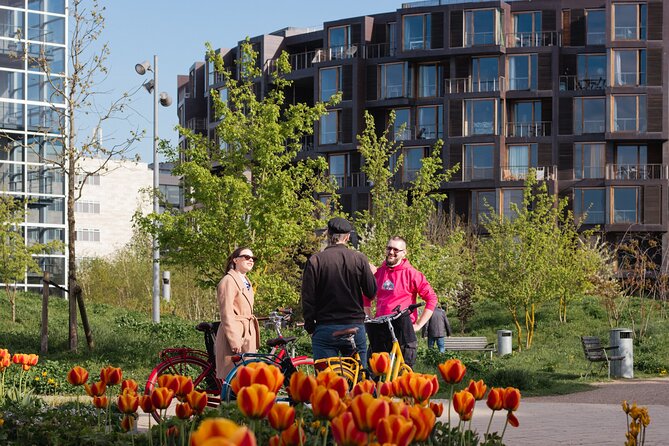
A key strength is the guide. The names Jörn and Julia show up in feedback for being friendly and informative, and for explaining current city development in a way that feels both clear and practical.
What you should expect from a good guide here is translation. You are seeing buildings and parks, but the guide makes you ask the right questions. Why does this space encourage sharing? Why is this crossing cyclist-first? Why did the harbor change here and not everywhere?
If you like your travel with explanations you can use, this fits.
Cycling comfort tips so the day stays fun
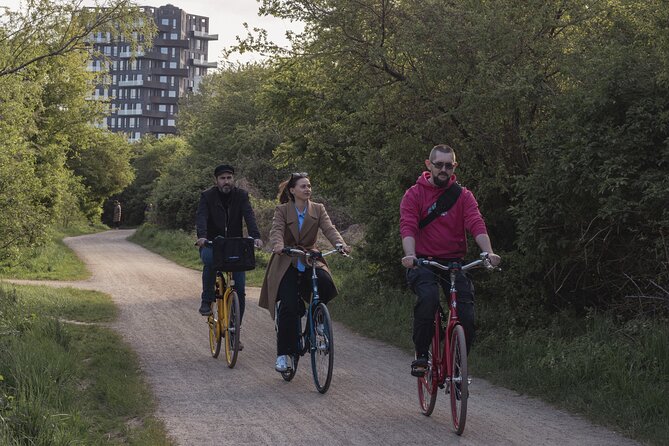
Even with a bike-friendly city, your comfort affects your enjoyment.
- If you tend to get cold fast, bring a layer, Copenhagen can shift quickly by season.
- If you like stopping for photos often, ask your guide when it is safe to pull slightly aside.
- If you carry a phone or small bag, consider adding a phone holder or basket ahead of time, since bike extras can cost extra.
- If you are traveling with kids, children bikes are available in different sizes, but you need to contact the provider for availability.
Also, helmets are available for free upon request. Use that option. It is a small thing that makes the whole ride feel more relaxed.
What to watch for: sustainability themes in plain sight
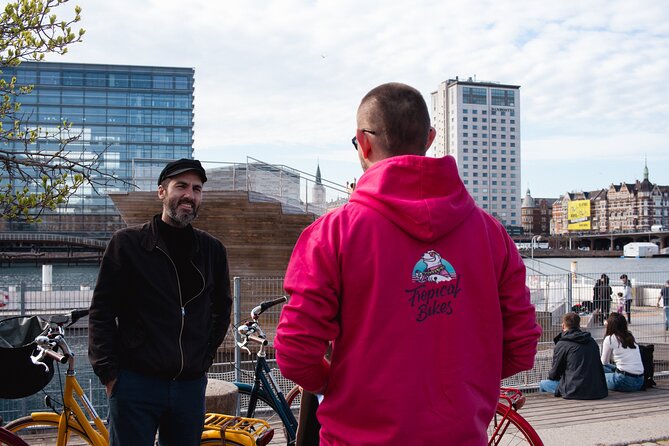
You do not need a design degree for this tour. The sustainability themes are built into the form.
At Blox, focus on how mixed use and exhibitions create public engagement around architecture. At Tietgen Residence Hall, watch for how shared rooms and shared amenities reduce isolated living while supporting community. At Enghave Park, look for climate resilience, since the redesign targets torrential rain control.
At Ørstedsparken, reuse is the message. At Amagerfælled, recovery and reclaimed land remind you that sustainability can be messy and slow. And at Havnebadet, the harbor bath shows how infrastructure can change daily habits.
The overall result is that sustainability stops being a buzzword and becomes a set of visible choices.
Who this tour is best for
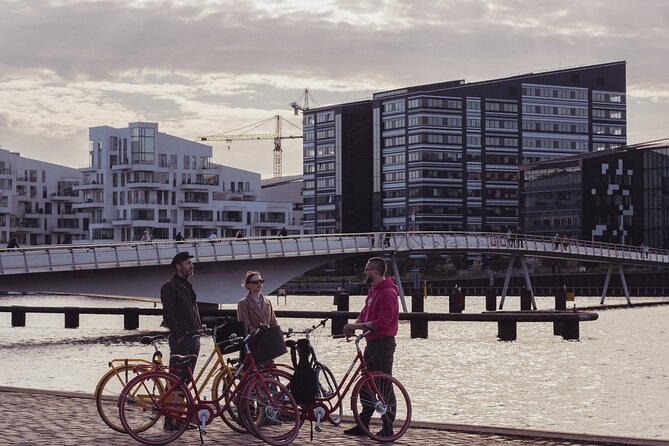
This works well if you are:
- Short on time but curious about how Copenhagen works
- Comfortable riding a bike and want a route that covers a lot without rushing
- Interested in architecture with social and environmental angles
- Traveling with an eco-minded mindset but still want practical city details
It may be less ideal if you want long indoor stops or heavy museum time, because most of the experience is outside, riding and brief stop visits at each location.
Should you book this Copenhagen architecture and sustainability cycling tour?
I think this is a strong choice if you want guided architecture without spending your whole day in transit. The value makes sense because you are paying for a guide, bike use, and a tight loop of free-access stops, while covering about 11 km in a small group.
Book it if you are excited by the idea of seeing Copenhagen through sustainability decisions, not just famous landmarks. If you are sensitive to crowds in peak summer, consider going on a day when you expect calmer harbor flow, or simply know the first canal-adjacent area can feel busy.
If your main goal is speed and depth in one afternoon, this tour fits the bill. If you want a slower pace with longer dwell times at only one or two attractions, you might prefer a more focused stop-by-stop plan.
FAQ
How long is the Copenhagen architecture and sustainability bike tour?
It runs for about 3 hours, with the listed time reflecting the time spent traveling and riding between stops.
What is the price and what do I get for it?
The tour costs $72.57 per person. It includes a bicycle, a local guide, and free bike helmets upon request. Children bikes are available in different sizes if you contact the provider about availability.
About how far do we bike during the tour?
There is roughly 11 km of biking between stops on the tour.
Is the tour offered in English?
Yes. The tour is offered in English.
Are there bike upgrades or extras available?
Yes. Bike extras like phone holders and baskets can be booked for an extra fee, and there are optional upgrades such as cargo or e-bikes with additional charges.
Where does the tour start and end?
The tour starts at Vester Voldgade 2, 1552 København, Denmark, and it ends back at the same meeting point.
Do I need good weather?
Yes. The experience requires good weather. If it is canceled due to poor weather, you will be offered a different date or a full refund.
Recently reviewed around Copenhagen
- The Forgotten Giants Private Tour★ 5.0 · 3 reviews
- Explore Copenhagen in 60 minutes with a Local★ 5.0 · 3 reviews
- E-Scooter guided tours in Wonderful Copenhagen★ 5.0 · 3 reviews
- E Biking Adventure to Kronborg Castle★ 5.0 · 3 reviews
- Danish Design Classic and Modern Style Self-Guided Audio Tour★ 5.0 · 3 reviews
- Departure by Luxury Vehicule Copenhagen to Copenhagen airport CPH★ 5.0 · 3 reviews
- Copenhagen: Self Guided Scavenger Hunt and Tour★ 4.0 · 3 reviews
- Mikkeller Tastings – The Unusual Story of Beer and Mikkeller★ 5.0 · 3 reviews
Architecture & Design Tours, compared.
Copenhagen City, Old Town, Nyhavn, Architecture Walking Tour
Read our review →
Danish Design Classic and Modern Style Self-Guided Audio Tour
Read our review →Browse the lists this tour appears in