
Reviewed · WALKING TOURS
Half Day Self-Guided Audio Walking Private Tour in Copenhagen
Copenhagen on foot is unbeatable, and this half-day audio route is interesting because it lets you slow down, stop when you want, and still see the city’s highlights. I especially like the stop-based pacing and the way the audio connects major landmarks to everyday Danish life. The main thing to watch is the app’s GPS, since a few phones may not track perfectly and you might need to tap ahead to stay on time.
This is a private experience for just your group, so you are not herded with strangers. It starts at Amagertorv by the Storck Fountain, and it ends right where you began, which makes planning simple. One review also mentioned a guide named Oscar as especially knowledgeable, so if you want extra human context, it can be worth asking when you can.
Key things to know before you go
- Audio-first, self-paced: you control your pace and take breaks without feeling guilty
- Major sights with low friction: many stops are outside, so you do not need to buy anything to keep the walk going
- Optional entries when open: churches and towers are watchable from outside, with add-on visits if they are open
- Royal Copenhagen and Danish design: the route ties art, craft, and place in a way that feels practical
- Walkable central route: you move through squares, canals, and the main pedestrian streets in a logical loop
- Good value for 3 to 4 hours: at about $16 per person, it’s a strong budget way to get oriented
Why Copenhagen works so well for an audio walk
If you are meeting Copenhagen for the first time, you do not want to spend your day standing still in a crowd. You want movement, choices, and the freedom to linger at the corners that catch your eye. This is built for that. You get a guided audio experience in English, broken into short stops so you feel progress without rushing.
I like that the route is not just “look at this building.” It points out what you are seeing, where you are standing, and how the area fits into daily life in Denmark. That matters, because after the walk you are not just taking photos, you understand the city a little better.
One more practical reason this format clicks: the meeting and ending are the same. That means you can plan lunch or a next stop without a second layer of logistics.
More walking tours in Copenhagen:
- Private Walking Grand Tour of Copenhagen
★ 5.0 · 3,953 reviews - Copenhagen Highlights Walking Tour
★ 5.0 · 2,324 reviews - Politically Incorrect Private Highlights Walking Tour
★ 5.0 · 1,244 reviews
Price, time, and what you’re really paying for
At about $16.04 per person for a 3 to 4 hour experience, you are paying for convenience and structure more than for museum access. Many of the points are outside, and the tour is designed so you can complete it without buying entry tickets at each stop.
This is also not a “sit with a headset and wander” situation. The audio is timed in chunks, with short segments so you know when to move on and when to pause. That helps you keep momentum, even if you are stopping for photos or reading signs.
A heads-up from the real world: the tour uses a mobile app (StoryHunt) and a mobile ticket. If your phone battery is low or your GPS is fussy, bring a charger or a portable battery. I would rather over-prepare than spend a beautiful day stuck.
Start at Amagertorv by the Storck Fountain
Your tour begins at Amagertorv 1F, 1160 København, right where things feel central and walkable. The key detail here is that the start location is next to the Storck Fountain, which makes it easier to orient yourself right away.
From the start, you get a complete introduction. That is important on a self-guided walk, because it sets expectations on how the audio play points work and what you should do at each stop.
Also, because this is near public transportation and the route stays in the city center, you can jump in or adjust your schedule without stress. You should have moderate physical fitness, since you are walking for most of the half-day.
Stop 1: Royal Copenhagen Flagship Store and the art of place

The first stop is the Royal Copenhagen Flagship Store, next to Amagertorv. You can think of this as the “design and craft” handshake of the day. You are not yet deep into castles or towers. You are getting a sense of what Copenhagen values and how famous Danish brands show up in real neighborhoods.
The store stop is also a smart way to break the ice. You do not need an entry ticket to enjoy the moment and keep going. If you do want to browse, you can. If not, you still get the context and you stay on schedule.
In practice, this works well for families and first-timers because you get an immediate anchor for orientation. You are learning as you walk, not after you walk.
A few more Copenhagen options worth comparing
- Copenhagen Little Mermaid Exploration Game and Self-Guided Tour
★ 4.0 · 36 reviews - Monstour: A Self-Guided Audio Tour of Danish Folk Legends
★ 4.5 · 19 reviews - Copenhagen Self-Guided Murder Mystery Tour by the Round Tower
★ 4.0 · 11 reviews - Explore Copenhagen: Self-Guided Audio Tour
★ 4.0 · 8 reviews
Stop 2: Absalon’s statue, where Copenhagen’s story starts to feel personal
Next up is the Rytterstatue af Absalon, a statue of Absalon, often described as a founder figure for Copenhagen. This stop is short, but it gives your walk a backbone. When you understand who shaped the city early, the later buildings make more sense.
You do not need to pay to view it, and you only need a few minutes. Still, it sets a theme: Copenhagen is not just pretty streets, it is a city with people making decisions that lasted.
If you like “why this place exists” history, this part lands. If you prefer architecture only, it still helps because it gives the surrounding areas meaning.
Stop 3: Christiansborg Slot and the Danish power center from the outside
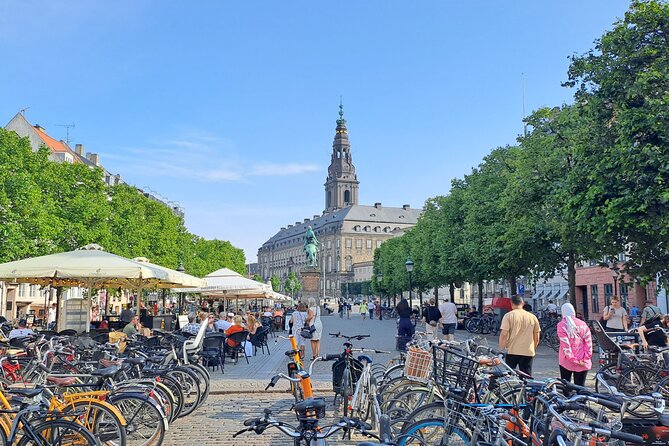
Then you reach Christiansborg Slot, a complex that includes multiple outside viewpoints during the walk. The tour uses it as an outdoor landmark stop, with the option to visit if you want.
This is one of those stops that can be either “wow, big building” or “wait, what is this place?” The audio angle makes the second option more likely. You are not just seeing power architecture, you are learning how it fits into Denmark’s civic life.
A practical note: since much of this is viewed outside, you can keep moving even if certain areas feel crowded. And because you have a timed stop, you can decide quickly whether you want to add entry.
Stop 4: Gammeltorv, a medieval square that still feels like a meeting point
Gammeltorv is one of those places that makes Copenhagen feel old without becoming a theme park. It is a medieval square and, importantly, you do not need entry tickets to appreciate it.
I like squares like this on an audio tour because they are naturally good places to pause. You can listen, look around, and watch people pass without thinking you’re “behind” schedule.
This stop also helps you contrast Copenhagen’s layers. You go from founder-era context into civic and religious areas, and then you hit a public space where the city’s daily rhythms still happen.
Stop 5: Church of Our Lady, only if it’s open
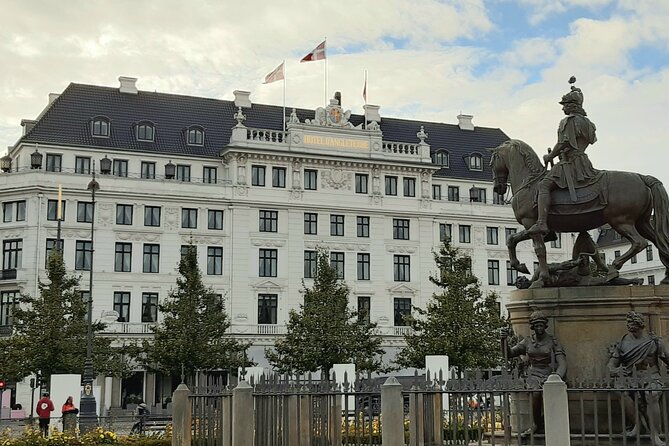
The next major landmark is Church of Our Lady, also known as the Copenhagen Cathedral. You can visit if it is open, and otherwise you still get the value of the stop as part of the route.
Religious buildings can be tricky on self-guided tours because opening hours are not always convenient. The good news here is that your experience does not collapse if you cannot go inside. The tour is set up so you can still get the main meaning.
If you do get inside, keep your expectations realistic. Plan for a quiet moment, not a long detour. You can always linger on the exterior listening points if you need more time.
Stop 6: The Round Tower, outside is still worth it
Then comes The Round Tower, a classic Copenhagen view. As with other key sites, you do not need entry to complete this part of the tour, but you have the option to visit.
Round towers and observatory-style buildings have a way of making a city feel engineered. You start noticing sightlines and how people positioned institutions in the urban core.
Even if you do not go in, I think it’s worth stopping for the audio explanation and looking at the surrounding streets. The tower works best when you understand the “why” of its presence.
Stop 7: Rosenborg Castle, summer residence to museum option
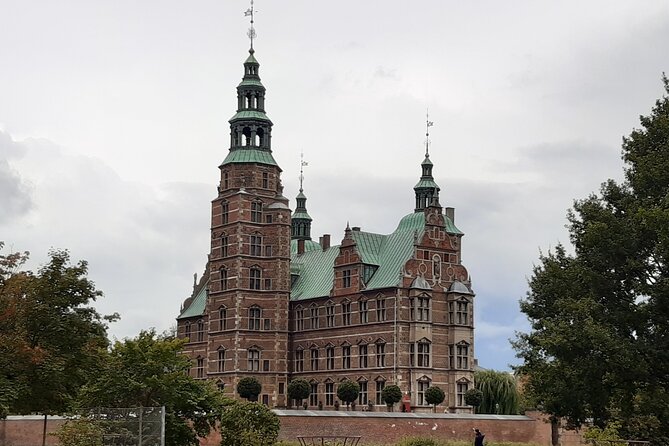
Next is Rosenborg Castle, connected to the summer residence of King Christian IV. Again, you can visit if you want, but you do not need an entry ticket to make the walk work.
This stop is the point where the tour starts feeling more “royal Copenhagen” and less “street-level Copenhagen.” That shift is good. It gives your day variation, so it does not become a wall of churches and squares.
If you choose to go inside, try to keep it tight and return to the walking flow. The route is timed to keep your day flowing logically, and you will enjoy the rest more if you do not overstay at one landmark.
Stop 8: Kongens Have and Hans Christian Andersen’s presence
Then you hit Kongens Have, the park next to Rosenborg Castle, including the statue of Hans Christian Andersen. This is a nice breather in the middle of a historic loop.
Parks can feel optional on tours, but here it makes practical sense. It breaks up the stone-and-brick feel and gives you a place to reset your eyes before the next big architecture stops.
Also, Andersen matters in Copenhagen. He is not just a name from school. When you see his statue here, the city’s literary identity feels less abstract.
Stop 9: Frederiks Kirke (Marmorkirken), visit if it’s open
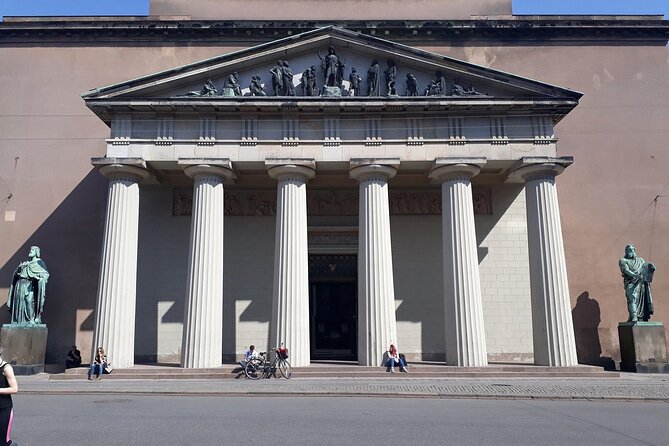
Next is Frederiks Kirke, also called Marmorkirken. It is another “if open, go in” stop. Even when you do not enter, it is still a strong visual anchor.
This is one of those places where you might catch different moods based on weather and light. The audio gives you the why behind the structure, which can help you appreciate the building beyond the surface wow factor.
If it is open and you have energy, going inside can be a good payoff. If not, do not stress. You are not losing the tour.
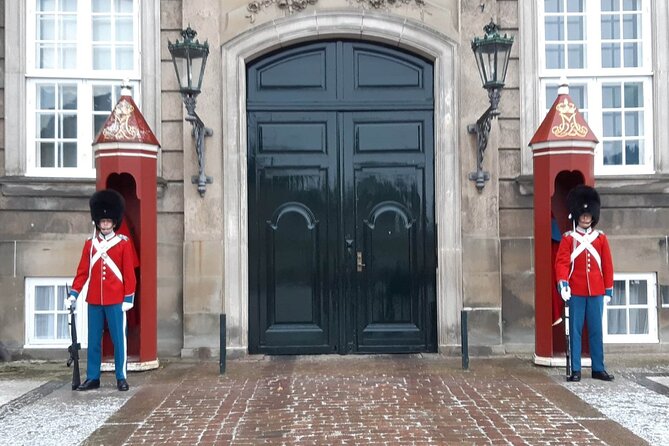
Stop 10: Amalienborg Palace Museum, optional entry after the royal walk
Now you reach Amalienborg Palace Museum, a royal residence and museum area. The same rule applies: you can visit if you want, but you do not need entry to keep the audio loop moving.
This is a “big finale energy” step, but still part of the build-up. After Rosenborg and the church stops, Amalienborg feels like the next logical royal connection.
If you are choosing whether to enter, think about your style. If you like interiors, this may be your best bet among the optional stops. If you prefer to maximize outdoor time, you can still get plenty from the audio at street level.
Stop 11: Nyhavn, the canal scene you can actually enjoy on your own terms
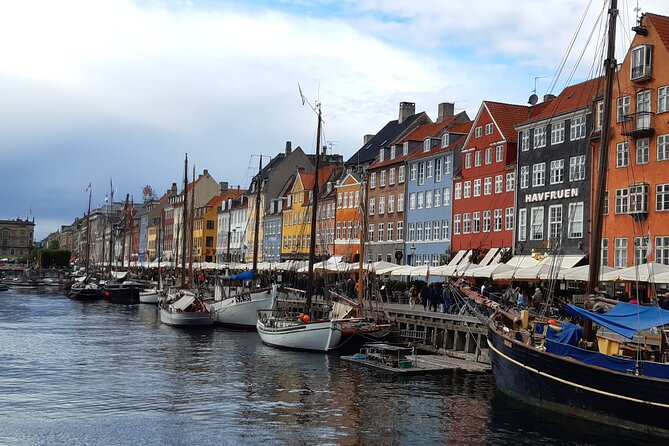
Then it’s Nyhavn, the canal with colorful houses. This is one of Copenhagen’s most photographed areas, but on a self-paced walk it becomes more than a photo stop.
Because you control the timing, you can pause when the light is right and move when it gets too crowded. That is the real advantage of self-guided versus group tours. You can time the canal part to your own rhythm.
Use this stop to slow down. Listen closely to what the audio highlights, because canal areas usually have layered stories about trade, living, and city changes.
Stop 12: Copenhagen King’s New Square, a clean central reset
After Nyhavn, you come to Copenhagen King’s New Square. It’s a “reset” stop, a place to catch your bearings again before your walk continues toward the end.
Squares work well for audio tours because you can hear context while taking in the geometry of the city. Even if you only spend about ten minutes here, it helps your day feel organized.
Stop 13 and beyond: the longest pedestrian street stretch
The route also includes a segment on Copenhagen’s longest pedestrian street. This is where your walking becomes more casual. You are moving through lively street energy, but still using audio to guide you rather than just wandering blindly.
I recommend treating this part as a chance to browse. If you see something interesting, pause. If not, keep moving. This is built for flexibility, and that is where self-guided tours shine.
Ending back at Royal Copenhagen, with optional shopping time
Finally, you return to the Royal Copenhagen Flagship Store, your start point. The tour ends back at Amagertorv, which means you can continue your day with less planning.
If you want, you can visit the Royal Copenhagen store or also check the Georg Jensen store nearby. This is a satisfying close because your day started with Danish craft and ends in the same design-focused zone.
You also get the best kind of souvenir moment: not a random shop stop, but a planned end to the walk where you already understand the context.
App and mobile ticket tips so your day stays smooth
This experience includes free access to the StoryHunt app, plus a mobile ticket. That means the real “work” is setting yourself up so you are not fighting tech in the middle of your walk.
Here are the practical things I would do:
- Download and test the app before you leave, especially if you know GPS can be finicky
- Bring headphones you like and keep volume comfortable
- Expect you may need to tap ahead if GPS tracking is not perfect on your phone
- Keep a small power bank if you are using navigation and audio together
One downside to be aware of: the format assumes you can follow play points on your device. If your GPS drifts, you might feel like the audio is late. That is not the end of the world, but it can take the edge off if you hate technology puzzles.
If you want a more human safety net, you can also ask staff at the start location or nearby businesses for help with the general area. But do not count on a dedicated guide following you around, since this is structured as self-guided.
The value question: does it feel worth it for first-timers?
At around $16 per person, this is a strong value if you want:
- a half-day structure
- a walkable city-center route
- audio that explains what you are seeing, not just what the place looks like
It’s especially good if you are the type who likes to move at your own speed. Many people find Copenhagen group tours too fast. This route gives you time to stop for photos, duck into a church if it’s open, or just stand in a square and listen.
It’s also helpful if you enjoy learning about daily Danish life. The audio is not only about royal names and dates, it connects the city’s identity to how people actually live.
Who this Copenhagen audio walk is best for
This one fits you best if:
- you want to see a lot of central landmarks in 3 to 4 hours
- you like self-paced tours instead of fixed group schedules
- you want an English audio guide that helps you understand the city while walking
- you can handle a moderate walking day and mostly outdoor stops
It may feel less ideal if:
- you rely heavily on GPS navigation and dislike dealing with phone tracking issues
- you strongly prefer a live guide at every step
- you want guaranteed indoor access at every stop (several options depend on whether places are open)
Practical FAQ you’ll want before you go
FAQ
How long is the half-day audio walking tour in Copenhagen?
The tour is listed as about 3 to 4 hours.
Where do I start the tour, and where does it end?
You start at Amagertorv 1F, 1160 København, Denmark, and the activity ends back at the meeting point.
Do I need admission tickets to do the tour?
You do not need entry to realize the tour at most stops. Some locations have an option to visit if open, but the walk itself does not depend on admission.
What language is the audio offered in?
The tour is offered in English.
What app and ticket type do I get?
You get free access to the StoryHunt app, and you have a mobile ticket.
Is this a private experience?
Yes. It is private, and only your group participates.
Is food included?
No. Food and drinks are not included.
Should you book this Copenhagen audio walk?
I’d book it if you want a practical, budget-friendly way to get oriented in central Copenhagen without juggling multiple museum tickets. The mix of outside viewing, optional indoor visits, and a logical loop through squares, royal sights, and Nyhavn is exactly what a half-day needs.
Skip it if you want a nonstop live guide, or if you know your phone struggles with GPS and you would rather not troubleshoot. For most people, though, this is an easy win: you walk at your pace, you learn along the way, and you finish where you started, ready to keep exploring.
More Audio Tours in Copenhagen
- The Philosopher’s Last Walk: An audio tour on the life of Søren Kierkegaard
★ 4.5 · 5 reviews - Cool Nørrebro and Foodie Tips Self Guided Audio Walking Tour
★ 5.0 · 4 reviews - Danish Design Classic and Modern Style Self-Guided Audio Tour
★ 5.0 · 3 reviews - Copenhagen Scavenger Hunt and Highlights Self Guided Audio Tour
★ 4.5 · 3 reviews
Recently reviewed around Copenhagen
- The Forgotten Giants Private Tour★ 5.0 · 3 reviews
- Explore Copenhagen in 60 minutes with a Local★ 5.0 · 3 reviews
- E-Scooter guided tours in Wonderful Copenhagen★ 5.0 · 3 reviews
- Departure by Luxury Vehicule Copenhagen to Copenhagen airport CPH★ 5.0 · 3 reviews
- E Biking Adventure to Kronborg Castle★ 5.0 · 3 reviews
- Danish Design Classic and Modern Style Self-Guided Audio Tour★ 5.0 · 3 reviews
- Copenhagen: Self Guided Scavenger Hunt and Tour★ 4.0 · 3 reviews
- Mikkeller Tastings – The Unusual Story of Beer and Mikkeller★ 5.0 · 3 reviews
Walking Tours, compared.
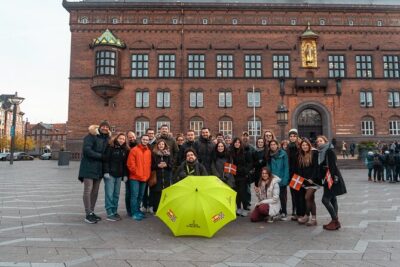

Politically Incorrect Private Highlights Walking Tour
Read our review →
Group Walking Tour – City Highlights – 2 Hours
Read our review →
3h walking tour, small group max 10 people Copenhagen
Read our review →
Walk & Canal Tour: Copenhagen Highlights + Changing of the Guards
Read our review →

Browse the lists this tour appears in