
Reviewed · ARCHITECTURE & DESIGN TOURS
Copenhagen: Harbor Architecture Private Walking Tour
Copenhagen’s harbor area is one of the fastest places to see how a city modernizes without erasing its past. This private 2-hour architecture walk focuses on the waterfront design story, from classic canals to newer landmarks that helped Copenhagen earn World Capital of Architecture 2023 status.
I especially love how the route connects the dots between neighborhoods that used to be industrial and the city spaces they became. I also like that you get real-time guidance for photo spots and viewpoints, including stops tied to DAC, the Danish Architecture Centre and major harbor landmarks.
The main drawback is simple: this is a walking tour, and it is not suitable for wheelchair users or people with mobility impairments. Also, it runs rain or shine, so pack for weather even if the forecast looks friendly.
Key things I’d plan around
- A private group means you can move at a comfortable pace and ask questions
- Nyhavn and the modern waterfront are shown in one clean loop, not as separate trips
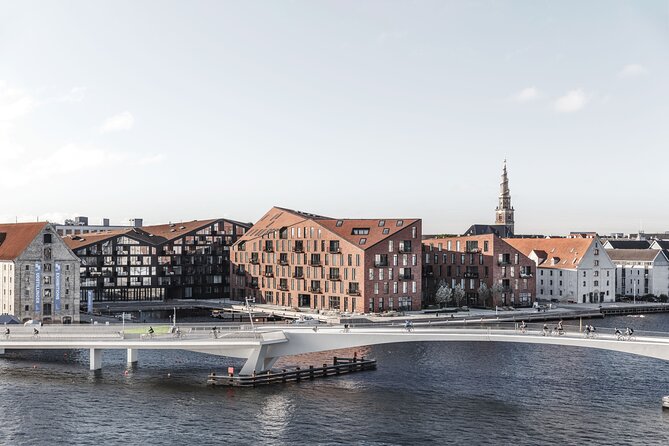
- Papiroen’s industrial-to-urban shift gives you context for what you’re seeing
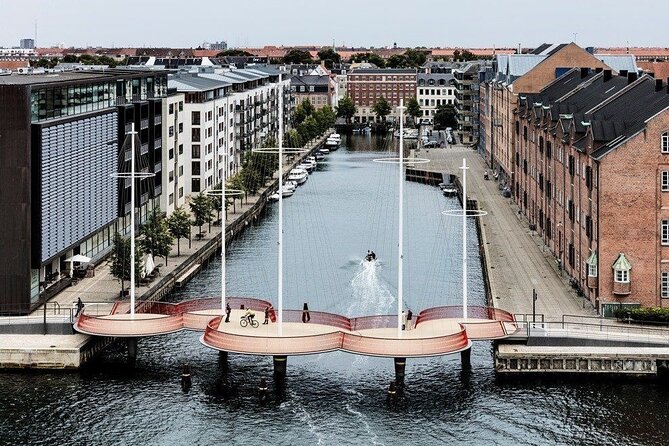
- Operaen and Cirkelbroen are design moments that make the harbor feel futuristic
- Photo stops are built in, including the Royal Library of Denmark area
- English and Spanish guided narration helps you follow the architecture talk
Copenhagen’s harbor, explained in the time you actually have
If you only have a short window in Copenhagen, the harbor is where the city’s architectural personality shows up fast. You get classic waterfront charm, then you move into newer projects that make the water feel like part of the design.
What makes this tour work is the focus. Instead of generic sightseeing, you get the “why” behind the buildings and public spaces, like how development decisions shape the way people move, gather, and take photos along the canals.
And if you enjoy architecture for real, this kind of structured walk is a win. You are not just looking at pretty facades. You’re learning what designers were responding to, like the harbor’s shape, the heritage behind old industry sites, and the cultural role of major public buildings.
More architecture and design walks in Copenhagen:
- Copenhagen: Guided Architecture and Sustainability Tour
★ 4.8 · 73 reviews - Copenhagen Architecture and Sustainability Tour with local Guide
★ 5.0 · 39 reviews - Urban Design and Livability E-bike Tour
★ 4.8 · 21 reviews
Meeting at Ofelia Plads, with a guide who sets the tone
The tour meets at Sankt Annæ Pl. 21, in front of the Scandic Hotel right on Ofelia Plads. From there, your guide leads the walk along the water, keeping things practical and easy to follow.
This is a private group, so you will not feel stuck in a cattle-line pace. The guidance is available in English or Spanish, which is handy if you are traveling with someone who wants the story in their own language.
Plan for weather. The tour runs rain or shine, so comfortable clothes matter more than you think. I would bring water too, since you are on your feet for the full 2 hours.
One more point that matters for expectations: this is not a bus tour with stops you hop in and out of. You’re walking through the city fabric, which is exactly why the architecture talk lands better in person.
Ofelia Plads: start where the harbor opens up

Your first stop is Ofelia Plads, with a guided introduction that sets the scene for everything to come. This area is a smart starting point because you can orient yourself quickly to the canal lines and the harbor viewpoints.
Think of this as your visual compass. Before you get pulled into the details of each building, you learn how the harbor area is organized and why certain waterfront stretches feel like neighborhoods while others feel like promenades.
It also gives you the chance to settle in. If you’re arriving from elsewhere in Copenhagen, starting here helps you get oriented before the tour moves into the photogenic, busier-with-views parts of the waterfront.
Nyhavn: the 17th-century port district that still tells stories
Next you head into Nyhavn, and this is the stop most people recognize instantly. You’re walking the 17th-century waterfront district with colorful buildings and lively restaurant energy along the canals.
What I like about this part is the way the guide frames Nyhavn as more than a pretty picture. You learn about the district’s origins as a working port and how that history helped attract creative people over time.
Nyhavn’s appeal is that you can see multiple layers at once. There’s the classic look, yes, but there’s also the ongoing life of a waterfront that continues to function as a public space. That mix is why it feels more than a museum street.
Photo tip that fits this stop: look for angles where the canal lines lead your eye toward the colorful facades. With a guide’s timing and small placement advice, you can avoid shooting into flat glare.
More walking tours in Copenhagen:
- Private Walking Grand Tour of Copenhagen
★ 5.0 · 3,953 reviews - Copenhagen Highlights Walking Tour
★ 5.0 · 2,324 reviews - Politically Incorrect Private Highlights Walking Tour
★ 5.0 · 1,244 reviews - Copenhagen: Group Walking Tour – City Highlights – 2 Hours
★ 4.7 · 1,088 reviews
Krøyers Plads and Papiroen: from industry to modern harbor living
From Nyhavn you move toward Krøyers Plads, and this is where the tour widens its lens. You start seeing how the harbor’s architecture is tied to redevelopment and adaptive reuse, not only preservation.
A key theme here is Papiroen, a former paper mill site transformed into a modern harbor neighborhood. The story matters because it helps you read what you’re seeing: the buildings and public areas are not random new construction. They reflect efforts to preserve industrial heritage while creating a functional, current urban space.
You also get views of the harbor from this side, and the architecture conversation becomes more about planning choices: how market and building forms interact with the waterfront, and how the area’s design invites people to linger rather than rush past.
If you care about design choices, this section is one of the most rewarding. You’re learning to spot the “old” in the “new,” like how industrial-era identity can influence the character of today’s streets and squares.
Operaen: a modern landmark that grew from the harbor itself
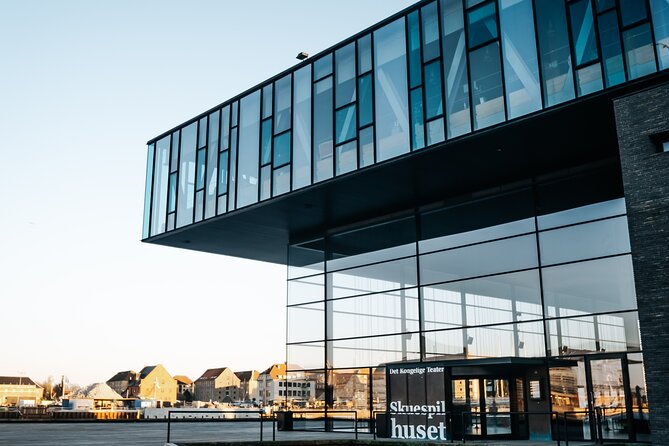
As the walk continues, you get a view of Operaen, the striking modern building completed in 2005. It is one of Copenhagen’s cultural anchors, and your guide explains how the architecture connects to the surrounding harbor environment and Denmark’s cultural heritage.
Even from outside, the building’s presence changes the feel of the waterfront. It’s not just another facade. It reads like a statement piece that tells you the city wants modern culture in the open air, right where daily harbor life happens.
This stop is worth treating like a design moment, not just a photo chance. Look at how the building sits against the water and how it shapes the sightlines around it. Those relationships are what architects aim for when they design something this visible.
Cirkelbroen: the pedestrian bridge that turns design into movement
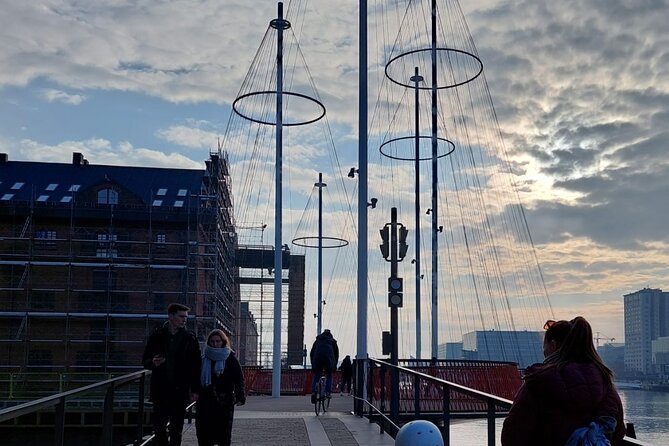
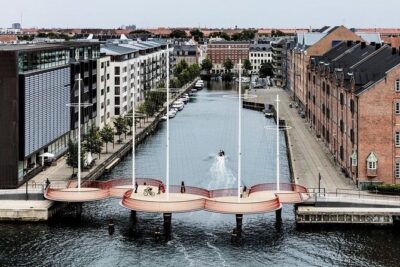
Then comes Cirkelbroen, the pedestrian bridge with an innovative concept tied to circles of life. This is where the tour shifts from individual buildings to infrastructure as architecture.
Your guide points out why this bridge works both ways. It connects people between harbor sides, but it also feels like a sculpture you walk through. That combination is why it earns repeat attention from architecture lovers.
This is a good moment to slow down and look from different angles. Bridge design is about form and function at the same time, so you get a better sense of the idea when you step into the space rather than only photographing from one side.
If you like walking bridges because they give you a moving viewpoint, Cirkelbroen is one of the best examples in this area. It turns a crossing into a small design experience.
Royal Library of Denmark: a built-in photo break
After the bridge segment, there’s a photo stop by the Royal Library of Denmark. This is scheduled time to step back, take pictures, and let your guide steer you toward angles that show the harbor and surrounding architecture.
Even if you do not go inside anywhere on this tour, the photo stop still has value. It gives you a breather while keeping the architecture narrative going. You get context and timing, so your photos look less random and more intentional.
This section also helps you manage energy. With only 2 hours total, the tour’s pacing keeps you from feeling like you need to run between stops.
Practical idea: if you’re carrying a camera, check your settings early and then use this photo stop to get your best shot rather than forcing it later.
Danish Architecture Centre (DAC): where the stories click
The tour’s final architecture-focused stop is DAC, the Danish Architecture Centre. Here, you get a guided visit that ties earlier street-level observations to broader architectural thinking.
This is a smart closing move. After seeing buildings and viewpoints along the harbor, stepping into an architecture center gives you a chance to organize what you just learned. Instead of remembering 6 separate stops, you start seeing themes like adaptive reuse, waterfront public space, and the city’s push toward design-led development.
Your guide’s explanations during the walk help you notice things you might otherwise skip, like how different development eras create different rhythms along the water. Then DAC helps you interpret those choices in a clearer way.
If architecture is a hobby for you, you’ll probably leave with a stronger sense of what to look for next in Copenhagen, especially around other waterfront and civic buildings.
Price and value for a private 2-hour harbor walk
At $394 per group up to 2, this is not a bargain-bin price. But it can still be good value if you care about guidance and want a tight route that saves decision-making time.
Here’s the math that matters for planning: for two people, the effective cost is about $197 each for a 2-hour private guided walk. For some travelers, that’s a reasonable tradeoff for having a guide tailor the pacing and answering questions in real time.
You also get value in the structure. The tour is timed so you see the most important harbor design stops without turning it into a self-made scavenger hunt. That matters if you’re not sure how far apart these places are or if you want the story connected across neighborhoods.
Where the price makes the biggest difference is in comfort and attention. A private group means you’re not competing for the guide’s focus, and it is easier to pause for photos when you want them.
If you’re traveling solo, consider the tradeoff. You still get the same private format, but the per-person value is lower because the price is per group, not per person.
Who should book this tour, and who should skip it
This tour fits best if you’re:
- Interested in how Copenhagen’s design language changes across time
- Hoping to learn architecture without studying it in advance
- Taking photos and want guidance for better viewpoints
- In Copenhagen for a short stay and want a high-impact waterfront route
It is not a good match if you:
- Need wheelchair access, because it is not suitable for wheelchair users
- Have mobility limitations that make extended walking difficult
- Prefer a fully inside, low-step itinerary, because this is a walking-focused experience
Also, since the tour runs rain or shine, pack with that in mind. Copenhagen weather can change fast, and you’ll have a better time if you’re ready for it.
Should you book this Copenhagen harbor architecture tour?
Book it if you want a guided architecture walk that connects Nyhavn, modern waterfront culture points like Operaen, and design infrastructure like Cirkelbroen, all in a tight 2-hour format. It’s especially worth it if you appreciate adaptive reuse stories, like the transformation tied to Papiroen and the way Copenhagen keeps old industrial identity while building a modern public city.
Skip it if walking distance is an issue for you, or if you’d rather explore at your own pace with no guide. For those cases, you might enjoy planning your own waterfront loop.
One last reason I’d lean yes: a strong guide makes the difference in an architecture tour. In this case, the guide’s enthusiasm is part of the experience, and that energy helps you see the harbor as more than scenery.
FAQ
How long is the Copenhagen harbor architecture private walking tour?
It lasts 2 hours.
Where does the tour start?
You meet at the Scandic Hotel in front, right on Ofelia Plads (Sankt Annæ Pl. 21).
Where does the tour end?
The tour finishes at Islands Brygge 4, 2300 København, Denmark.
Is this tour private?
Yes, it’s a private group experience.
What languages are offered?
The live guide offers English and Spanish.
Does the tour run in bad weather?
Yes, it takes place rain or shine.
Is hotel pickup or drop-off included?
No, hotel pickup and drop-off are not included.
Are food and drinks included?
No, food and drinks are not included.
Is the tour suitable for wheelchair users or people with mobility impairments?
No, it is not suitable for people with mobility impairments or for wheelchair users.
Recently reviewed around Copenhagen
- The Forgotten Giants Private Tour★ 5.0 · 3 reviews
- E-Scooter guided tours in Wonderful Copenhagen★ 5.0 · 3 reviews
- Explore Copenhagen in 60 minutes with a Local★ 5.0 · 3 reviews
- E Biking Adventure to Kronborg Castle★ 5.0 · 3 reviews
- Danish Design Classic and Modern Style Self-Guided Audio Tour★ 5.0 · 3 reviews
- Departure by Luxury Vehicule Copenhagen to Copenhagen airport CPH★ 5.0 · 3 reviews
- Mikkeller Tastings – The Unusual Story of Beer and Mikkeller★ 5.0 · 3 reviews
- Copenhagen: Self Guided Scavenger Hunt and Tour★ 4.0 · 3 reviews
Architecture & Design Tours, compared.

Copenhagen Architecture and Sustainability Tour with local Guide
Read our review →

Copenhagen City, Old Town, Nyhavn, Architecture Walking Tour
Read our review →
Danish Design Classic and Modern Style Self-Guided Audio Tour
Read our review →Browse the lists this tour appears in