
Reviewed · WALKING TOURS
Walking tour – Copenhagen Old Town & Tivoli Park included
Copenhagen can feel big on paper, but this tour is designed to help you get your bearings fast. You walk the old-center highlights and end with Tivoli Park ticket access, so your day has both sight seeing and payoff.
I love the skip-the-line Tivoli Park entry included, because it saves time when you are ready to relax. I also love the chance to time your royal moments with the changing of the Royal Guard at Amalienborg at 12:00 noon.
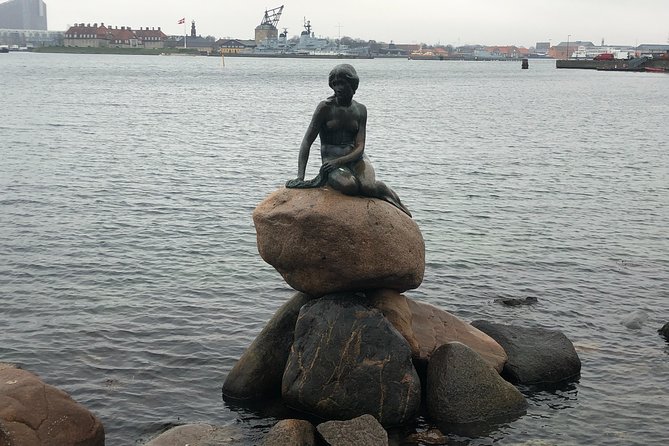
One thing to consider: it does not include The Little Mermaid, so if that is your number one stop, you’ll need a separate plan.
Key points worth knowing
- Tivoli Park is the final stop, and your ticket is included so you can stay as long as you want within opening hours
- Changing of the guards at Amalienborg happens daily at 12:00 noon, with a clear route from the barracks toward the palace
- You see major landmarks without a long museum day, which is ideal for time tight trips
- Copenhagen Cathedral includes Thorvaldsen sculptures, including Christ and the twelve apostles
- The walk threads together classic squares, from King’s New Square to Gammeltorv and Nytorv, plus City Hall Square
Why this Copenhagen Old Town walk works in just 2 hours
If you only have a morning or early afternoon in Copenhagen, this kind of route is a smart way to avoid getting stuck in one neighborhood. The tour is about 2 hours approx., so it is paced for first timers and people who like to see a lot without feeling like you are sprinting.
The big idea is simple: you get context while you walk. Instead of random snapshots, you are pointed toward why each place mattered, and you are not left figuring out where to go next. That is especially handy on central streets like Strøget, where everything looks important once you arrive.
The one caution I’d give you is the tradeoff built into the format. It is efficient, not exhaustive. If you want a long, deep dive into any single site, you’ll probably want to pair this with one longer activity later.
More walking tours in Copenhagen:
- Private Walking Grand Tour of Copenhagen
★ 5.0 · 3,953 reviews - Copenhagen Highlights Walking Tour
★ 5.0 · 2,324 reviews - Politically Incorrect Private Highlights Walking Tour
★ 5.0 · 1,244 reviews
Price, duration, and what you actually get from Tivoli Park access
At $79.30 per person for about 2 hours, you are paying for three things: a live guide, guided navigation through central sights, and paid entry that can eat up time on your own.
The standout value for many people is the Tivoli Park general entry fee included (listed for ages +8 years old). Tivoli is popular, so having the ticket handled as part of the tour means you can spend your energy deciding what to do inside, not wrestling with lines at the entrance.
Also, your ticket is mobile, which is great for a walking tour. You’ll keep everything in your phone while you move from stop to stop. If you like having fewer moving parts on a trip day, this is a good match.
One more value note: coffee and tea are not included, so you might want to build in a quick break plan at Tivoli or somewhere along the way. Copenhagen is expensive enough that having a budget for a drink saves surprises.
Meeting at Højbro Plads and getting oriented fast
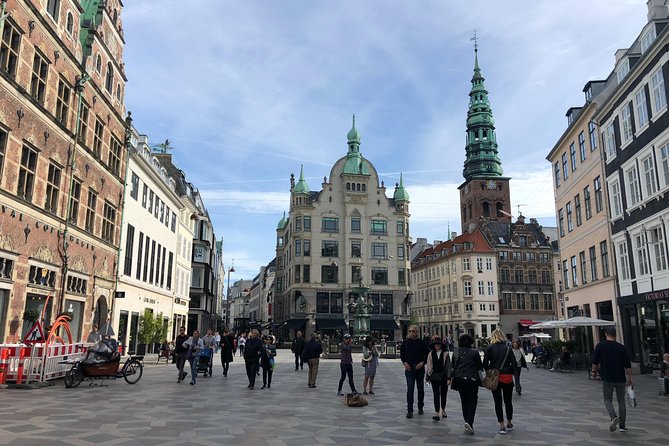
The tour starts at Højbro Plads (Højbro Pl., 1200 København, Denmark) near central pedestrian streets. If you are already planning to walk around Strøget later, this is a convenient launch point, since the meeting area puts you right where Copenhagen’s core action begins.
From there, the first stop is Copenhagen King’s New Square, which is basically Copenhagen’s big visual welcome. This square is closely tied to the city’s shift toward a more planned, royal-style layout. It was laid out by Christian V in 1670, and there is an equestrian statue of him in the center. Looking up at the surrounding facades makes the “new center” idea click.
I like this opening stop because it sets you up for what you’ll see later: squares, palaces, and landmarks that were designed to project power and stability. It helps you read the city instead of just walking through it.
You’ll also pass or notice several prominent buildings facing the square, including:
- Royal Danish Theater (from 1874)
- Charlottenborg Palace (from 1671, connected to the Royal Danish Academy of Fine Arts)
- Thott Palace (from 1683, now the French Embassy)
- Hotel D’Angleterre and Magasin du Nord
The practical takeaway: start here, and the rest of the walking feels more connected.
Strøget and the King’s New Square-to-old-town transition
A walking tour is only as good as the “how do I connect these dots” part. This one does that using streets that most people want to walk anyway, especially Strøget, Copenhagen’s main pedestrian shopping street.
Strøget is described as car-free and about 1.1 km long, running through the heart of the old city. That matters because it is the artery where you naturally see old Copenhagen’s everyday rhythm. Even if you do not plan on shopping, it is one of the best ways to understand the city’s shape.
As you move from square to square, you’ll keep noticing the same theme: Neoclassical facades, royal or civic buildings, and carefully placed open space. Copenhagen feels tidy, but not sterile, because the city planning still shows how the old center was organized.
If you are traveling with kids or people who need frequent photo breaks, this part of the day is usually manageable. The route is built around major waypoints, so you can pause without getting lost.
A few more Copenhagen options worth comparing
- Copenhagen Card-Discover: 80+ Attractions & Public Transport
★ 4.6 · 5,351 reviews - Copenhagen: Hop-On Hop-Off Bus Tour with Boat Tour Option
★ 3.9 · 4,122 reviews - From Copenhagen: Lund and Malmö 2-Country Tour
★ 4.7 · 3,807 reviews - Copenhagen: Highlights 3 Hour Bike Tour with a Local Guide
★ 4.8 · 2,312 reviews
Nyhavn canals, Amalienborg, and the 12:00 Royal Guard changing moment
Two of the most photographed areas in Copenhagen show up in this route.
Nyhavn
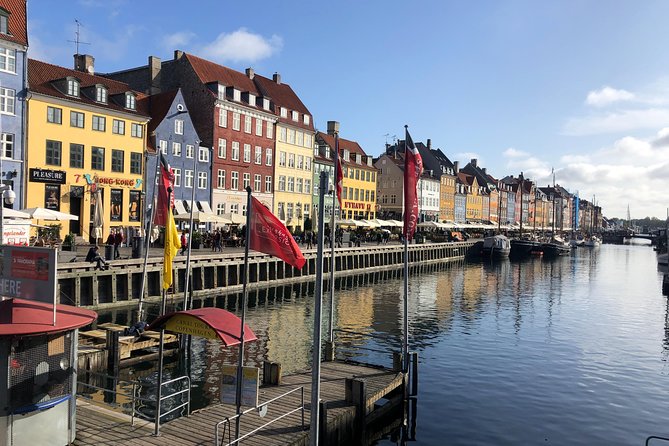
You will reach Nyhavn, the iconic canal area. It is included as a distinct stop, so you have time to actually look at the water and the colorful canal-front buildings instead of just passing by at street speed. Nyhavn is also a great reset point after civic buildings and squares because it shifts you into a more human, postcard view of the city.
Amalienborg and the Royal Guard at 12:00 noon
The royal highlight is Amalienborg Palace, described as a unique Rococo-style set of buildings where the Danish royal family still lives. This is the kind of sight that feels instantly important the moment you arrive, especially around the palace square.
Here’s the timing detail I really want you to note: the changing of the Royal Guard happens daily at 12:00 noon. The guard march runs from the barracks in Gothersgade by Rosenborg Castle, through the streets of Copenhagen, and ends at Amalienborg. That route is part of what makes the moment more than just a quick ceremony.
If your visit overlaps with noon, you are in luck. If you miss it, the palace architecture and the surrounding square are still worth your attention, but you’ll have less of the kinetic “watch and listen” payoff.
Four identical palaces to spot
Amalienborg is made up of four identical buildings, each tied to a different royal family member:
- Christian VII’s Palace (Moltke’s Palace), guest residence
- Frederik VIII’s Palace (Brockdorff’s Palace), home of the Crown Prince family
- Christian IX’s Palace (Schack’s Palace), home of the Queen
- Christian VIII’s Palace (Levetzau’s Palace), guest palace for Prince Joachim and Princess Benedikte, plus a public museum area in one building
As you look across the square, you can try matching what you see to the family roles. It makes the architecture feel personal instead of just decorative.
Rosenborg Castle stop for Christian IV architecture fans
You also get a stop for Rosenborg Castle. It is described as a Renaissance castle in Copenhagen, originally built in 1606 as Christian IV’s country summerhouse. That “summerhouse” detail matters, because it explains why the building is both grand and designed like a power project tied to the comfort of the monarch.
Christian IV’s influence is a thread in Copenhagen, and Rosenborg is one of the easier places to see that impact. If you’re the kind of traveler who likes to connect architecture to rulers and eras, you’ll appreciate that this stop fits into the tour’s overall story.
Even if you do not go inside (the provided data focuses on the tour stops rather than admissions here), the exterior and the context the guide gives can still help you place it in the city’s timeline.
Copenhagen Cathedral, Thorvaldsen sculptures, and why the inside matters
One of the most meaningful parts of the route is Church of Our Lady, also known as Copenhagen Cathedral. The tour description emphasizes the Neo-Classicist design by architect C.F. Hansen, with a foundation stone laid by King Frederik VI in 1817 and consecration on Whitsunday in 1829.
What I like about this stop is that it is not treated like a generic church visit. The site has a longer timeline on the same ground, since Bishop Absalon had a small chapel there earlier, and the original church was erected around 1200.
The tour also connects the cathedral to major Danish moments, including:
- The marriage of Margrethe I (as a child at the time, connected to Valdemar Atterdag’s decision in 1363)
- Funeral of Søren Kierkegaard in 1855
- The 2004 wedding of Crown Prince Frederik and Australian Mary Donaldson
And then there is the art inside that you’ll want to actually look for: Thorvaldsen sculptures, including Christ and the twelve apostles. The description points out Christ’s welcoming arm gesture above the altar, with the apostles watching from the nave sides.
There is also a dramatic historical note that makes the cathedral story feel heavier than you might expect. In 1807, during the British bombardment led by Admiral James Gambier and General Lord Cathcart, the cathedral was hit by an incendiary rocket and burned down.
Practical note for planning your photos and pacing: churches often have different visiting conditions by day and time. If you are aiming for specific interior viewing, stay flexible and rely on the guide’s lead for where and when you can best see what you want.
Gammeltorv, Nytorv, Caritas Well, and Rådhuspladsen civic views

After the cathedral, the tour moves back toward squares, and this is where Copenhagen’s urban design becomes easy to read.
Gammeltorv and Nytorv
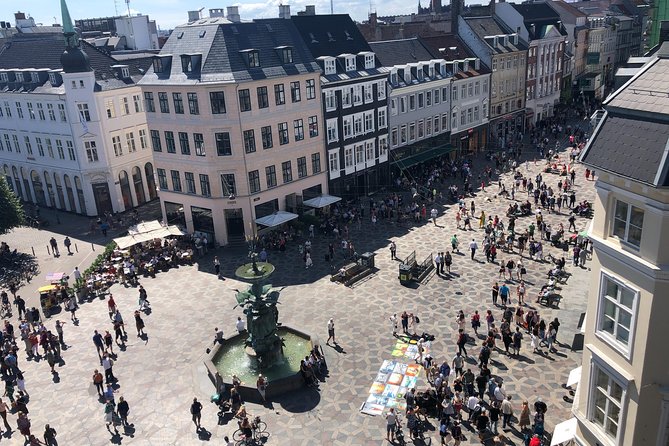
You’ll visit Gammeltorv and the adjoining Nytorv, which together form a shared space along Strøget. Gammeltorv dates back to the city’s foundation in the 12th century, but many of the buildings you see are from after the Great Fire of 1795, rebuilt in Neoclassical style.
A key detail you can look for is Caritas Well, a Renaissance fountain erected by King Christian IV in 1610. It is the kind of landmark that can be easy to miss if you are rushing, so having a stop dedicated to the square helps you notice it properly.
You’ll also see the Copenhagen Court House facade, which dominated the area and served as City Hall from 1815 to 1905. That civic function explains why the architecture feels so official.
Rådhuspladsen
You then reach Radhuspladsen, the city hall square. The tour description keeps this as a shorter stop, but it gives you that needed transition from old civic squares into the big “time to shift gears” end of the walk.
If you like finishing a city walk by moving from history to something playful, this is a good ramp. You’re not just ending at another building, you’re ending at an amusement park.
Ending at Tivoli Park with your included entrance ticket
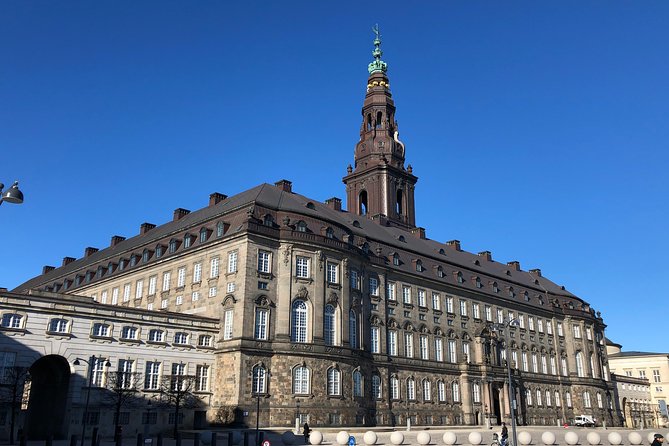
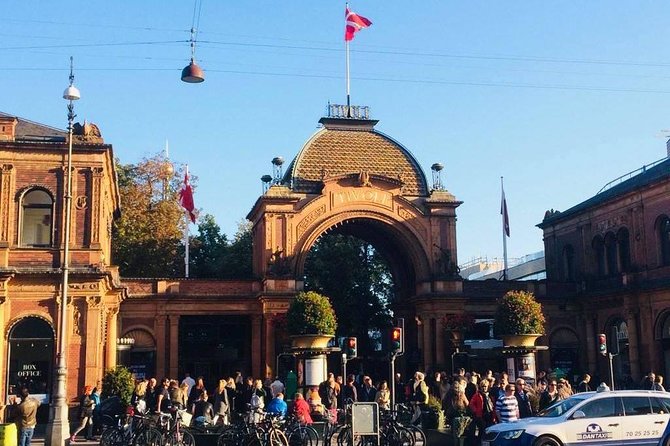
The tour ends at Vesterbrogade 3, 1630 København V, Denmark, at Tivoli Park, after the final sightseeing stops.
This is where the planning detail matters most: Tivoli entry is included, and you can stay as long as you wish, within opening hours and their terms. The last part of the tour is essentially about letting you take control. The guide gets you into place, then you choose how to spend your time.
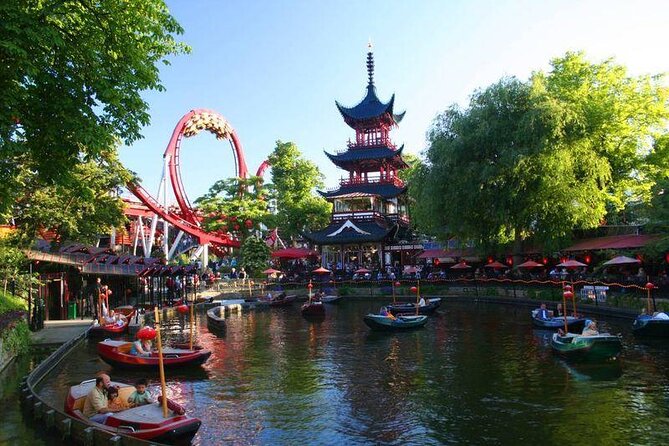
One more context point you will likely hear before you go in: Tivoli is described as a 175-year-old amusement park. Knowing that helps you understand why the park feels like it belongs to Copenhagen’s identity, not just a modern attraction.
Practical advice for your Tivoli time
- If you are arriving with the noon guard change behind you, plan on being hungry. Coffee and tea are not included on the tour, so consider a quick snack plan.
- If you want photo-heavy rides or must-do attractions, decide those first, then leave room for wandering. Tivoli rewards slow movement, not just checking off one thing.
- If you are traveling with kids or anyone who dislikes long lines, your skip-the-line access is your biggest time saver. Use it to do the most line-prone attractions first.
Guide quality: what to expect and how to get full value
This tour’s best experiences are usually tied to the guide. You can feel it in the way people describe the day: relaxed pacing, strong context, and patience with photo stops.
I’ve seen names connected with positive experiences like Felipe and Viviane, and it’s also mentioned that guides can be Danish locals. That local angle tends to matter when you want more than dates. It is the difference between hearing facts and understanding why a building or tradition exists.
That said, balance is important. There have been complaints that guides did not always deliver the level of detail some people expected, especially around specific cathedral art details like Thorvaldsen’s Christus and the apostles, and around knowing what you can access on the day. You cannot control everything, but you can control how you engage.
My advice: come with questions. If the interior art matters to you, ask where to look first and what you should notice. If the noon guard change is your priority, ask how to position yourself for the walk by the palace. When you ask good questions early, you usually get more out of the day.
Also, remember the tour excludes The Little Mermaid. If you care about it, do not assume this walk covers it.
Who this tour suits best
This is a strong fit for:
- First-time visitors who want major landmarks in a tight time window
- People who prefer a guided structure through central Copenhagen
- Travelers who want both culture and an easy next step, since Tivoli ends the walk
- Anyone who likes practical city orientation on days with limited time
It might be less ideal if:
- The Little Mermaid is your top priority and you want it handled as part of your main itinerary
- You want a museum-heavy day or long indoor exploration at every stop
- Your schedule is very inflexible around noon, since Amalienborg’s changing of the guard is at 12:00 noon and works best when you can align with it
Should you book Copenhagen Old Town & Tivoli Park?
I’d book this if you want a morning that feels efficient and satisfying. The combination of central old-town walking, big-sight stops, and included Tivoli Park entry is a tidy way to build a Copenhagen day that does not rely on luck.
Book it with eyes open if you are a checklist purist. This is a highlights-and-context approach, not a full Copenhagen deep program, and The Little Mermaid is excluded.
If you’re planning ahead anyway, aim to lock it in early. It’s noted that it is commonly booked about 52 days in advance, which tells me the popular slots can go quickly.
In short: if you want great bearings plus Tivoli payoff, this is a very reasonable use of time and money.
FAQ
How long is the Copenhagen Old Town & Tivoli Park walking tour?
It is listed as about 2 hours approx.
What is the price per person?
The price is $79.30 per person.
Is the tour offered in English?
Yes. It is offered in English.
Does the tour include Tivoli Park entrance?
Yes. The tour includes Tivoli Park general entrance fee for ages +8, and it ends at Tivoli so you can enter after the walking portion.
Is a skip-the-line entry included for Tivoli Park?
The highlights indicate skip-the-line entry to Tivoli Park is included for faster access.
Where does the tour start and end?
Start: Højbro Plads, 1200 København. End: Vesterbrogade 3, 1630 København V, at Tivoli Park.
What time does the tour start?
The start time is 10:00 am.
What does the tour include besides the guide?
It includes the local guide and Tivoli Park general entrance fee (+8).
Is coffee or tea included?
No. Coffee and/or tea are not included.
Can I cancel and get a full refund?
Yes. Free cancellation is available if you cancel at least 24 hours before the experience start time for a full refund.
How big is the group?
The tour has a maximum of 21 travelers.
Recently reviewed around Copenhagen
- The Forgotten Giants Private Tour★ 5.0 · 3 reviews
- E-Scooter guided tours in Wonderful Copenhagen★ 5.0 · 3 reviews
- Explore Copenhagen in 60 minutes with a Local★ 5.0 · 3 reviews
- E Biking Adventure to Kronborg Castle★ 5.0 · 3 reviews
- Danish Design Classic and Modern Style Self-Guided Audio Tour★ 5.0 · 3 reviews
- Departure by Luxury Vehicule Copenhagen to Copenhagen airport CPH★ 5.0 · 3 reviews
- Mikkeller Tastings – The Unusual Story of Beer and Mikkeller★ 5.0 · 3 reviews
- Copenhagen: Self Guided Scavenger Hunt and Tour★ 4.0 · 3 reviews
Walking Tours, compared.

Politically Incorrect Private Highlights Walking Tour
Read our review →
Group Walking Tour – City Highlights – 2 Hours
Read our review →
3h walking tour, small group max 10 people Copenhagen
Read our review →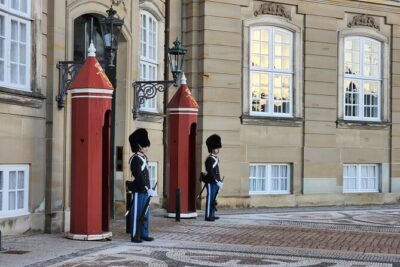
Walk & Canal Tour: Copenhagen Highlights + Changing of the Guards
Read our review →

Browse the lists this tour appears in