

Reviewed · CHRISTIANSHAVN TOURS
Copenhagen Alternative Private Tour: Vesterbro & Christianshavn
If you think Copenhagen is all canals and postcard facades, this tour is interesting because it takes you to the city’s real-life neighborhoods, where history shows up in streets, walls, churches, and even housing pressure. It’s a private walk that trades the usual checklist sites for the kind of context that helps you read the city as you pass it.
I especially love how the route connects places in a way normal sightseeing misses, like old fortifications turned into street grids and WWII signals woven into a working neighborhood. I also like that you get a local guide who can answer follow-up questions, with past groups praising guides such as Alessandro, Grazi, and Karolina for being personable and spot on with details. One possible drawback: the pace is street-level and focused on sights, so you will not get a full-on food tour unless you book the Full Option.
Key highlights to watch for
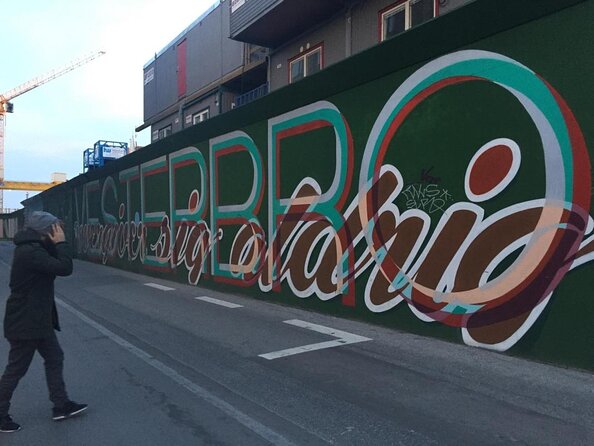
- Street history you can see: a moat turned into Viktoriagade, plus walls built like bullet traps.
- WWII details in plain sight: Istedgade, and the BBC radio transmissions via Stjerne Radio.
- Neighborhood variety: meatpacking markets, a haymarket past, and today’s city life.
- Practical Christiania approach: you end near Christiania, but the guide can’t enter.
- Good use of time: a 3.5- to 4-hour loop that mixes Vesterbro grit with Christianshavn calm.
- Stops with meaning, not just photos: churches and institutions tied to real community support.
Vesterbro and Christianshavn, two moods in one Copenhagen walk
This is an “alternative Copenhagen” tour in the best way: not loud or gimmicky, just grounded. You start in Vesterbro, where Copenhagen’s industrial and working-class layers show through everything from old markets to late-war resistance stories. Then you shift into Christianshavn, where the streets slow down and the architecture leans more theatrical, especially around the baroque church and the riverfront views.
The big value here is that you learn to connect what you’re seeing with why it’s shaped the way it is. That means you end up with more than landmarks. You get a map of ideas, like how defensive structures become streets, and how neighborhoods evolve from housing shortages into communities people travel for.
More of Christianshavn on foot:
- Hippies & Christianshavn Walking Tour
★ 5.0 · 249 reviews - Private Walking Tour of Christianshavn
★ 5.0 · 122 reviews - Private Hippies & Christianshavn Politically Incorrect Tour
★ 5.0 · 114 reviews
Viktoriagade: the moat under your feet
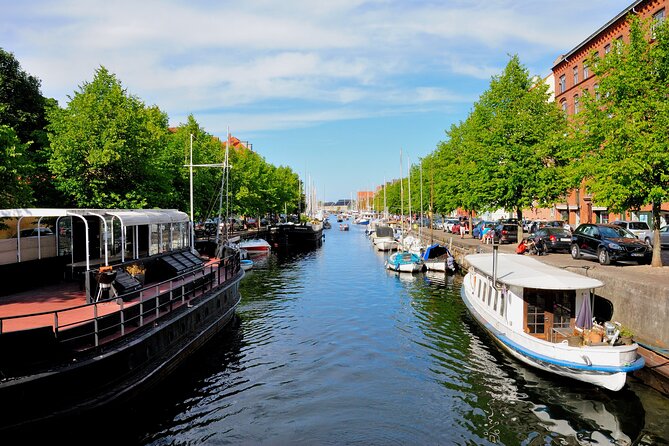
Your walk opens at Viktoriagade, a street with a surprisingly literal past. This area began as fortifications created under Christian IV around 1600, protected by a moat. Later, when redevelopment started in 1950, that moat looked less like defense and more like an open sewer. The solution was bold and very Copenhagen: the street goes right over the old moat.
You also pick up the “charity city” angle. Land along the street was sold in lots starting in 1856, and many mid-1800s buildings were dedicated to charitable housing, including places for officers’ widows. If you’re the kind of traveler who likes to understand the city’s social priorities, this stop gives you a real theme for the rest of the day, because it’s not just a pretty street. It’s a system that mattered to people.
What to expect: a short stop with good context, right where the physical layout tells the story.
Watch for: you’ll be walking soon, so keep your pace steady and save photos for when the guide finishes the explanation.
Det Ny Teater and the pass-through idea in Vesterbro
Next is Det Ny Teater, opened in September 1908. It was built as one of Denmark’s larger theaters, but the design included something practical: a passage that helped connect Gammel Kongevej to what is now Vesterbrogade. In other words, the theater wasn’t just a destination. It also reshaped movement through the neighborhood.
This matters because Copenhagen often works like that, not with monuments alone, but with how buildings adjust the flow of daily life. Even if you’ve seen theaters before, this one teaches you to look for how city planning and architecture show up in small conveniences.
Værnedamsvej and Saxogade: beer gardens to housing pressure
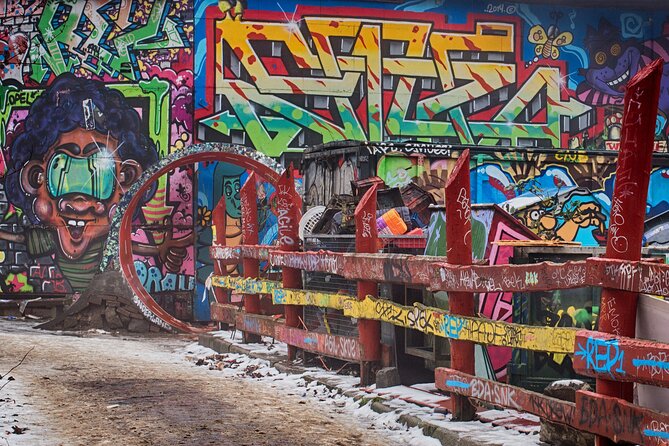
Værnedamsvej is a quick name lesson with real social roots. The name links to Werner Dam, a beer collector who opened a popular beer garden in the 1700s. It was also known as Slagtergaden, literally Butchers’ Street, due to the volume of butchers there.
Then you move to Saxogade, where the story turns sharply human. In the early 1950s, residents sent a large letter of protest because they were tired of miserable housing conditions. Think overcrowding in small one-room apartments, where sleeping capacity could reach up to 10 people. The guide’s framing usually puts the emphasis on children, because cramped housing is not an abstract problem when families lived this way.
Why you’ll like this part: it shows how neighborhoods are shaped by ordinary pressure, not only by royal decisions or big buildings.
Consideration: if you prefer only upbeat topics, this stop may feel heavy, but it’s brief and grounded in real context.
A few more Copenhagen options worth comparing
- Copenhagen Card-Discover: 80+ Attractions & Public Transport
★ 4.6 · 5,351 reviews - Copenhagen: Hop-On Hop-Off Bus Tour with Boat Tour Option
★ 3.9 · 4,122 reviews - Private Walking Grand Tour of Copenhagen
★ 5.0 · 3,953 reviews - From Copenhagen: Lund and Malmö 2-Country Tour
★ 4.7 · 3,807 reviews
Skydemuren and Istedgade: the bullet trap wall and the street of WWII signals
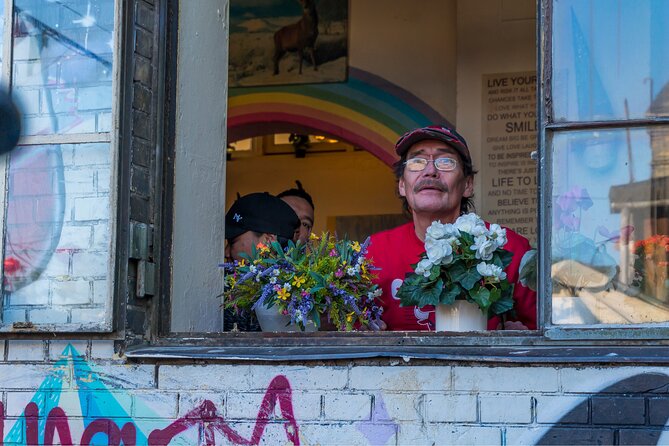
Skydemuren is one of those Copenhagen sights that looks like architecture first, and defense second. It’s a castle-like wall with two residential buildings beside it, built as a bullet trap. The job was to protect traffic along the then-new street, Istedgade, from projectiles from the Royal Danish Army’s shooting range at Skydebane (where Skydebanehaven is today). The wall also creates a point de vue for Skydebanegade, which runs with richly decorated, uniform houses.
Then comes Istedgade itself, one of Vesterbro’s most important streets. It is named for the 1850 Battle of Isted in the First Schleswig War. During World War II it was tied to Danish resistance, and there’s even a famous resistance slogan that captures the street’s stubborn symbolic role. You’ll hear it in the right tone, because the point is not drama for drama’s sake. It’s about how people used places as coded hope.
And yes, Istedgade has a modern edge too. It’s known for a drug-hit period and for being one of the largest red light districts in Scandinavia. I like that the tour does not sanitize this. You walk through it with historical context, so it becomes easier to understand rather than just judge.
Stjerne Radio at Istedgade 31: BBC broadcasts through loudspeakers
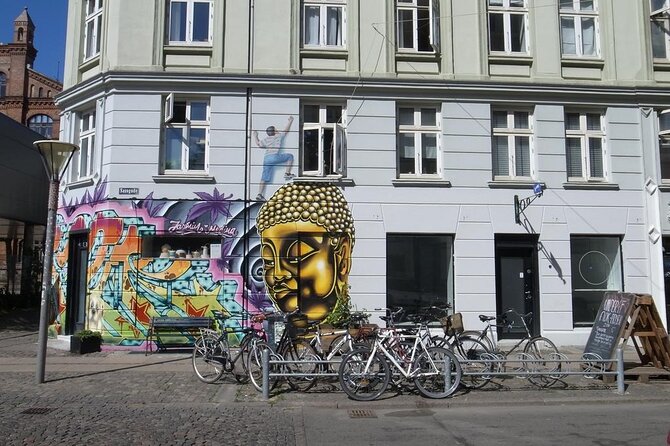
At Istedgade 31, you stop at a WWII communication story that is easy to miss on your own. Stjerne Radio opened in September 1942, run by Carl Munck and JK Søndergård. They began transmitting BBC English broadcasts through loudspeakers, and it became an essential tool for Danish resistance.
This is one of those moments where the city becomes a classroom without the lecture feeling. You’re standing in an ordinary street environment, yet you’re also learning how sound and information mattered during occupation. It makes your later memories stick.
Meatpacking District and Oksnehallen: from cattle capacity to today’s scene
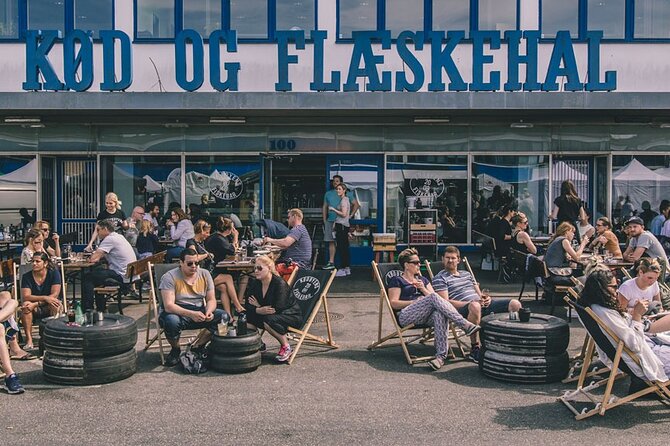
The tour shifts into the Meatpacking District, a revitalized industrial zone now known for trendy dining and nightlife. Even if you don’t plan to party, this stop works because it shows Copenhagen’s ability to reuse infrastructure instead of erasing it.
Oksnehallen is the standout structure here. It is an exhibition space in an old market area, part of the brown zone of the Meatpacking District. Built in 1891, it was set up to house merchant offices and had capacity for about 1,600 cattle. The market later remained in use until the White Zone opened in the 1950s.
If you’re wondering why this matters on an alternative tour, it’s because the building’s purpose explains the neighborhood’s later transformation. Industrial and market spaces become cultural spaces, and once you know the original function, you see the architecture differently.
Halmtorvet haymarket and the old city gate connection
Next is Halmtorvet, Copenhagen’s haymarket story. It originally was just inside the Western City Gate where City Hall Square sits today. It closed on January 1, 1888, then relocated outside the new Livestock Market, which opened in 1879. Market days were Wednesday and Saturday, with trade including hundreds of loads of hay and straw for cattle and horse stables across the city.
This is a surprisingly useful stop if you want to understand how Copenhagen fed itself, literally. You’ll also get a sense of how the city moved outward as needs changed.
Support institutions in Vesterbro: Men’s Home and Maria Church
Two quick but meaningful stops show you a different side of “alternative.” The Men’s Home for homeless is a private organization established in 1910 and subsidized by the Danish state. The aim is to help homeless and vulnerable people recognize and use their own resources to build a good life and contribute to a diverse society.
Then Maria Church, a small church opened in 1909, is used as a shelter for homeless people, families in need, and other socially marginalized groups. It provides daily care, including support for vulnerable groups such as illegal immigrants, drug addicts, prostitutes, and people whose lives are criminalized.
You get in and out fast, but these stops are valuable because they ground Copenhagen in care systems you will not notice unless someone points them out. It also helps you see the city as more than tourism.
København H to Knippelsbro: from rail power to the drawbridge to Christianshavn
The walk pushes toward Copenhagen’s rail hub, København H. The station was built in 1911, inspired by the architectural style of the town hall building. It’s the largest railway station in Denmark, with 7 platforms and 13 tracks. For a city day that includes history and neighborhood life, having a stop at the transportation engine makes the whole route feel more realistic. You’re seeing where people actually move.
After that you cross toward the bridge. Knippelsbro is a 115-meter drawbridge built in 1937, connecting Copenhagen with Christianshavn. The name comes from Hans Knip, the operator who collected tolls from passing ships back in 1641, and who lived with his family on the bridge. It’s a small reminder that even bridges have working stories, not just scenic ones.
Christians Kirke and Strandgade 4: changing congregations and changing industries
Christians Kirke is a rococo church built between 1754 and 1759. It used to be called Frederik’s German Church, named after Frederick V, and for many years served the German-speaking congregation that wanted their own church. It’s a good stop if you like how cities reflect migration and cultural needs in architecture.
Then you pass by Strandgade 4, tied to Denmark’s industrial identity. The building dates from the 1780s and until recently housed the DieselHouse Museum, which told the story of B&W, going back to 1843 and a one-man smithing workshop. B&W later became one of Denmark’s biggest workplaces, and it held that status for a hundred years ahead of its time, with the symbol tied to Danish industry from 1865 to 1979 and today connected to MAN Energy Solutions. Even without museum time, the street-level story makes the architecture feel purposeful.
Asiatisk Plads and Sankt Annae Kirke: company power, then listed streets
Asiatisk Plads is tied to the Danish Asia Company, which operated from 1732 to 1843. Today the area is used by the Ministry of Foreign Affairs and a convention center. That’s a strong example of how a location can shift from trade-era power to government and diplomacy.
Then there’s Sankt Annae Kirke, with listed buildings dating from the 1600s to 1700s, including a row of houses 8-22 with remains from some of the oldest houses in Copenhagen, built around 1650. Number 14 is noted as especially well preserved. If you enjoy walking past preserved street fabric, this stop is one of the best “slow down and notice details” moments on the route.
Wildersgade to Wilders Plads: cobblestones, timber framing, and water views
Wildersgade is a cobblestone street that dates to the founding years of Christianshavn, from 1617 to 1622. It’s quieter today, with mansions, old houses, and warehouses from the 1700s to 1800s, which makes it a nice contrast after busier parts of Vesterbro.
Wilders Plads then brings you to the water. It used to be a busy market square but today is a good place to relax and enjoy the views. You’ll also hear about a very expensive marina there, and you’ll see Wilders Plads 10, a beautiful two-story timber-framed house built in 1736 as a sailmaker’s workshop and housing.
Church of Our Saviour: twisted spire and the climb theme
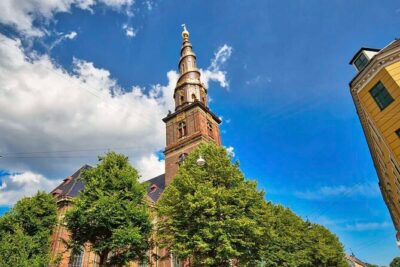
The Church of Our Saviour is the baroque headline in this area. It’s famous for its twisted spire and an external spiral staircase that climbs to the top. It’s also a living parish church for about 8,000 people.
Even if you don’t climb, this stop gives you a sense of why Christianshavn feels different. The church reads as both a landmark and a neighborhood institution.
The yellow naval building and the Christian IV defense ring idea
Along the route you also see a big yellow neoclassical building from 1754 to 1756. It is listed and was used as a naval hospice, then housed the Danish Naval Museum, Orlogsmuseet, until 2016. Nearby, the tour context ties Christianshavn’s layout to defense planning from Christian IV’s era, designed to close the ring of protection and prevent attacks from the Swedes. It’s the kind of framing that helps you understand why the area’s geometry and waterfront feel the way they do.
Freetown Christiania: what you can expect when the guide must stop
The tour ends at Freetown Christiania, a partially self-governed neighborhood of about 1,000 residents. It began in 1971 when a group of hippies protested the lack of housing on military land abandoned by the Danish army. It covers about 34 hectares and is described as the second most visited sight in Copenhagen after Tivoli, with half a million tourists visiting per year.
Here’s the key practical detail: the guide will not go with you into Christiania because they are not allowed. That means you arrive with context, you get to ask any last questions before the boundary, and then you explore on your own while staying respectful of the community rules.
Smart move for you: bring time to wander slowly. Christiania is not the kind of place where you only want one photo and then leave.
Price and what your money buys in a private 3.5 to 4 hours
At $147.96 per person for a 3.5- to 4-hour private tour, you are paying for three things: private pacing, a local guide, and admissions or inclusions that make the walk smoother.
What you get for sure includes a private tour with a local guide, and metro tickets. The station entry at København H is listed as included. Also, many stops are marked free, so you are not constantly paying for attractions on the side.
The Full Option is where the value changes if you want food. It can include a local tasting and a drink in a traditional restaurant, plus lunch in a classic Danish restaurant. One thing to note: if you book expecting a full food-focused tour but you only get the tasting component, you might feel shortchanged. If you’re the kind of traveler who wants “story first, bites second,” you’ll probably be happy with the standard setup. If you want both, pick the Full Option.
As for timing, this is a walking tour. Even at a guide-led pace, plan for real time on your feet, not just short strolls. Good shoes help.
Who this tour suits best, and who should reconsider
This is for you if you like Copenhagen that feels lived in. If you enjoy WWII context, city planning details, and the way neighborhoods hold both hardship and community systems, you’ll get a lot out of it. It also suits you if you want a guided alternative to the typical canal-and-castle loop, especially when you care about understanding local streets like Istedgade and the industrial-to-market-to-cultural transformations near Meatpacking.
You might reconsider if you dislike heavier social topics, because you will walk through places tied to housing pressure and homelessness support. You should also reconsider if you want a purely scenic, low-walking day, because the day is structured as a series of short stops plus continuous transit on foot.
Should you book this Copenhagen alternative private tour?
I’d book it if you want Copenhagen with layers. You’ll walk past real neighborhoods and come away with specific explanations, like why Viktoriagade sits over an old moat and how Stjerne Radio helped resistance by spreading BBC English through loudspeakers. You also get a clear path into Christianshavn, ending at Christiania with the right expectations about the guide boundary.
I’d skip it only if you want a classic museum-only plan, or if you are set on a full meal experience without choosing the Full Option.
If your goal is to understand the city by how it was built, rebuilt, and lived in, this tour is a strong use of half a day.
Recently reviewed around Copenhagen
- The Forgotten Giants Private Tour★ 5.0 · 3 reviews
- E-Scooter guided tours in Wonderful Copenhagen★ 5.0 · 3 reviews
- Explore Copenhagen in 60 minutes with a Local★ 5.0 · 3 reviews
- E Biking Adventure to Kronborg Castle★ 5.0 · 3 reviews
- Danish Design Classic and Modern Style Self-Guided Audio Tour★ 5.0 · 3 reviews
- Departure by Luxury Vehicule Copenhagen to Copenhagen airport CPH★ 5.0 · 3 reviews
- Mikkeller Tastings – The Unusual Story of Beer and Mikkeller★ 5.0 · 3 reviews
- Copenhagen: Self Guided Scavenger Hunt and Tour★ 4.0 · 3 reviews
Christianshavn Tours, compared.
Private Hippies & Christianshavn Politically Incorrect Tour
Read our review →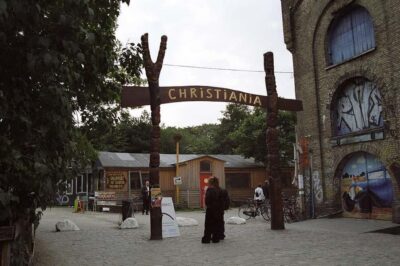
Copenhagen & Christiania : Guided Bike Tour in French
Read our review →
1.5-hour Private Walking Tour of Christianshavn
Read our review →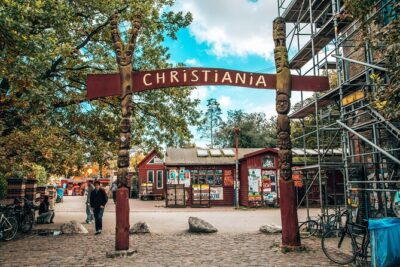
Copenhagen Christiania: Hidden Stories Self-Guided Adventure
Read our review →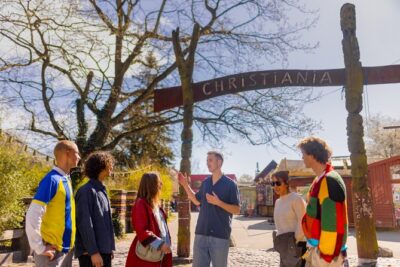
Copenhagen Christiania and Christianshavn Guided Walking Tour
Read our review →
Browse the lists this tour appears in