
Reviewed · WALKING TOURS
2-Hour Walking Introduction to Copenhagen and its Main Sights
Copenhagen can feel big on your first day, but this 2-hour walk makes the city make sense fast. I like the small-group setup and the headset so you can actually hear the guide as you move. One consideration, though, is that it is a brisk, on-your-feet route, so comfy shoes matter.
You also get a guide who mixes city storytelling with real-world advice. If you end up with a guide like Jens or Rasmus, you can expect lively, clear explanations and plenty of Q and A about where to go next.
Finally, it is a good value for first-timers because it covers major sights in a tight loop and ends in a perfect area to keep wandering. The only real drawback is that a couple of bigger stops are not included, so you might need to plan extra visits later if you want to go inside.
Key points worth knowing
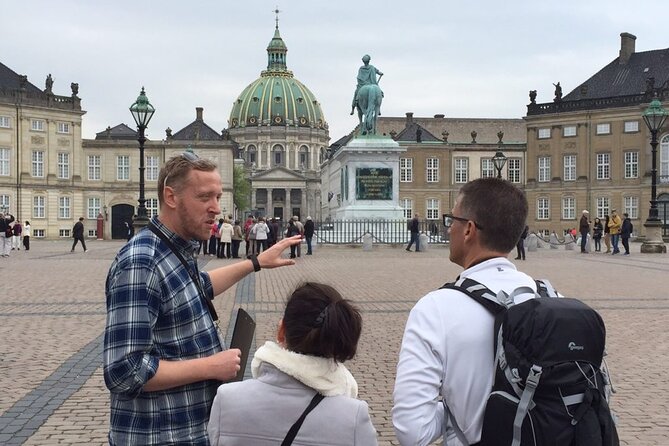
- 2 hours, small group (max 10), great for getting your bearings without feeling rushed by a crowd
- Headset included (not required), so you can follow the stories even when walking
- Copenhagen’s power sites and royal landmarks are covered on foot, not just photographed from afar
- A practical ending at Amalienborg that can line up with the changing of the guards
- Mix of free highlights and a few paid interiors, so you control how much you want to enter
- You get a small map plus next-steps tips, useful for turning the walk into a full day plan
Why this 2-hour intro walk works so well
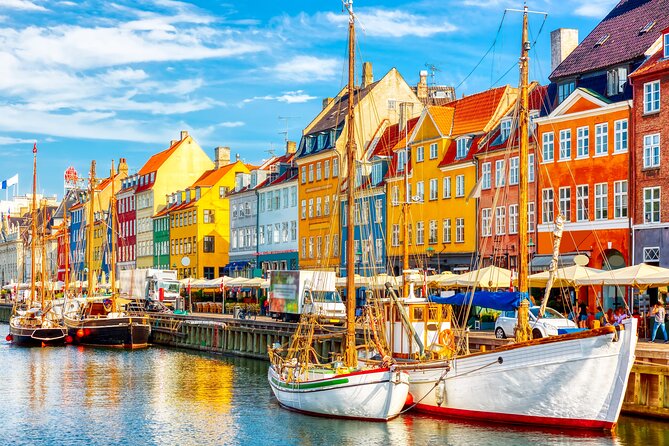
This is the kind of tour that helps you stop seeing Copenhagen as a blur of streets and start seeing it as a place with logic. In just two hours you move through the city’s key anchors: civic power, royal Denmark, trade and harbor history, and the classic postcard streetscape of Nyhavn.
What I especially like is that it is not only facts on signs. You get interpretation, plus little details that explain why each spot matters. That matters because Copenhagen is a city where the small visual cues tell big stories.
The other reason it works is the pace. You are not trying to do “everything.” You are doing enough to feel oriented, then you decide how to spend the rest of your trip.
More walking tours in Copenhagen:
- Private Walking Grand Tour of Copenhagen
★ 5.0 · 3,953 reviews - Copenhagen Highlights Walking Tour
★ 5.0 · 2,324 reviews - Politically Incorrect Private Highlights Walking Tour
★ 5.0 · 1,244 reviews
Where you start at Rådhuspladsen, and why the route makes sense
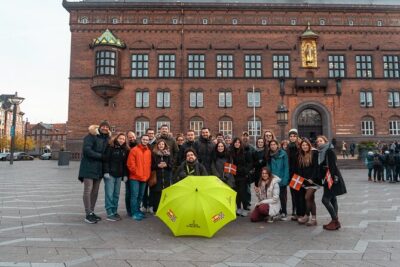
You meet at the Statue of Andersen at Rådhuspladsen in central Copenhagen. That is a smart starting point because it puts you near major transit and near the city’s public-life center.
From there, the walk is set up to flow outward and then back toward the royal waterfront area. You end at Amalienborg Palace, so your tour finishes where many people naturally want to explore next.
Also, the time you spend is efficient. The tour duration includes travel time, and most stops are around 6 to 15 minutes. That means you get context without turning the experience into a long sit-down lecture.
City Hall Square: civic Copenhagen and a stadium-size sense of pride
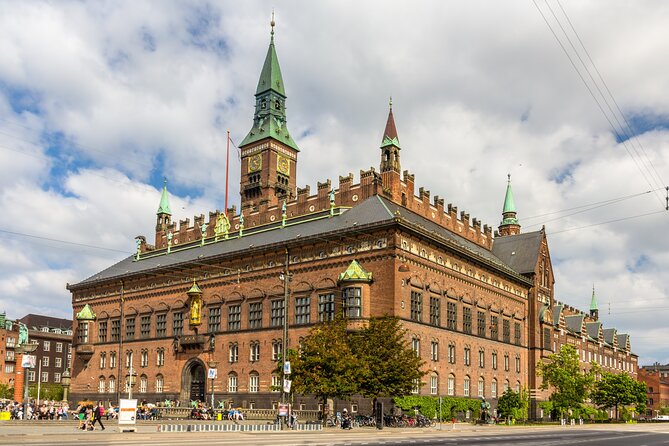
Your first stop is City Hall Square, the central gathering place where Danes show up in huge numbers to celebrate major wins, like big sporting victories or wartime moments. Even if you have never been to Denmark, you instantly understand that this square is about collective identity, not just architecture.
You then see the City Hall itself, built in 1905, which is where the city administration lives. It is a classic Copenhagen “this is how the city runs” moment, and it sets you up for the next stop, where Denmark’s national power lives.
Tip for your photos: keep an eye on the mix of open space and landmark buildings. This square helps you learn the city’s scale, which makes later streets feel easier to navigate.
Tivoli Gardens, the pedestrian shopping street, and the bishop who founded Copenhagen
After City Hall Square, the walk threads through the area around Tivoli Gardens. Tivoli is famous as one of the world’s best-known amusement parks, and the unusual part is that it sits inside the middle of a working city. That contrast is a recurring theme in Copenhagen: recreation and history share the same space.
You also pass by the world’s longest pedestrian shopping street. This is one of those “Copenhagen everyday life” stretches. Even if you do not shop, it shows how pedestrian-friendly the city is, and why walking feels like the natural way to travel here.
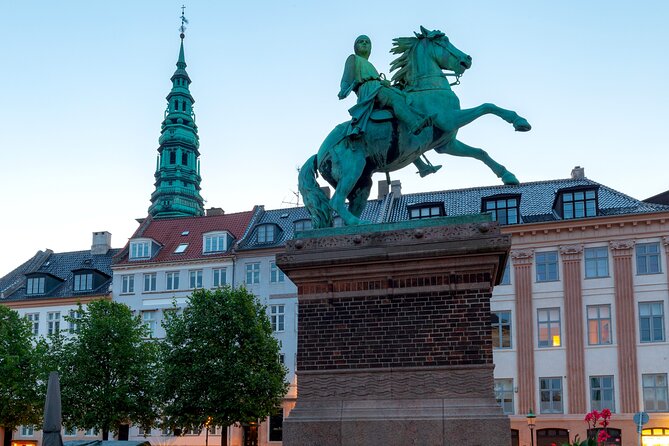
Then you get an equestrian statue of the bishop who founded Copenhagen in 1189. This is an early-history anchor, and it helps you understand how the city has layers, not just a single origin story.
If you like history that explains why things are where they are, this section is a strong start.
A few more Copenhagen options worth comparing
- Copenhagen Card-Discover: 80+ Attractions & Public Transport
★ 4.6 · 5,351 reviews - Copenhagen: Hop-On Hop-Off Bus Tour with Boat Tour Option
★ 3.9 · 4,122 reviews - From Copenhagen: Lund and Malmö 2-Country Tour
★ 4.7 · 3,807 reviews - Copenhagen: Highlights 3 Hour Bike Tour with a Local Guide
★ 4.8 · 2,312 reviews
Christiansborg Slot: Denmark’s government district in one big complex
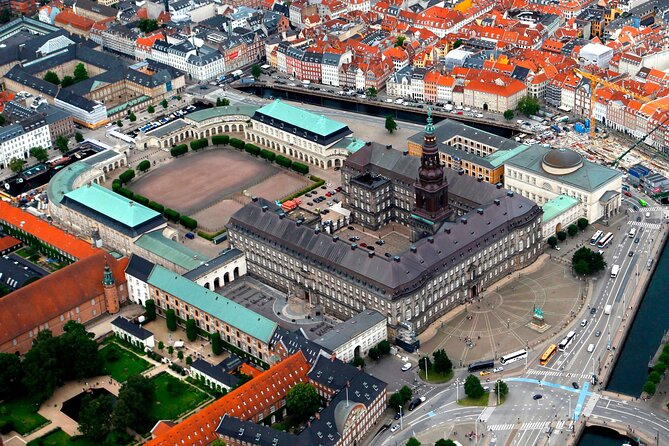
Next comes Christiansborg Slot, a huge palace complex that holds Denmark’s parliament, the supreme court, and the prime minister. In other cities, those institutions are spread out. Here, they are concentrated, so you understand the political weight of the area quickly.
From this spot, the guide points out other government-related buildings and explains that Copenhagen was founded here. That is the key value of this stop. It turns a landmark into a mental map: this district is where governance, law, and the city’s origins overlap.
You do not need to enter to get the point. The walking orientation helps you connect what you see outside to what you read later when you visit museums.
Christian IV’s Brewhouse and the harbor navy story
You then move to Christian IV’s Brewhouse, a massive brick building from 1618 located in the harbor area. This is where the walk becomes more than pretty scenes. You get a specific story about how the harbor functioned as a navy base during the Renaissance.
This matters if you want to understand why Copenhagen grew into a major city. Water access and naval power shaped trade, wealth, and infrastructure. Watching the tour shift from civic and royal Denmark into maritime history helps you understand the city’s “why.”
One drawback: admission is not included for this stop. You can still enjoy the exterior and the explanation, but if you want to go in, you should budget extra.
The old stock exchange with the dragon-tailed tower
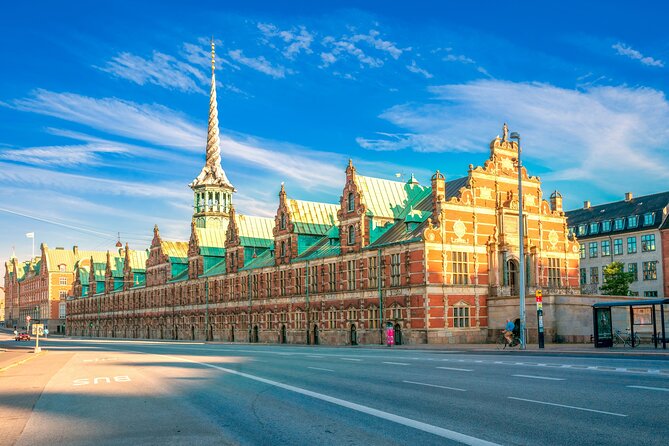
After the harbor brewhouse, you see the old stock exchange from the early 1600s. It has a striking tower detail described as tails from three dragons.
Even if you are not a “detail hunter,” a landmark like this gives you something to look for later when you wander on your own. It also adds a layer of commerce to the story so far, balancing government, monarchy, and naval power with finance and trade.
If you enjoy architecture trivia and city legends, this is the kind of stop that makes Copenhagen feel more personal.
Holmens Kirke: where political leaders and royalty intersect
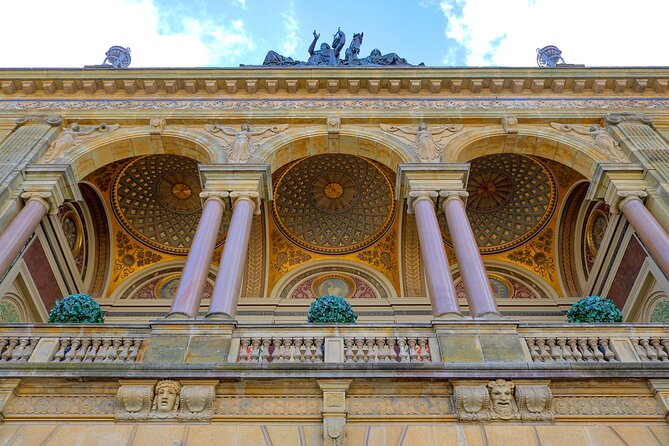
Holmens Kirke is a 1500s church where prime ministers are buried and royals are married. That combination alone tells you this is not just a religious building. It is a place tied to state and social hierarchy.
You enter the church if it is open, which depends on church activities. So, plan for the outside view as the sure thing, and treat interior entry as a bonus.
It is a short stop, about 6 minutes, but it lands well after the stock exchange. The tour is quietly building a theme: who has influence in Copenhagen, and how that influence is recorded in stone.
King’s New Square: Renaissance design and an easy walk to more icons
Then you reach Copenhagen King’s New Square, a beautiful Renaissance square surrounded by impressive buildings from the 1700s. It feels like the city is switching gears into a more formal “you are close to royalty” zone.
The guide finishes the main walking loop here by explaining how to get back or continue exploring on foot to Nyhav, the Royal Amalienborg Palace, and the Little Mermaid. This is one of the most practical parts of the tour because you leave with a ready-made next plan.
If you only have one day and you want a route that makes sense without guessing, this is exactly the kind of advice that helps.
Nyhavn: the colorful postcard street with a real backstory
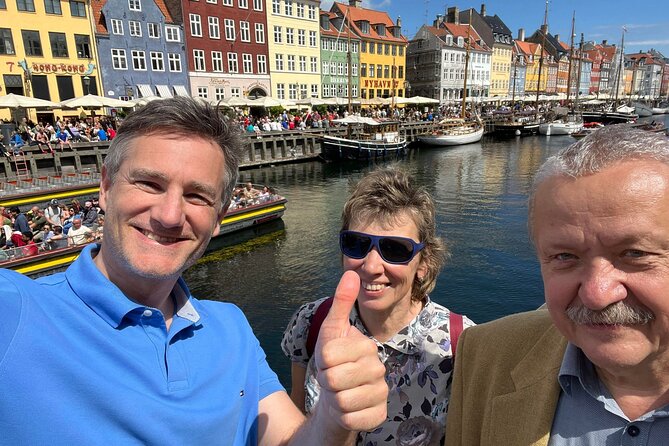
Nyhavn, the iconic New Harbour, is next. The colorful houses are a magnet, but the story makes the area more than a photo stop. Nyhavn was dug out in the 1600s by Swedish prisoners of war.
That turns what might seem like just a lively canal scene into an example of how Copenhagen’s history includes conflict, labor, and city-building under pressure. It also gives you a clearer timeline for why the harbor area developed the way it did.
This is also a good moment to slow down, look at the façades, and get a sense of where the city’s waterfront energy lives. In at least one case, the walk has been timed so people can grab a cold drink in Nyhavn after walking hard, which is a thoughtful touch when weather and crowds are factors.
Amalienborg Palace: royal residence, wartime drama, and possible changing of the guards
The tour ends at Amalienborg Palace, where the king and family live in four huge mansions from the mid 1700s. This stop adds modern political life back into the picture, because it connects monarchy to how Denmark presents itself today.
The historical note here is especially striking: dramatic fights took place at Amalienborg during World War II. That detail gives you a deeper sense of gravity when you are standing in a place that also feels ceremonial.
One of the best benefits of ending here is timing. The walk has been arranged in a way that can line up with the changing of the guards ceremony at the palace. If you catch it, you get a lively, on-site moment that feels distinctly Copenhagen.
Admission is not included for the palace, so if you want to go inside, that becomes your next decision. Even without entry, you still get the orientation payoff because you finish at a major hub for onward exploration.
Price, value, and what you get for $40.41
At $40.41 per person for about two hours, you are paying for three things that matter on a first visit.
First, you buy efficiency. The route covers multiple top sights in one compact loop, including civic, government, harbor history, religious heritage, and royal Denmark.
Second, you buy guidance quality. The tour is run with an English-speaking local guide, and the headset makes a big difference for clarity as you walk through busy streets. You are not stuck straining to hear details.
Third, you buy a plan for after. You get a small map plus tips on what else to see and how to get there, so you can convert this intro into a fuller itinerary instead of ending the walk wondering what comes next.
If you enjoy asking questions, this is also a good format. Many people feel comfortable steering the guide with their interests, whether that means architecture, Danish customs, or where to eat.
What’s included versus what you may pay for later
Here is the practical split.
Included:
- guided walk in a small group
- local English speaking guide
- headset so you can hear the guide throughout (optional to use)
- small map of the city
- tips on what else to see and how to get there after the walk
Not included:
- admission tickets are not included at every stop
- Christian IV’s Brewhouse lists admission as not included
- Amalienborg Palace lists admission as not included
- Holmens Kirke can be entered only if it is open, and it is free if you can go in
So you can do this tour without feeling forced to pay for every interior. You will still get plenty of exterior sights and the stories that connect them.
How to make the most of the 2-hour format
This walk is best when you treat it as a first-day tool, not a final exam. If you do it early, you will understand where major landmarks sit relative to each other, and you can plan museums and longer visits with less guesswork.
A few simple moves help:
- Wear walking shoes you already trust, because you cover a lot of ground in a short time.
- Use the headset, especially if you want to catch the more detailed historical explanations.
- Come with one or two questions. Ask for what to see next based on your interests, like royal sights, harbor history, or food neighborhoods.
If the guide also shares practical restaurant or bakery ideas, take them. One example from the tour experience includes a bakery recommendation called Hart, and another includes a stop some people used as a sweet ending at La Glacé with cakes and hot chocolate. Even if you choose different places, those pointers often shorten your research time.
Who should book this walking introduction?
I think this tour is a strong match if:
- you have limited time in Copenhagen and want a fast orientation
- you like your history tied to real locations, not just dates
- you prefer a small-group setting rather than a big bus-style overview
- you want an English-speaking guide who answers questions
It may be less ideal if:
- you need a slow, fully seated experience
- you hate walking routes that are packed with quick stops
- you expect every major site to be entered during the tour, because some are outside and some have paid admission if you want to go in
Should you book this tour?
Book it if you want Copenhagen to click quickly. For the money, you get a tight loop through the city’s biggest themes, a guide who explains the stories in clear English, and a useful ending near Amalienborg that can overlap with changing of the guards.
If you are the type who loves turning a visit into a personal plan, this one pays off. You will come away with a mental map, a shortlist of what to explore next, and a better sense of why the city developed the way it did.
FAQ
How long is the Copenhagen walking introduction?
The tour lasts about 2 hours.
What is the price per person?
The price is $40.41 per person.
Is the tour offered in English?
Yes. The tour is offered in English, with a local English speaking guide.
What is included during the walk?
You get a guided walk in a small group, a local English speaking guide, a headset to hear the guide clearly, a small map, and tips on what else to see and how to get there after the walk.
Do we enter all the sights on the tour?
No. Some stops are free, and you enter Holmens Kirke only if it is open. Christian IV’s Brewhouse and Amalienborg Palace list admission as not included, so you would need to pay separately if you want to go inside.
Where does the tour start and where does it end?
It starts at the Statue of Andersen at Rådhuspladsen and ends at Amalienborg Palace at Amalienborg Slotsplads.
What if the weather is bad or I need to cancel?
This experience requires good weather. If it is canceled due to poor weather, you are offered a different date or a full refund. You can cancel up to 24 hours in advance for a full refund.
More 2-Hour Experiences in Copenhagen
- Copenhagen: Group Walking Tour – City Highlights – 2 Hours
★ 4.7 · 1,088 reviews - Copenhagen: 2-hour City Highlights Bike Tour
★ 4.7 · 632 reviews - Segway Tours Copenhagen w. Guide & Concierge Service. 2 Hours+
★ 5.0 · 550 reviews - 2 Hour Copenhagen Segway Tour
★ 5.0 · 404 reviews
Recently reviewed around Copenhagen
- The Forgotten Giants Private Tour★ 5.0 · 3 reviews
- E-Scooter guided tours in Wonderful Copenhagen★ 5.0 · 3 reviews
- Explore Copenhagen in 60 minutes with a Local★ 5.0 · 3 reviews
- E Biking Adventure to Kronborg Castle★ 5.0 · 3 reviews
- Danish Design Classic and Modern Style Self-Guided Audio Tour★ 5.0 · 3 reviews
- Departure by Luxury Vehicule Copenhagen to Copenhagen airport CPH★ 5.0 · 3 reviews
- Mikkeller Tastings – The Unusual Story of Beer and Mikkeller★ 5.0 · 3 reviews
- Copenhagen: Self Guided Scavenger Hunt and Tour★ 4.0 · 3 reviews
Walking Tours, compared.

Politically Incorrect Private Highlights Walking Tour
Read our review →
Group Walking Tour – City Highlights – 2 Hours
Read our review →
3h walking tour, small group max 10 people Copenhagen
Read our review →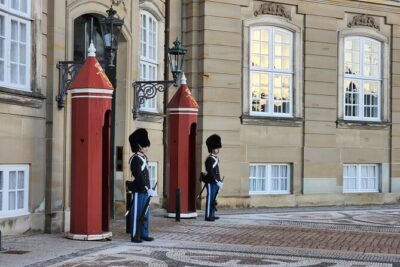
Walk & Canal Tour: Copenhagen Highlights + Changing of the Guards
Read our review →

Browse the lists this tour appears in