Reviewed · COPENHAGEN TOURS
The Art of Baking Danish Pastry
Hands-on Danish pastry baking in Copenhagen is interesting because it turns a sweet cultural icon into something you can actually do with your own hands, not just buy and eat. I like how this class starts in the morning and stays focused on real technique, from kneading to folding. It is also a small group setup, so the chef can keep an eye on your dough.
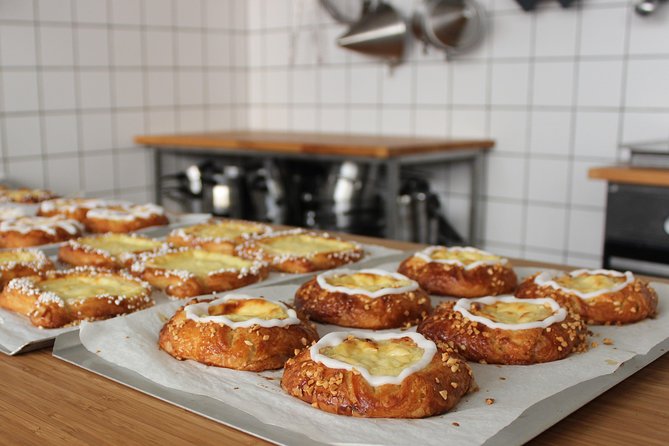
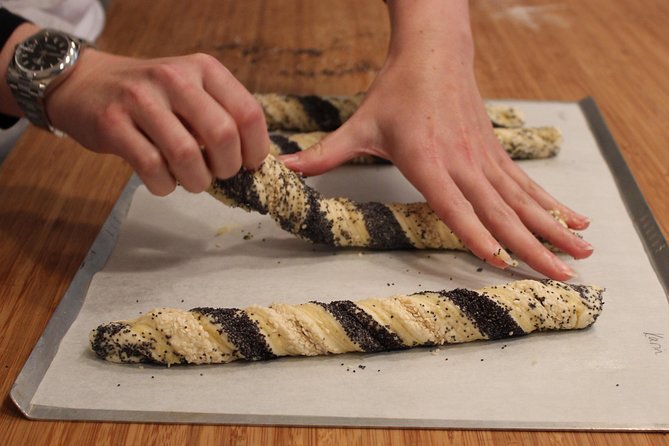
Two things I really like: you leave with lots of finished pastries (not just bites to sample), and you get the recipes emailed afterward so the class keeps paying off after you’re back home. The pastries you make include classics like kanelsnegle (cinnamon rolls), Spandauer (Danish pastry), and Frøsnapper (poppy and sesame seed twists).
One possible drawback: you will likely make more than you can comfortably eat yourself. Plan on sharing, freezing, or having space in your luggage, because you do end up leaving with plenty.
Key highlights to look for
- Chef-led small group (maximum 12) means faster feedback while you work
- Hands-on Danish dough skills like kneading, rolling, and folding
- You make multiple pastry types, including kanelsnegle, Spandauer, and Frøsnapper
- Tea and coffee break at the end, paired with what you baked
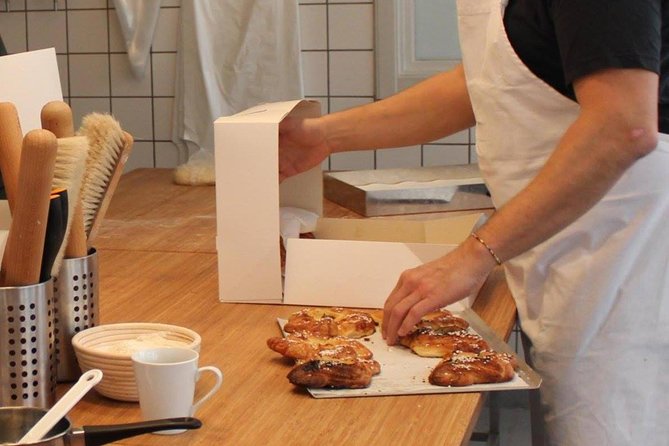
- Take-home pastries in boxes so you can carry the experience forward
Why this Frederiksberg Danish pastry class feels different

Copenhagen has pastry culture baked into everyday life, but this experience gives you the part you usually miss: the step-by-step mechanics of making the dough behave. Danish pastry is not “hard,” but it is fussy. So having a professional chef guide you through what to do, when to do it, and how to fix common dough mistakes is the whole point.
The best part for me is how practical the format is. You are not sitting through a long talk. You work. Then you taste what you made. Then you take the results home. That simple loop is exactly why a food class can feel more valuable than another sightseeing stop.
Also, the timing helps. You start at 9:00 am, so even though the session runs about 3 hours 30 minutes, you still get most of your day back. That matters in Copenhagen, where the afternoons often get busy and you might want to stack other plans without feeling rushed.
A few more Copenhagen options worth comparing
- Copenhagen Card-Discover: 80+ Attractions & Public Transport
★ 4.6 · 5,351 reviews - Copenhagen: Hop-On Hop-Off Bus Tour with Boat Tour Option
★ 3.9 · 4,122 reviews - Private Walking Grand Tour of Copenhagen
★ 5.0 · 3,953 reviews
Arriving at Terrible – Konditorskole in Frederiksberg
This class runs out of Terrible – Konditorskole at Grundtvigsvej 10A, 1864 Frederiksberg. Frederiksberg is west of the core tourist area, so you’re not just popping into some central shop. You’re getting a more local, neighborhood-feeling start.
It is also described as near public transportation, and you will likely find it easier than you expect, as long as you double-check the exact entrance location. One practical heads-up from the experience: the entrance can be on a different side of the street than what maps show at first glance. In other words, give yourself a few extra minutes for orientation.
Once you’re inside, the class moves quickly, but not randomly. It is set up so you can catch up if you need to. The atmosphere is a working kitchen, not a demo theater, so show up ready to roll up your sleeves and follow directions closely.
The 3.5 hour plan: what you do, in order
The session is built around a chef-led demonstration followed by hands-on work. The rhythm matters. Danish pastry can be technical, and a class like this is designed to keep you from falling behind. The chef shows you the technique first, then you repeat it at your station.
Here’s the flow you can expect:
Step 1: Technique foundations with real Danish pastry handling
Before you start assembling pastries, you get the core skills. The chef walks the group through dough fundamentals, including:
- kneading (to develop structure)
- rolling (for thickness and even layers)
- folding (where Danish pastry gets its characteristic texture)
This is where the class earns its money. If you’ve never worked Danish dough before, you might not know what “good” looks like. A chef can spot the difference between dough that is ready and dough that will fight you later. That saves you from guesswork.
A different shape of day in Copenhagen:
- From Copenhagen: Lund and Malmö 2-Country Tour
★ 4.7 · 3,807 reviews - Copenhagen Highlights Walking Tour
★ 5.0 · 2,324 reviews - Copenhagen: Highlights 3 Hour Bike Tour with a Local Guide
★ 4.8 · 2,312 reviews - Hamlet and Sweden Tour – Two Countries in one day !
★ 5.0 · 2,223 reviews
Step 2: Hands-on assembly for several pastry styles
After the basics, you shift into production mode. You’ll make multiple Danish pastries rather than just one token item. The sample set includes:
- Cinnamon rolls (kanelsnegle)
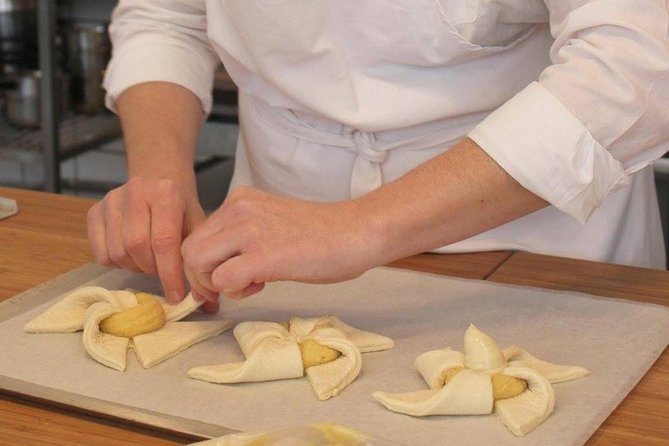
- Danish pastry (Spandauer)
- Poppy seed and sesame seed twists (Frøsnapper)
Different pastries mean different shaping and filling techniques, so you get variety without wasting the morning. And since the class is small, you can ask questions while you’re working instead of hoping you remember the steps from a lecture.
Step 3: Baking finishes, then a taste break with tea and coffee
Once your pastries are baked, you get a chance to taste the final results. Tea and coffee are served, which turns the session from work-only to enjoy-and-learn. You can see, smell, and taste the payoff for all the folding and shaping you did earlier.
This is also a good moment to take a breath. Danish pastry rewards patience, but the class itself can feel fast-paced, so the tasting portion helps you land the experience.
Making kanelsnegle, Spandauer, and Frøsnapper like a pro
You might think Danish pastry classes would be gentle and slow. This one is actually built for results, and that’s why people rate it so highly. You’re not just practicing shapes. You’re producing pastries you can box and bring home.
Kanelsnegle (cinnamon rolls): sweet, classic, and forgiving
Cinnamon rolls are usually a good starter because the dough application is straightforward, and you can focus on even rolling and tidy assembly. In a chef-led class, you’ll also learn how to handle the dough so it stays manageable instead of tearing or shrinking back.
I like this choice because it is both familiar and instructional. Even if you’ve eaten cinnamon rolls before, Danish-style dough work changes the outcome.
Spandauer: the layered Danish pastry moment
Spandauer takes the Danish pastry identity more seriously. Expect more attention to how the dough is treated and how the pastry is structured before baking. This is the style where technique tends to show up clearly in the final texture.
If you like the idea of learning why Danish pastry tastes the way it does, this is the one to watch closely during the chef’s instructions.
Frøsnapper: poppy and sesame twists with strong flavor payoff
The poppy and sesame twists bring a different kind of satisfaction. The flavor is bold, and the shape work gives you a chance to practice how you move from dough to finished pastry without losing your rhythm.
If you enjoy baking with contrast, you will likely enjoy the way this one tastes once it’s out of the oven. One more practical bonus: these twists travel well in boxes, so they’re good for take-home sharing.
What you taste and why the tea and coffee moment matters
The tasting part is not filler. You’re paying for education, but you also want confirmation. When the chef helps you with dough handling earlier, the real proof is how the baked goods come out.
Tea and coffee being included also keeps the experience from turning into a hunger problem partway through. Danish pastry is rich. Having a warm drink at the end makes it easier to enjoy what you baked, not just sample quickly and rush out.
And even if you are a beginner, tasting your own results helps you understand what you did right. That is how you get from learning steps to learning instincts.
Take-home pastries and emailed recipes: real value, not just leftovers
This is where the class becomes a standout value. You don’t leave empty-handed. You leave with boxed pastries, and based on the class feedback, it can be enough to fill multiple boxes per person.
The other payoff is the recipes emailed afterward. That turns your morning from a one-time souvenir into a skill you can repeat. You get to practice at home when you have time to slow down. You also get to adjust based on what you learned in the classroom, especially if your first attempt is a little uneven.
I also like the fact that the recipes come after you’ve already tasted the end product. You’re more likely to follow the instructions carefully because you know what the finished result should look and taste like.
Price and value for $117.23 in a 3.5 hour class
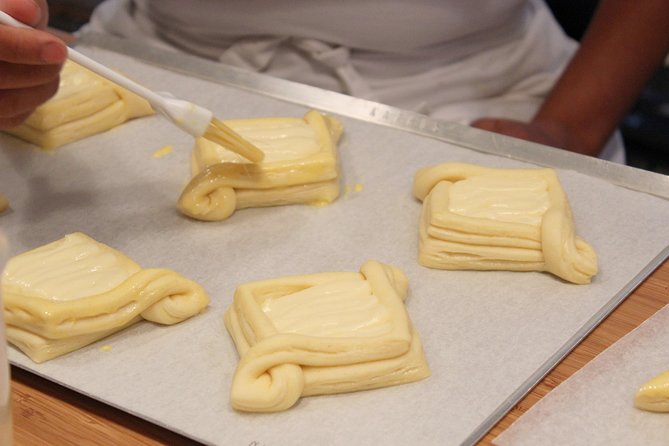
At $117.23 per person, this is not a budget snack activity. But it is also not overpriced in the context of what you receive.
Here’s what you are paying for:
- A professional pastry chef guiding you through technique, not just handing you a worksheet
- Hands-on instruction for multiple pastry types in a small group limited to 12 travelers
- Ingredients and baking work done in a real kitchen setup
- Tea and coffee included
- Finished pastries you can take home
- Recipes emailed after the class
If you compare it to buying multiple Danish pastries and dessert boxes in the city, the math gets interesting fast. Many visitors spend a similar amount over a couple of days on treats. Here, you get the education plus the treats, and you can bring some of it into your kitchen routine later.
For food lovers and people who enjoy cooking, the value feels especially strong. For pure sightseers who want photos, it will feel like a splurge with a narrower focus. But for anyone who likes learning through doing, it’s money well spent.
Who this Danish pastry class suits best

This class fits best when your travel style includes hands-on food experiences. It is especially good if you:
- Love Danish pastry and want to understand it beyond taste
- Are a first-time baker who benefits from clear step-by-step coaching
- Want a morning activity that leaves the rest of your day free
- Travel as a couple, group of friends, or family where everyone enjoys cooking
It also seems to work well for mixed skill levels. The chef’s style is described as organized, patient, and structured, which helps beginners feel successful. You should still be ready to work steadily, because the class is hands-on and moves.
If you hate mess, tight timing, or you don’t like food-focused activities, this may not be your best morning choice.
Practical considerations before you go
A few things you should plan for so the morning stays smooth:
- Bring the right mindset: you will be working with dough and following steps quickly, so listen carefully when the chef demonstrates the technique.
- Plan for take-home volume: you will probably make enough pastries to share. If you fly soon after, be ready to pack boxes carefully.
- Arrive a little early: the entrance can be tricky to spot on the first try, even with maps.
- Keep your morning flexible: the class ends back at the starting point, so having your next plan not too tight on timing helps.
Should you book this Danish pastry baking class?
I’d book it if you want a Copenhagen experience that is hands-on, structured, and genuinely productive. The combination of technique instruction, small group size, and the fact that you leave with boxed pastries plus emailed recipes makes it feel like more than a one-off show-and-taste activity.
Book it early if you can, since it is commonly scheduled about 70 days in advance, and it is limited to 12 people per class. If you are traveling light and hate the idea of carrying food, think twice. But if you enjoy cooking, learning by doing, and sharing what you make, this is one of the most satisfying morning plans in Copenhagen.
Recently reviewed around Copenhagen
- The Forgotten Giants Private Tour★ 5.0 · 3 reviews
- Explore Copenhagen in 60 minutes with a Local★ 5.0 · 3 reviews
- E-Scooter guided tours in Wonderful Copenhagen★ 5.0 · 3 reviews
- Danish Design Classic and Modern Style Self-Guided Audio Tour★ 5.0 · 3 reviews
- Departure by Luxury Vehicule Copenhagen to Copenhagen airport CPH★ 5.0 · 3 reviews
- E Biking Adventure to Kronborg Castle★ 5.0 · 3 reviews
- Copenhagen: Self Guided Scavenger Hunt and Tour★ 4.0 · 3 reviews
- Mikkeller Tastings – The Unusual Story of Beer and Mikkeller★ 5.0 · 3 reviews
Copenhagen Tours, compared.

Copenhagen Card-Discover: 80+ Attractions & Public Transport
Read our review →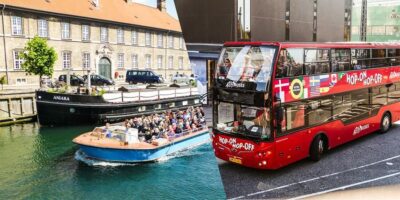
Hop-On Hop-Off Bus Tour with Boat Tour Option
Read our review →


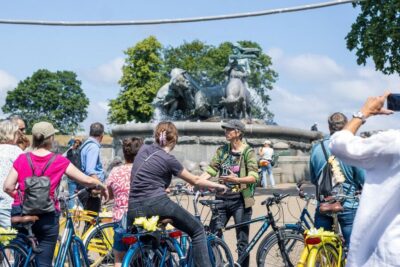
Highlights 3 Hour Bike Tour with a Local Guide
Read our review →
Hamlet and Sweden Tour – Two Countries in one day !
Read our review →