Reviewed · COPENHAGEN TOURS
Explore Copenhagen’s Art and Culture with a Local
This small-group walking tour is a great way to get your bearings fast in Copenhagen, with stops that mix street art and major sights like Stork Fountain and Nyhavn. You follow a local around the center of town, picking up stories as you move.
I love how the guide gives quick context, so something as simple as a fountain or a domed building turns into a point you can remember. I also like that you get practical cultural nuggets, including Danish food customs, and a focused look at street art by Stine Hvid.
One watch-out: the explanations can feel brief, and there may be quiet stretches where you would expect more commentary, so come with questions and enjoy the walk even if the pace is not nonstop talk.
Key highlights worth your time
- Start at Stork Fountain in Amagertorv, a clear old-town landmark to orient you right away
- Street art focus on Stine Hvid, plus extra examples you can keep an eye out for later
- Hans Christian Andersen sculpture in the castle gardens, a calm pause between bigger monuments
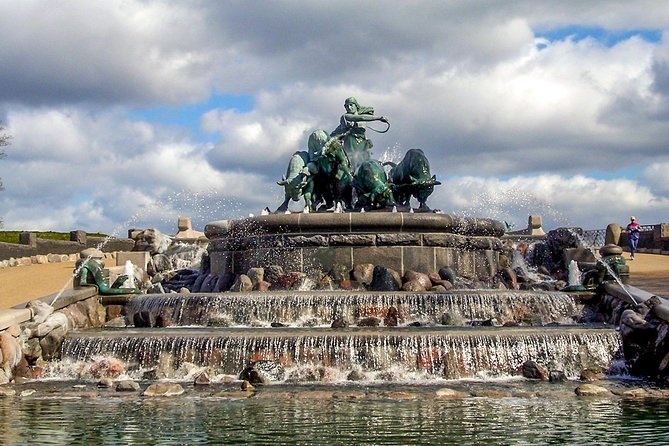
- Kastellet fortress and the Gefion legend, connected through a striking fountain story
- Rococo dome and Kierkegaard grounds, mixing art, architecture, and ideas
- Finish in Nyhavn, where the 17th-century waterfront facades make a photogenic ending
Why This Copenhagen Art Walk Fits So Many Travelers
If you’re short on time but want more than postcard sightseeing, this tour works. It’s built as a 90-minute hit list of Copenhagen art and culture, delivered on foot with a local guide, and paced for a small group (max 8). You’re not trying to cover every museum in town, but you do get a clear sense of what the city values.
I also appreciate that it’s a tour you can enjoy whether it’s your first day or your 10th. The stops bounce between street art, architecture, and culture-linked landmarks, so it doesn’t feel like a repeat for returning visitors.
The biggest tradeoff is what you might expect from a compact walk: some moments are more about the highlight than a long lesson. If you want extended time at specific institutions, this format may feel a bit tight.
A few more Copenhagen options worth comparing
- Copenhagen Card-Discover: 80+ Attractions & Public Transport
★ 4.6 · 5,351 reviews - Copenhagen: Hop-On Hop-Off Bus Tour with Boat Tour Option
★ 3.9 · 4,122 reviews - Private Walking Grand Tour of Copenhagen
★ 5.0 · 3,953 reviews
Meeting at Stork Fountain: Old Town First, Then On With the Stories
You begin at Stork Fountain at Amagertorv 6, right in a historic square with a mosaic floor and classic old-town buildings around it. This is a smart starting point because you can instantly see how Copenhagen blends public art, architecture, and everyday life.
From here, you get the walking-tour rhythm down fast. The guide sets expectations, points you toward what to notice, and then you move from “look at it” to “understand why it’s here.” Even if you’ve seen photos of Amagertorv, the real value is learning how locals read these spaces.
Practical note: since the tour starts in a central square and runs about 1 hour 30 minutes, you’ll want to show up on time and be ready to walk continuously.
Copenhagen Street Art by Stine Hvid and How to Read Walls
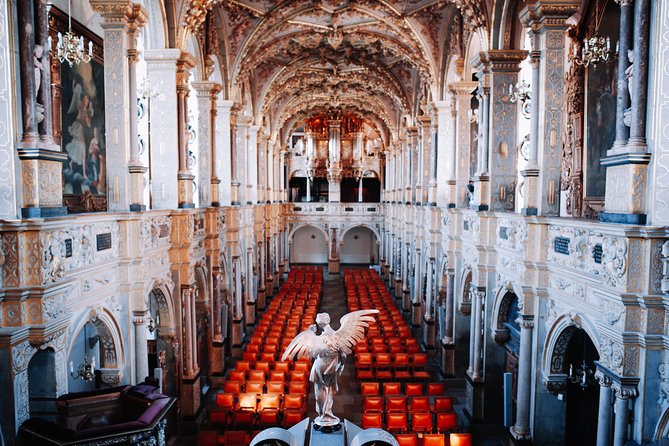
One of the most fun parts is the street art stop tied to Stine Hvid. You’re not just shown one piece and rushed away. You also hear about other impressive street art examples in different neighborhoods, which helps you make sense of what street art means here.
Why this matters for you: Copenhagen street art is often part of the city’s cultural conversation, not random decoration. When you learn the names and styles the guide points out, you’ll start noticing details on your own after the tour ends.
If you like art that lives outside museum walls, this is the section that usually clicks. And if you’re not sure what to look for, that’s fine too. The guide’s role is to give you a few clear lenses, so you know where to aim your eyes.
Castle Gardens and the Hans Christian Andersen Sculpture Reset

Next comes a quieter change of pace: a historical castle and its gardens, with a Hans Christian Andersen sculpture. This stop gives you something different from the street-level art and civic squares you’ve just been in.
Gardens matter on a city walk like this. They’re where you slow down enough to actually notice details, shapes, and views, instead of just moving between landmarks. If you’re coming off a long travel day, this is also the kind of moment that helps your energy level catch up.
The Andersen connection is especially useful if you want Copenhagen to feel like more than architecture. You get a cultural anchor that links storytelling, Danish identity, and the arts without needing a formal museum visit.
A different shape of day in Copenhagen:
- From Copenhagen: Lund and Malmö 2-Country Tour
★ 4.7 · 3,807 reviews - Copenhagen Highlights Walking Tour
★ 5.0 · 2,324 reviews - Copenhagen: Highlights 3 Hour Bike Tour with a Local Guide
★ 4.8 · 2,312 reviews - Hamlet and Sweden Tour – Two Countries in one day !
★ 5.0 · 2,223 reviews
Kastellet, Built in 1664: The Star Fortress and the Gefion Legend

Then you hit Kastellet, the star-shaped fortress built in 1664. Even if you only get exterior views, the shape itself tells a story about defense, planning, and how Copenhagen grew its military footprint.
What I like about this stop is the way it’s paired with the legend of the Norse goddess Gefion, depicted in a fountain. This is exactly the kind of “art and culture” pairing that makes a walking tour worth doing. You’re not just seeing a landmark. You’re getting the myth that gives it meaning.
One consideration: this is a short tour, so you won’t have time to go deep into fortress history. Still, the legend makes the fortress feel more human and less like a hard geometric object.
Rococo Dome and Kierkegaard Grounds: Architecture Meets Ideas
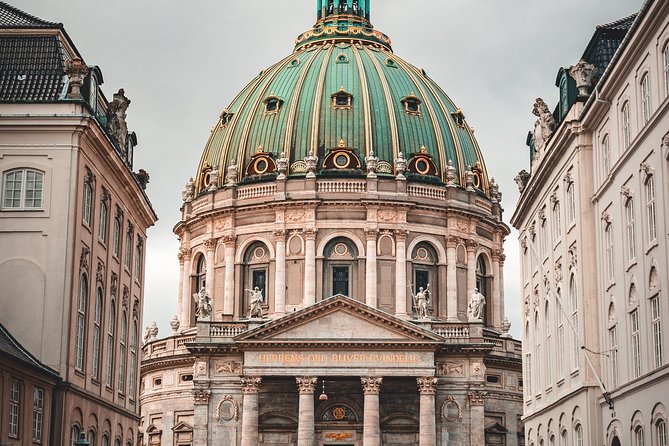
After Kastellet, you get to a Rococo structure with the largest dome in Scandinavia, plus a Kierkegaard statue in the grounds. This is one of those stops where Copenhagen shows its range: religious or monumental design on one hand, philosophy on the other.
You don’t need to be a dome expert to enjoy it. The dome gives you a visual anchor, and the Kierkegaard connection gives you a cultural conversation starter. You start thinking about Copenhagen not as a place of sightseeing, but as a place that shaped ideas.
If you’re the type who likes your travel with some intellectual sparks, this portion tends to land well. It also breaks up the route so you don’t just repeat “square, fountain, photo, move on.”
Royal Opera Views Across the Water, Plus the Palace and Garden Feel
The tour then moves through an imposing square, with the palace and garden in the mix. From here, you get a glimpse of the Danish Royal Opera house on the other side of the water.
This is a classic Copenhagen framing trick. Water creates distance, and distance changes how buildings read. From the right spot, you can see how the city’s landmarks work together as a skyline, not separate monuments.
The practical value is that you leave the tour with a mental map. Even if you don’t return immediately, you’ll know where to head later for a longer look from the streets or along the water.
Finishing in Nyhavn: A 17th-Century Waterfront Stroll That Ends Strong
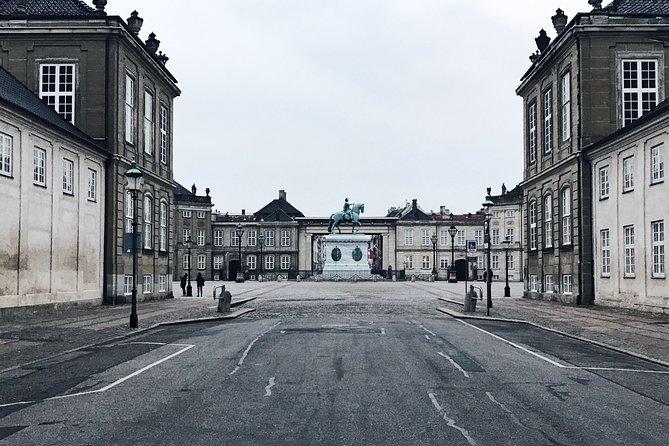
You wrap up with a stroll through Nyhavn, a 17th-century harbour area known for its colorful waterfront facades. This is the kind of ending that feels right because it’s open, photo-friendly, and easy to keep exploring after the tour ends.
Nyhavn also works as a “reset” zone. After focusing on fountains, forts, and domes, you get something more relaxed and human-scale, with lots of small streets and views along the canal edge.
If you want to turn your tour into a full afternoon, this is where you can confidently wander next. You already have the cultural context from earlier, so the colorful scene feels earned, not just decorative.
Price, Timing, and Group Size: Is $128.94 Worth It?
At $128.94 per person for about 1 hour 30 minutes, you’re paying for a guided route with a local, in English, with a maximum of 8 travelers. That small group size matters. It usually means you spend less time waiting and more time actually looking and asking questions.
The value here is not that you get every museum ticket. The value is that you get a curated route through Copenhagen’s art and culture hotspots, with context you would struggle to piece together on your own in such a short time.
Also, this tour is a solid option for new arrivals. Copenhagen can feel spread out, and a short walking plan helps you avoid decision fatigue. You get a sense of what to prioritize later, whether that means more time near street art spots or a longer stop at cultural buildings you noticed during the walk.
Who This Tour Suits Best (and Who Might Want Something Else)
This is ideal if you want:
- A guided walk that mixes street art, major landmarks, and culture-linked stories
- A short, efficient way to orient yourself in central Copenhagen
- A small-group experience where you can take photos and still get explanations
It may not be ideal if you want deep time at one specific museum or you’re hunting a very targeted art destination only. The route is designed as a straightforward highlight path, so you might not spend as much time near every cultural stop you have on your own wish list.
One more practical thought: if you’re picky about hearing long, detailed commentary at every stop, be aware that some parts of the tour may feel more like a quick hit than a lecture. The upside is that the city stays the main event, and you still get plenty to look at.
Should You Book This Copenhagen Art and Culture Walk?
I’d book it if you like the idea of connecting Copenhagen’s art and culture through real places, on foot, with a local guide. It’s short, structured, and ends in Nyhavn, so it fits neatly into a travel day without swallowing your whole afternoon.
Skip it if you want a museum-heavy itinerary or if you need long stops at specific venues. In that case, you’ll likely be happier with a longer guided format focused on one neighborhood or one institution.
For most people, though, this is a smart way to leave Copenhagen with more than photos. You’ll leave with stories you can reuse while you keep exploring.
FAQ
How long is the Copenhagen Art and Culture with a Local tour?
It lasts about 1 hour 30 minutes.
What does the tour cost?
The price is $128.94 per person.
What language is the tour offered in?
The tour is offered in English.
How many people are in the group?
The tour has a maximum of 8 travelers.
Where does the tour start and where does it end?
It starts at Stork Fountain, Amagertorv 6, 1160 København, Denmark, and ends in Nyhavn, Indre By, Denmark.
What is included in the experience?
A local guide is included.
Are food and drinks included?
No, food, drinks, and snacks are not included.
Is there free cancellation?
Yes, you can cancel for free up to 24 hours in advance for a full refund.
Do I need to bring a paper ticket?
You get a mobile ticket, so you will use your phone for the ticket.
Recently reviewed around Copenhagen
- The Forgotten Giants Private Tour★ 5.0 · 3 reviews
- Explore Copenhagen in 60 minutes with a Local★ 5.0 · 3 reviews
- E-Scooter guided tours in Wonderful Copenhagen★ 5.0 · 3 reviews
- E Biking Adventure to Kronborg Castle★ 5.0 · 3 reviews
- Danish Design Classic and Modern Style Self-Guided Audio Tour★ 5.0 · 3 reviews
- Departure by Luxury Vehicule Copenhagen to Copenhagen airport CPH★ 5.0 · 3 reviews
- Copenhagen: Self Guided Scavenger Hunt and Tour★ 4.0 · 3 reviews
- Mikkeller Tastings – The Unusual Story of Beer and Mikkeller★ 5.0 · 3 reviews
Copenhagen Tours, compared.
Copenhagen Card-Discover: 80+ Attractions & Public Transport
Read our review →
Hop-On Hop-Off Bus Tour with Boat Tour Option
Read our review →

Highlights 3 Hour Bike Tour with a Local Guide
Read our review →
Hamlet and Sweden Tour – Two Countries in one day !
Read our review →