
Reviewed · CRUISES & BOAT TOURS
Discover Copenhagen Private Boat Tour Experience
Copenhagen by boat is interesting because the city’s stories travel with you. This private ride threads together the old port world, the royal waterfront, and the modern, green side of Denmark, all at a pace that feels personal. I especially love two things: the calm, close-up views from the water and Captain Denis who makes the places click with clear, funny, real talk. The one consideration is that good weather matters, since the experience requires it.
What you get is not a crowded loop. It is a private outing for your group, up to 8 people, with an English-speaking host, a mobile ticket, and a route packed with iconic sights and meaningful details. If you like architecture, maritime history, and street-level Denmark without the treadmill feeling, this is a smart way to spend your time on the water.
Key highlights worth prioritizing
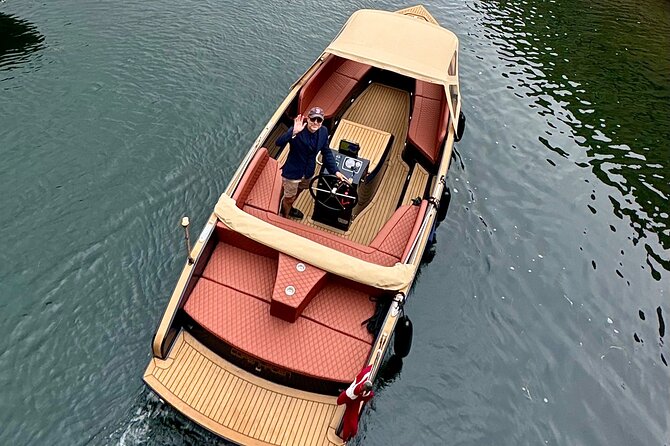
- Captain Denis as your guide, with humor and stories that keep every age group engaged
- Nyhavn first, for instant payoff, then you move into less obvious canals and waterfront districts
- A true mix of Copenhagen contrasts, from Christiania to Copenhill to the royal naval area at Holmen
- Holmen’s museum ships from the water, where scale and atmosphere land better than photos
- A route that works for families, including reports of teens staying interested
- Private comfort for up to 8, so you can ask questions and stay relaxed with your group
A private Copenhagen canal ride that actually feels personal
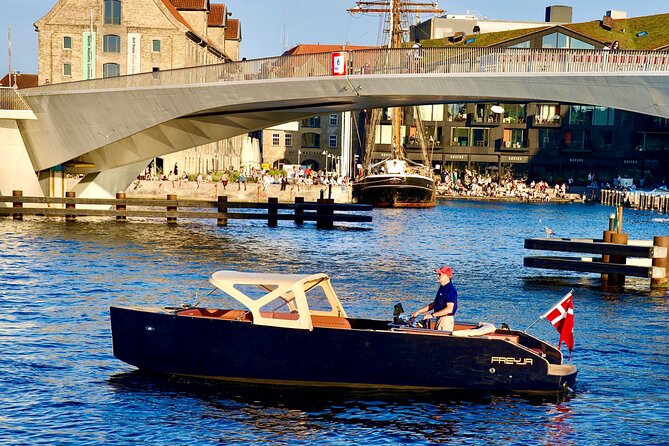
This tour shines because it is built around moving through Copenhagen the way the city was designed to be used. You are not stuck behind ropes, and you are not watching the sights through other people’s heads. From the water, the city’s layers make sense fast, from shipbuilding blocks and canal edges to royal buildings and modern architectural statements.
The best part, in my view, is how the guide connects dots. You see a building, then you understand why it matters: the port past behind the present promenade, the defense logic behind industrial waterfront spaces, and the cultural intent behind modern landmarks. And that is exactly what groups emphasize when they talk about Captain Denis, including how he delivers facts like you are hanging out with a friend who happens to know every corner.
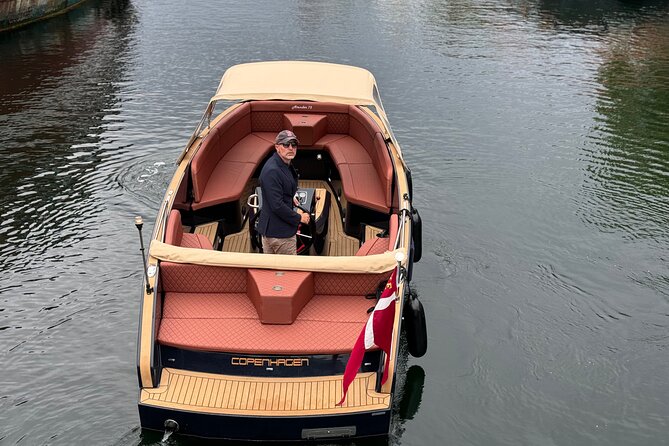
There is also real comfort value here. Multiple reviews describe a clean, well-kept boat, and people liked having space for small groups rather than being squeezed into a mass tour.
More boat trips from Copenhagen:
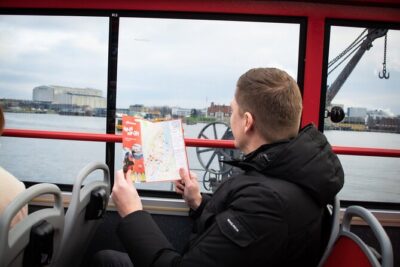
- Copenhagen: Hop-On Hop-Off Bus Tour with Boat Tour Option
★ 3.9 · 4,122 reviews - Social Sailing – Copenhagen Canal Tour – Captain’s Favorite
★ 5.0 · 1,610 reviews - Copenhagen Bus and Boat ticket, Valid 48 Hours
★ 4.0 · 565 reviews
Price and value: $484.89 per group, up to 8 people
The headline price is $484.89 per group, up to 8. That number can feel steep if you are traveling solo or as a couple. But it makes a lot more sense when you treat it as group pricing for a private experience on the water.
Here is how I think about value:
- You are paying for privacy, not just transportation. Your group gets the boat time and the host attention.
- The route covers a huge stretch of Copenhagen highlights in one outing, which can save time versus piecing together multiple neighborhood walks and transit plans.
- Reviews mention drinks and snacks, including wine and bites prepared by the captain. That turns the ride into more of a slow, enjoyable morning or afternoon, not just sightseeing.
If you have 4 to 8 people, this is often one of the better value ways to see a lot of waterfront fast without feeling rushed. If it is just two travelers, consider whether you would rather pay more for a private boat or spend the money on museum tickets plus a shorter public canal cruise.
Meeting point and timing: start at Havnegade 44 and pick your ride length
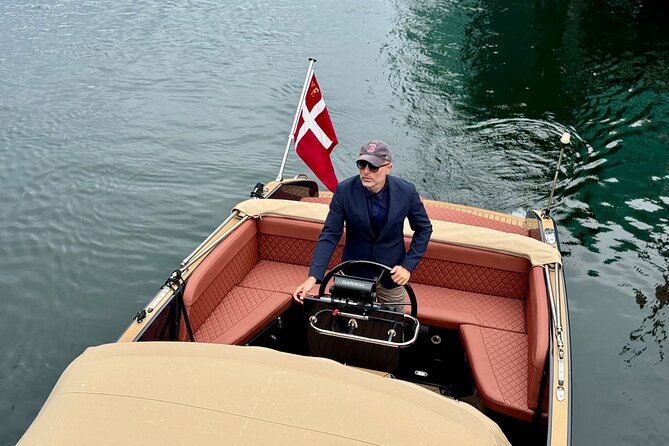
The tour starts and ends at Havnegade 44, 1058 København. That matters because it puts you on the water side right away, so you can get into the sights without a long transfer from a random dock.
Duration is flexible, listed as 1 to 12 hours (approx.). In practice, a shorter ride can be ideal if your goal is maximum highlights with minimal fuss. A longer ride is better if you want deeper stops, more questions, and time to linger on the water where the light and views are better.
Booking timing is also a clue. This experience is typically booked around 20 days in advance, so if you are traveling in peak season, early planning helps.
You receive a mobile ticket, and the tour is offered in English. Service animals are allowed, and the meeting point is described as near public transportation.
How the route works: Old Customs House to Nyhavn to the royal waterfront
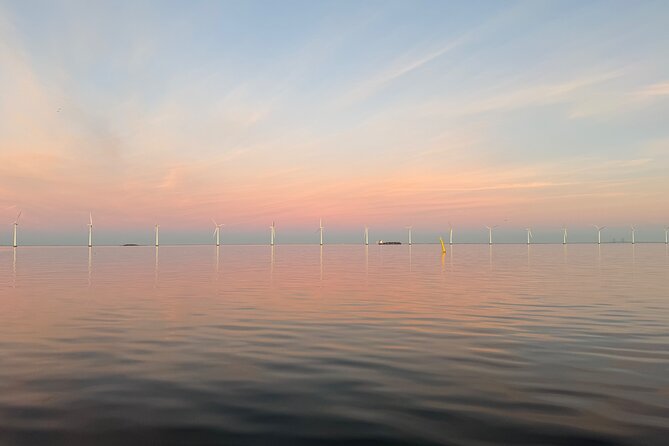
The tour’s strength is momentum. You begin where Copenhagen’s shipping identity is written in stone, then you slide into the city’s most photogenic canal life, and you keep moving east and north into modern architecture and naval districts.
A few more Copenhagen options worth comparing
- Copenhagen Card-Discover: 80+ Attractions & Public Transport
★ 4.6 · 5,351 reviews - Private Walking Grand Tour of Copenhagen
★ 5.0 · 3,953 reviews - From Copenhagen: Lund and Malmö 2-Country Tour
★ 4.7 · 3,807 reviews - Copenhagen Highlights Walking Tour
★ 5.0 · 2,324 reviews
Old Customs House, Det Gamle Toldhus: Copenhagen opens its ports
Your day starts at the Old Customs House, built in 1734. This Baroque building was the gateway between Denmark and the wider world. It is the kind of place where you can almost picture barrels, timber, rum, and silk moving through the same waters you will be cruising now.
From the boat, it hits differently than a quick street visit. You are literally in the current that once carried goods and news. It sets the tone for the whole ride: Copenhagen as a trading port, not just a pretty postcard.
Nyhavn: the postcard canal you actually get to experience
Then you hit Nyhavn, the “New Harbor” canal that has been there since 1673. It is now a beloved promenade, famous for colorful houses, old ships at dock, and the feeling that everything is happening right at the water’s edge.
From the boat, you get a front-row view of the buildings leaning over the water. Nyhavn is busy on land, but on the water it feels calmer, like a scene you can watch instead of fight through. This is also where the story of Hans Christian Andersen becomes part of the scenery, because Andersen lived here and multiple houses connected to him are part of the canal.
A small practical note: this is one of the stop points where you will likely want your camera ready, since the light and angles are classic.
Modern Copenhagen edges: Playhouse, Papirøen, mast houses, and cannonballs
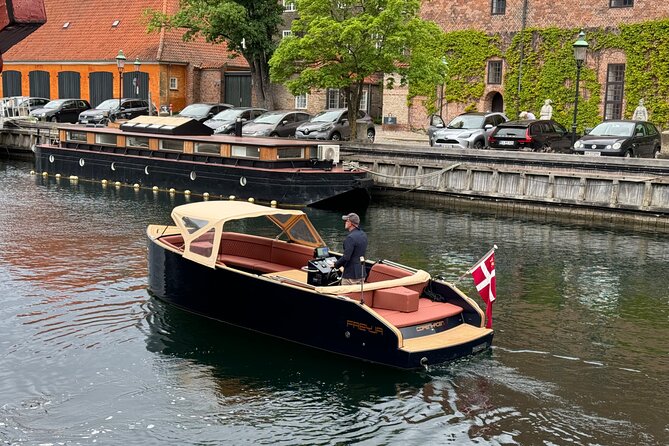
After Nyhavn, the tour becomes a tour of contrasts, moving from old charm to bold design and back again.
Royal Danish Playhouse: art and architecture locked together
You pass the Royal Danish Playhouse (Skuespilhuset), which opened in 2008. The building’s sleek lines, oak and glass look, and dramatic placement make it feel like a stage set from the water.
Even if you never see a performance, it is a meaningful stop because you understand how Copenhagen treats culture as a public-facing thing. It is not hidden behind walls. It is part of how the harbor itself looks.
Papirøen, Paper Island: from warehouse to community
Next is Papirøen, a former paper warehouse turned cultural hotspot. This is one of those Copenhagen ideas that works because it feels human. Artists and pop-up spaces replaced industrial storage, and the waterfront became a social edge again.
Today, some of the original area has been cleared for modern development, including Opera Park, but the spirit of the place remains in the way it uses the waterline for food, music, and community gatherings.
If you like cities that reuse industrial space instead of erasing it, this stop matters.
Old mast houses and the Cannonball Courtyard: war, craft, and scars
You then pass the mast houses (Mastekranen area) tied to shipbuilding, and you get the ominous Cannonball Courtyard where cannonballs from the Battle of Copenhagen in 1807 are still lodged in brick.
This is one of the most powerful sections of the ride because it is both craft-focused and conflict-focused. You see how labor shaped ships, then you see physical proof of how the city was hit. From a boat, the sense of scale and survival is harder to ignore.
Christiania and the quieter stretch toward Holmen
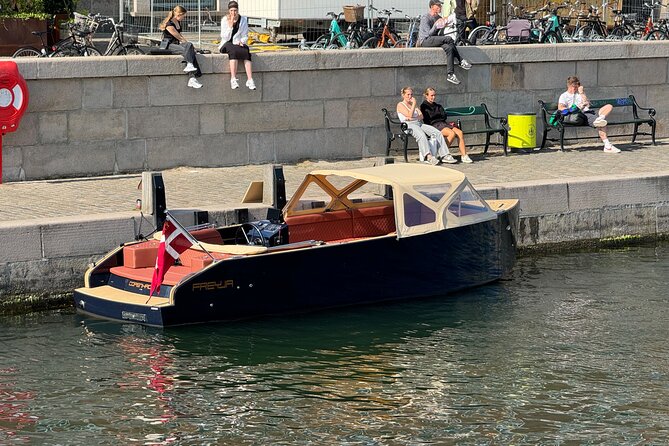
The route includes Christiania, and this is a stop that people either love for its difference or find challenging for its controversy. Either way, it gives you Copenhagen’s countercultural layer without needing to schedule a separate land visit.
Christiania: a free town experiment on the water edge
Christiania started in 1971 when squatters took over an abandoned military base. It has grown into a self-governing commune with colorful houses, art-covered walls, and a history tied to what outsiders call the green light district.
From the canal edge, you can see handmade structures and gardens. But more importantly, the ride keeps the tone neutral. You are not being herded through a script. You pass by and absorb the mood, the colors, and the sense of autonomy.
This stop is a reminder that Copenhagen is not only museums and palaces. It also has real people building their own rules.
Torpedo boat heritage and Long Boat Houses: small scale, big feeling
Farther along, you enter an area near Torpedohallen, tied to naval torpedo boats and training facilities from the early 20th century. These austere concrete bones matter because they show a military layer that most postcards skip.
Then you pass the Long Boat Houses, restored wooden dwellings that can be more than 150 years old. This is where the harbor turns intimate. The low-roofed cottages and the quiet scale feel like a sailor’s dream, and this is a favorite moment for many families because the scenery looks lived-in, not staged.
Copenhill and Nordhavn: Copenhagen gets weird, then gets serious
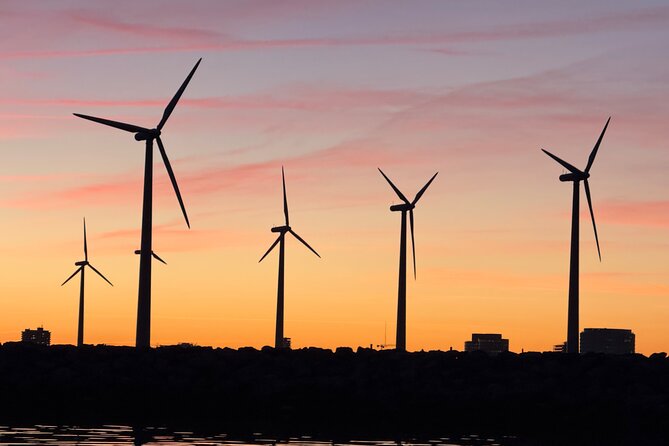
Two later stops help you understand why Copenhagen is considered a model for modern planning.
Copenhill: the waste-to-energy plant that doubles as a park
You spot Copenhill, the waste-to-energy facility by Bjarke Ingels that doubles as a public park. The idea sounds like fiction until you see it, because it includes a climbing wall, hiking trails, and even a ski slope on the roof.
From the boat, you can see skiers gliding on the synthetic slope and the smokestack. It feels quirky, but it also connects to real environmental responsibility. This is modern Copenhagen showing that infrastructure does not have to be hidden.
Nordhavn: reclaimed land, floating homes, and the UN City
Then you sail toward Nordhavn, a bold experiment on reclaimed land. It is planned for sustainable living, with energy-efficient buildings, harbor baths, rooftop gardens, and even bicycle infrastructure ideas.
You also pass the UN City, home to several United Nations agencies, and you may notice former grain silos repurposed into luxury apartments. Even if you do not care about UN buildings, the area is visually worth it because it signals a Copenhagen that is still building its future.
Holmen and the royal edge: museum ships, pavilions, Dannebrog, and salutes
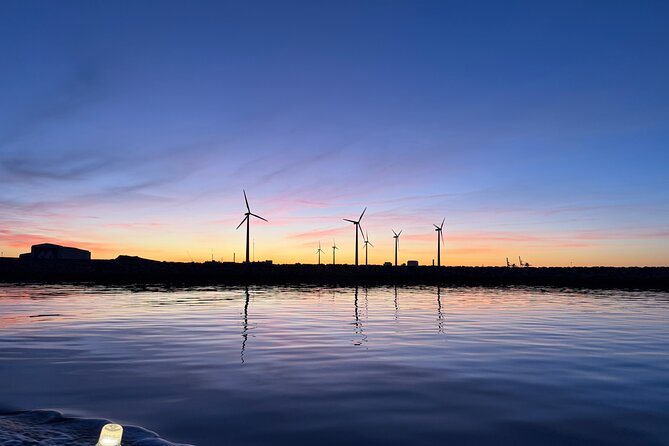
Holmen is where the maritime theme goes formal. You are in Copenhagen’s historic naval district, and you can feel it in the way the shoreline is lined with ships.
Museum ships and the Royal Danish Naval Museum feel like the real thing
As you pass, you see several museum vessels moored in place:
- The frigate Peder Skram, once a Cold War powerhouse with guided missiles
- The torpedo boat Sehested
- The diesel-electric submarine Sælen, now open for visitors inside her narrow steel space
Seeing these from the water gives you scale in a way land photos cannot. It feels like respect. And it is not a reenactment.
Royal Pavilions and the Yacht Dannebrog
You also pass the Royal Pavilions, waterside buildings used for welcoming and seeing off royal guests arriving by sea.
Across the water waits the Royal Yacht Dannebrog, launched in 1931 and still active for official visits and holidays. From the boat, it reads as living history, not just a monument.
The Old Guardhouse and daily cannon salutes
One of the most striking rituals included in the narrative is the daily cannon salute from the saluting battery nearby at sunrise and again at sunset. You hear the salute while afloat, which is a different kind of moment than watching from shore.
Whether you catch the salute at a specific time depends on your schedule, but the fact that this tradition still exists tells you something important about Copenhagen: maritime ceremony has a pulse.
Copenhill, Christianshavn, and the big names: Little Mermaid to Opera to the Church of Our Saviour
As you continue, you transition into neighborhoods that blend historic architecture with standout landmarks.
The Little Mermaid: small statue, big meaning
You pass The Little Mermaid, unveiled in 1913 by sculptor Edvard Eriksen. It is modest in size, but the symbolism hits when you see it from water, alone against the harbor.
If you only think you know this statue from photos, it is worth seeing in motion. The statue’s position on the waterline makes the story feel more quiet, more patient, and less like a tourist prop.
Amalienborg and the Yellow Palace: monarchy as daily rhythm
You pass the Yellow Palace (Det Gule Palæ), built in 1764, used as the monarch’s guesthouse and administrative office.
Then you arrive at Amalienborg Palace, the heart of the Danish monarchy with the four identical rococo mansions around King Frederik V. If the guard changing appeals to you, you might see the Royal Life Guards in bearskin hats marching to that daily ritual.
Copenhagen Opera House: the ship-bow roof look
From the water, the Copenhagen Opera House makes sense. Completed in 2005 and designed by Henning Larsen, it is built on Dokøen and features a cantilevered roof that looks like a bow over the harbor.
Even if opera is not your thing, you can appreciate why it is a landmark. It is state-backed, architecturally bold, and designed to interact with the harbor view.
Christianshavn and Church of Our Saviour spiral tower
You glide into Christianshavn, founded in the early 1600s. It feels softer and more personal than some other central areas.
You also pass The Church of Our Saviour, completed in 1695, famous for its external spiral staircase that wraps around the tower. Climbing it is an option when you have time on your own, but even from the boat, the structure grabs your eye. The view logic is part of the reason it is famous.
Cirkelbroen: the Circle Bridge teaches you a different pace
You pass Cirkelbroen (The Circle Bridge), designed by Olafur Eliasson and unveiled in 2015. It looks playful, like overlapping circles, and it is designed to slow foot traffic down, encouraging pedestrians and cyclists to pause and change direction.
From the boat, it is a small detail with a big idea: Copenhagen asks you to move with the city rather than forcing speed.
Black Diamond: the modern library wing as harbor-reflection
You also see Denmark’s Royal Library extension, often called the Black Diamond. Completed in 1999, it has an obsidian-glass look that reflects the water and passing boats.
If you like architecture that plays with reflection, this is a great stop. It is modern, but it still feels connected to the harbor’s visual language.
Frederiksholms Kanal and Gammel Strand: where the city turns older
In the quiet sections around Frederiksholms Kanal, you pass Kongens Bryghus and the Lapidarium of Kings in the vaulted cellars. Nearby sits the King’s old lighthouse ship, a red-hulled sentinel resting in calm waters.
Then the route moves through Ved Stranden and Gammel Strand, part of Copenhagen’s oldest area. This is where medieval shoreline life is imagined again, with older houses and cafes along narrow water edges.
Højbro Plads and Christiansborg: city origin myths to active democracy
Near Højbro Plads, you see the bronze statue of Bishop Absalon, credited with founding Copenhagen in 1167.
Then you pass Christiansborg Palace, Denmark’s seat of government and the only building in the world housing all three branches of democratic state, Parliament, Supreme Court, and Prime Minister’s Office. It sits over layers of older fortress foundations, which makes it feel less like a single time period and more like Copenhagen stacked on itself.
Børsen dragon spire: resilience after the 2024 fire
You also pass Børsen, the former stock exchange commissioned by Christian IV in the 1620s, known for its dragon spire.
A major detail to know: in April 2024, a devastating fire damaged much of the building and collapsed the spire. The Danish rebuilding effort is already underway, and from the canal the building still feels present, not erased.
Food, drinks, and what to wear on a boat
The practical win: you can often keep the experience relaxed and comfortable, not just scenic. Reviews mention wine and snacks being part of the ride, and at least one group ordered food for their excursion and found it very good. If you want that kind of add-on feel, ask what the captain can accommodate when you book.
What to wear depends on season. Even if the day is bright, you are on moving water, and wind can change fast. Bring a warm layer and something you can put on quickly. If it rains, the boat setup tends to keep you drier than being out on the streets, and reviews specifically mention going out in rain instead of cancelling.
Who this private Copenhagen boat tour is for
This is a strong match if you:
- Want a private way to see a lot of Copenhagen without tiring walks
- Love maritime stories and architecture, from the Old Customs House to Holmen ships
- Travel with family members who need a mix of fun and facts, including teens who want context
- Prefer a smaller-group feel, up to 8, with a host like Captain Denis who keeps it conversational
You might think twice if:
- You are very budget sensitive and need the lowest cost per person
- You are relying on a specific time window and weather swings worry you, since this experience requires good weather
So, should you book Freyja Private Canal Tours?
Yes, if you want the kind of Copenhagen day where the water itself becomes the guidebook. The standout strength is the combination of private boat comfort plus a route packed with real, meaningful stops, guided by Captain Denis who brings humor and context that keeps it from becoming a list.
I would book it with confidence if you are traveling with 3 to 8 people, or if you really value a high-quality host and a smooth, low-stress way to cover major waterfront areas. If weather is uncertain, keep your schedule flexible and plan around that key requirement.
FAQ
How many people can join the private tour?
The tour is private and supports your group only, with a maximum of up to 8 people.
Where does the Copenhagen private boat tour start?
The meeting point is Havnegade 44, 1058 København, Denmark. The tour ends back at the meeting point.
How long is the tour?
The duration is listed as 1 to 12 hours (approx.), depending on what you book.
Is the tour offered in English?
Yes, the tour is offered in English.
Do I get a mobile ticket?
Yes, the tour uses a mobile ticket.
Is service animals allowed?
Yes, service animals are allowed.
Do I need good weather?
Yes, the experience requires good weather. If it is canceled due to poor weather, you will be offered a different date or a full refund.
Can I ask questions about health or mobility needs before booking?
Yes. If you have specific health concerns or mobility questions, you can contact us before booking for advice.
Is it refundable if I cancel?
This experience is non-refundable and cannot be changed for any reason.
When should I book to get a spot?
Confirmation is received within 48 hours of booking, subject to availability, and the experience is typically booked about 20 days in advance.
Recently reviewed around Copenhagen
- The Forgotten Giants Private Tour★ 5.0 · 3 reviews
- Explore Copenhagen in 60 minutes with a Local★ 5.0 · 3 reviews
- E-Scooter guided tours in Wonderful Copenhagen★ 5.0 · 3 reviews
- E Biking Adventure to Kronborg Castle★ 5.0 · 3 reviews
- Danish Design Classic and Modern Style Self-Guided Audio Tour★ 5.0 · 3 reviews
- Departure by Luxury Vehicule Copenhagen to Copenhagen airport CPH★ 5.0 · 3 reviews
- Copenhagen: Self Guided Scavenger Hunt and Tour★ 4.0 · 3 reviews
- Mikkeller Tastings – The Unusual Story of Beer and Mikkeller★ 5.0 · 3 reviews
Cruises & Boat Tours, compared.
Hop-On Hop-Off Bus Tour with Boat Tour Option
Read our review →
Social Sailing – Copenhagen Canal Tour – Captain’s Favorite
Read our review →
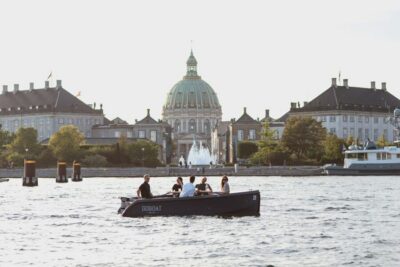
1, 2 or 3-Hour Boat Rental (No License Required)
Read our review →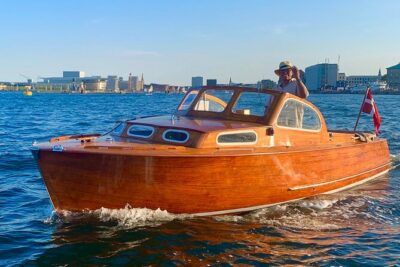
Private Copenhagen Boat cruise in Scandinavian mahogany boat
Read our review →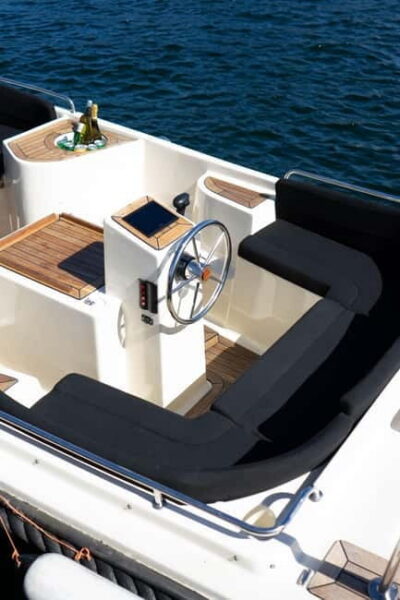
Browse the lists this tour appears in