Reviewed · GUIDED
Copenhagen: The Opera House Guided Tour
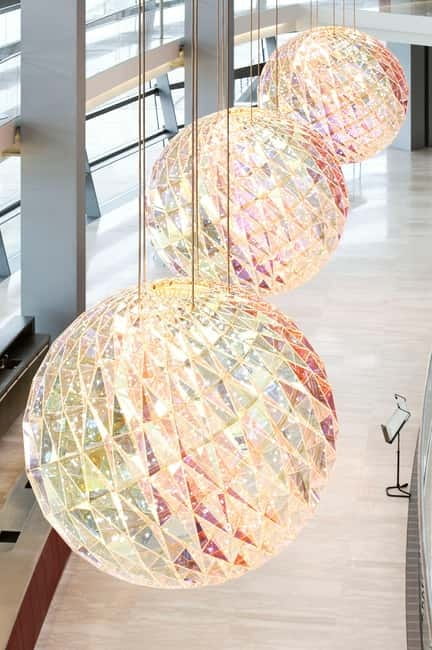
This tour is interesting because Copenhagen’s Royal Danish Opera House is built for high-tech staging, and the guide shows you how the magic actually works. I especially love the light-filled foyer, with Olafur Eliasson-style glow, and the way the glossy maple shell frames the main stage like a piece of design you can walk into.
The only real drawback to plan around: it is not recommended for young kids, specifically children under 7.
Key highlights you will notice fast
- Olafur Eliasson light sculptures: world-renowned lighting art you see up close, not just in photos
- Glossy maple shell around the Main Stage: the wood is part of the show, not background decoration
- Gilded ceiling and glowing woodwork: the auditorium feels dramatic even before the performance starts
- Behind-the-scenes movable stage fields: big sets move through complex systems that enable quick changes
- How scenography and costumes work together: staging, wardrobe, and design are explained in practical terms
- English guided tour, 75 minutes: enough time for real context without dragging on
Why this Opera House tour feels different from a typical “see the building”
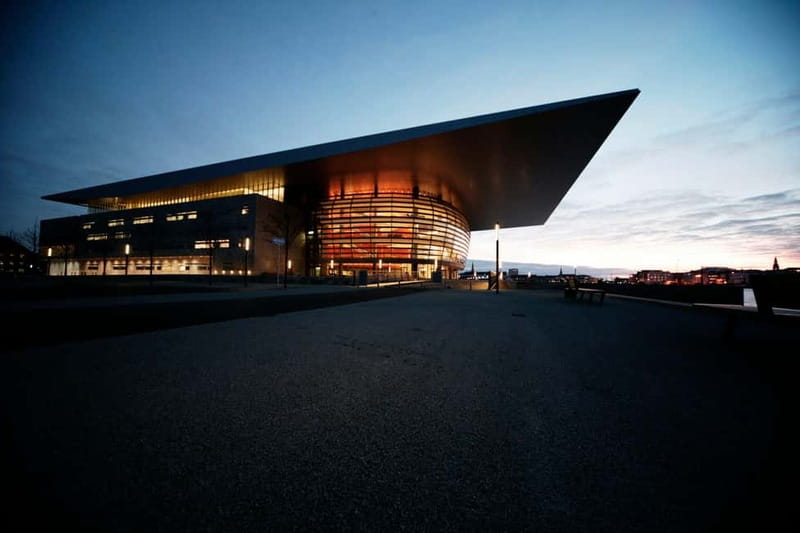
Copenhagen has plenty of impressive architecture, but this one has a job to do. The Royal Danish Opera House is designed for performances, and the tour is built around that idea, so you are not just looking at pretty rooms, you are seeing how the building supports theater.
You will get a front-to-back sense of the experience, from the overwhelming light of the foyer to the detailed atmosphere of the hall, then all the way to the mechanics that move huge sets behind the curtain. The fact that it focuses on staging, costumes, and scenography makes it more useful than a basic walk-through.
At $24 for a 75-minute guided visit, it is good value if you care even a little about how productions are put together. If you only want architectural photos and nothing else, you might feel the time is better spent elsewhere. But if you like theater and design, this is one of the cleanest introductions to how it all clicks.
A few more Copenhagen options worth comparing
- Copenhagen Card-Discover: 80+ Attractions & Public Transport
★ 4.6 · 5,351 reviews - Copenhagen: Hop-On Hop-Off Bus Tour with Boat Tour Option
★ 3.9 · 4,122 reviews - Private Walking Grand Tour of Copenhagen
★ 5.0 · 3,953 reviews
Meet at the lobby by the harbor entrance, not the “front door”
Plan to arrive 15 minutes early. Your meeting spot is in the lobby at the main entrance out to the harbor, and it is just around the corner from the official address listed as Ekvipagemestervej 10.
Why the timing and the exact location matter: this tour is timed to move groups efficiently through busy parts of the building. Showing up late can squeeze your time inside, and you do not want that with a tour this focused.
Once you are in the right lobby, you will be set for an English guided route that starts from the foyer and gradually leads you toward the auditorium and backstage areas.
The foyer: overwhelming light, plus art that changes how you see the room
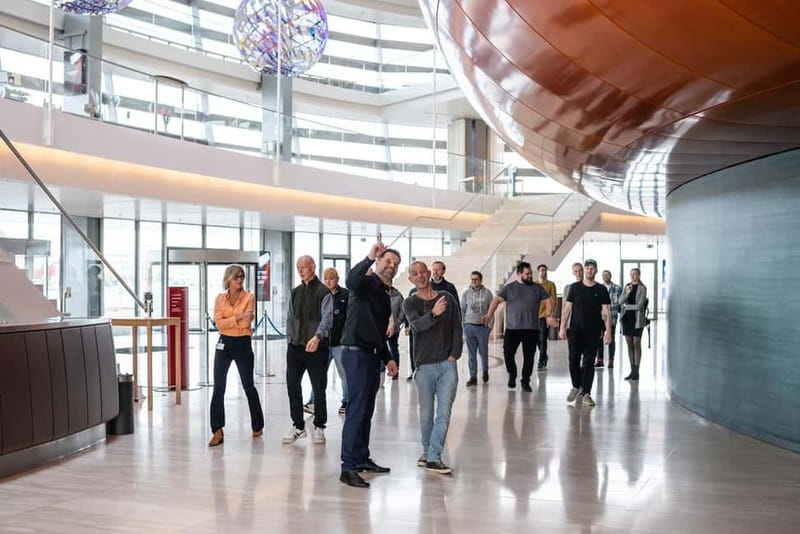
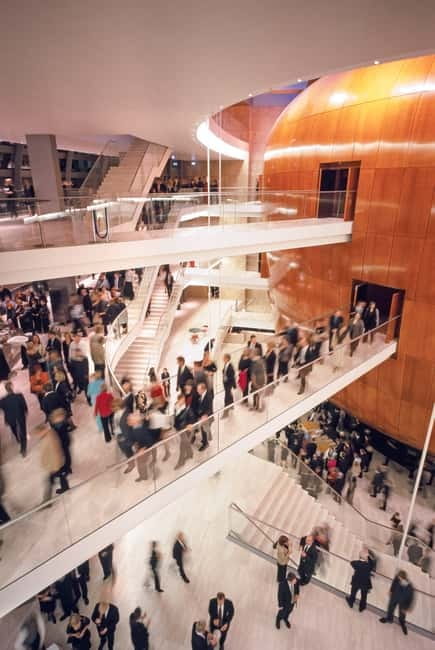
The tour begins where you can understand the Opera House’s personality immediately: the foyer by the main entrance. This is where you get that first wow moment, not just because it looks grand, but because the lighting is doing serious work.
You will be amazed by the overwhelming light and the effect it has on your sense of space. Then the guide points out Olafur Eliasson world-renowned light sculptures and the glossy maple shell wrapping the Main Stage area.
What I like about this part is that the guide treats it like a design system, not a decorative feature. Light, materials, and shape are all working together to make the building feel alive. Even if you are not an art expert, you can usually tell what the designer was aiming for: theatrical drama starts before the curtain rises.
If you are the kind of traveler who likes standing for a minute and simply looking, this is a great place to do it. The foyer rewards stillness.
Inside the hall: gilded ceiling and glowing woodwork in a performance mindset
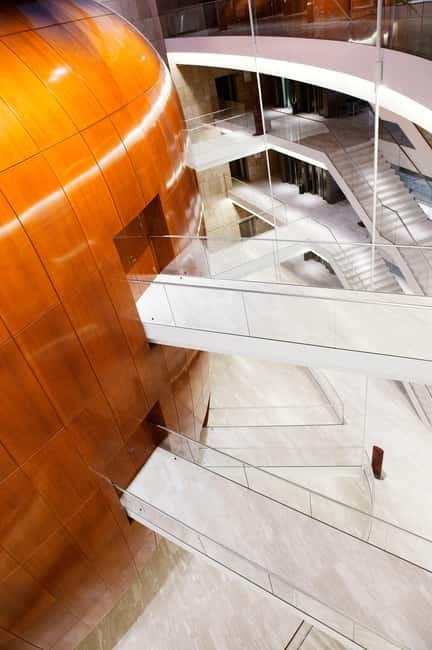
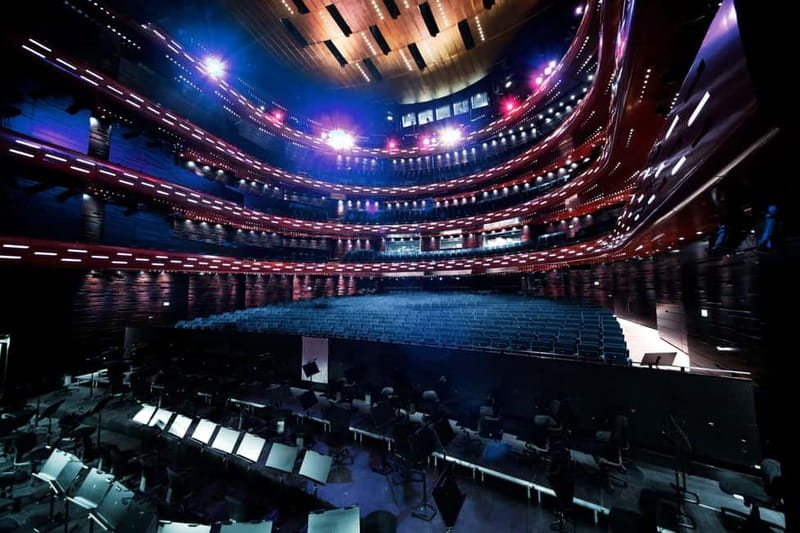
Next you move into the hall atmosphere where the focus shifts from dramatic light to crafted detail. The gilded ceiling and the glowing woodwork take center stage, giving the space a warm, almost backstage-ready feel.
This is one of those interiors that can be hard to describe until you see it. On paper, it is “beautiful.” In person, it reads like stage design extended into architecture, with warm materials that help the space feel theatrical without needing an audience full of people yet.
The tour keeps you moving at a pace that lets you take it in, but you should still expect to do some standing and walking. If you enjoy architecture that feels connected to real use, this is exactly the right stop.
A different shape of day in Copenhagen:
- From Copenhagen: Lund and Malmö 2-Country Tour
★ 4.7 · 3,807 reviews - Copenhagen Highlights Walking Tour
★ 5.0 · 2,324 reviews - Copenhagen: Highlights 3 Hour Bike Tour with a Local Guide
★ 4.8 · 2,312 reviews - Hamlet and Sweden Tour – Two Countries in one day !
★ 5.0 · 2,223 reviews
Behind the scenes: movable stage fields and real-world staging engineering
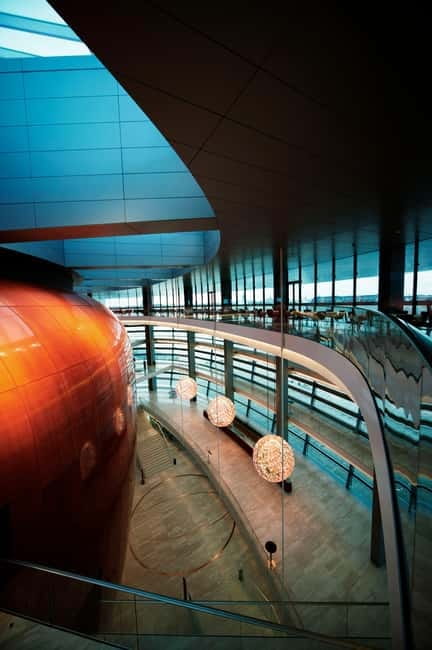
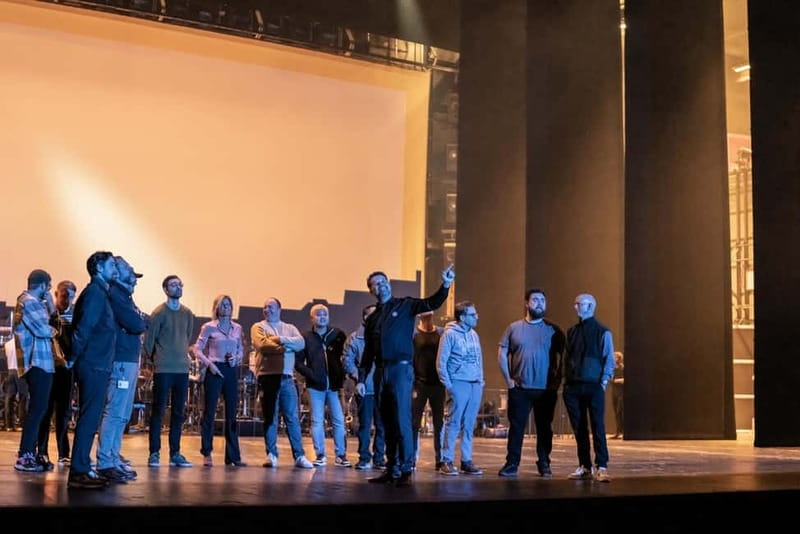
This is where the tour earns its keep. You get behind the scenes and see how gigantic and complex sets can be moved, and why this Opera House can pull off theatrical effects that are hard to replicate anywhere else in Denmark.
The core idea the guide explains is that the building is not just a shell around performances. It has high-tech solutions built in, including movable stage fields that allow scenography to shift in ways that support timing, illusion, and production demands.
What you will likely find most satisfying here is the practical angle. Instead of vague, magic-talk explanations, the tour talks about how systems, mechanics, and planning come together. Theater has an engineering side, and once you see it, performances start making more sense, even if you have never thought about it before.
And yes, this part tends to be the most interesting for people who thought the tour would be mostly sightseeing. Even if you are not the “technical theater” type, seeing the moving-set capability gives you a new lens for what you later watch onstage.
How staging, costumes, and scenography connect (and why that matters)
A good guided tour does more than show you objects. It explains why those objects exist together, and this one does that by tying staging performances to costumes and scenography.
You will learn how productions are planned so that set changes, scene transitions, and wardrobe needs line up with what the stage and technology can actually handle. You also get a clearer sense of roles: the story is not just acted, it is engineered through design decisions.
Why this is valuable for you as a traveler: it changes how you interpret everything else. If you attend a show in Copenhagen later, you will likely notice more than you did before. Even without that next step, you still get a stronger appreciation for the building itself, because you understand what it is built to do.
The Opera House’s Danish roots, explained without getting heavy
One neat contextual detail: the Royal Danish Opera House is described as a gift to the Danish people from shipowner Mærsk Mc-Kinney Møller. That kind of note helps ground the architecture and the production capabilities in something human, not just modern design language.
It also helps you understand why this building is treated as a public treasure, not only a private venue. That perspective makes the tour feel more meaningful, especially if you care about cultural places that belong to locals.
Price and value: $24 for entrance and a 75-minute guided look at real theater tech
At $24 per person for about 75 minutes, you are paying for more than access. You are paying for interpretation, plus entry into the Opera House spaces you would not casually explore on your own.
Here is how I think about the value for you:
- If you want architecture photos only, $24 can feel like too much.
- If you want to understand why the building looks and works the way it does, it feels like a fair deal.
- If you like theater and stagecraft, this is one of those “small ticket, big payoff” experiences because it teaches you something specific.
The tour includes entrance to the Opera and a guided tour, and the route focuses on the foyer, hall atmosphere, and behind-the-scenes systems. That combination is what makes the price feel justified.
Practical details that will save you stress on tour day
A few ground rules keep the tour flowing, so it is worth adjusting early:
- No baby strollers are allowed.
- No food or drinks.
- No luggage or large bags.
- Pets are not allowed, but assistance dogs are allowed.
If you are traveling light, good. If you are carrying a backpack full of day gear, consider keeping it small and manageable.
Also, this tour is in English, and it is wheelchair accessible. You should still expect to follow the guide’s path closely since some areas are set up for operations, not tourist wandering.
And since the meeting spot is in a lobby near the harbor entrance, go with the easy plan: head there early, find the correct lobby, and let the tour start when it is ready.
Who should book this tour
You will likely enjoy this most if:
- you like opera or theater, even just casually
- you enjoy architecture when it has a purpose
- you are curious about how complicated stage effects get done
- you want a guided experience that explains the “how,” not just the “what”
You might skip it if:
- you are traveling with small kids under 7, since it is not recommended for them
- you want a slow, open-ended museum-style visit where you can linger forever
Should you book the Copenhagen Opera House Guided Tour?
If you are torn, my take is simple: book it if you want a tour that connects stunning design with the behind-the-scenes mechanics of modern performance. The foyer light experience and Olafur Eliasson-style installations are a strong reason to go, but the real reason to book is what happens next, the backstage look at moving stage fields and the explanation of how staging, costumes, and scenography work together.
If you want a quick, structured introduction to how the Opera House functions, this 75-minute format fits well. And at $24, it is hard to beat the value for a guided entry into a world-class performance building.
FAQ
How long is the Copenhagen Opera House guided tour?
The tour lasts 75 minutes.
What is the price of the tour?
The price is $24 per person.
Where is the meeting point?
Meet in the lobby at the main entrance out to the harbor, just around the corner from Ekvipagemestervej 10.
What time should I arrive?
Please arrive 15 minutes early.
Is the tour offered in English?
Yes, the guided tour is in English.
Is the tour wheelchair accessible?
Yes, the tour is wheelchair accessible.
Is the tour suitable for children?
It is not recommended for children under 7 years old.
Are strollers allowed?
No, baby strollers are not allowed.
Are pets allowed?
Pets are not allowed, but assistance dogs are allowed.
Can I cancel or pay later?
You can cancel up to 24 hours in advance for a full refund. You can also reserve now and pay later.
Recently reviewed around Copenhagen
- The Forgotten Giants Private Tour★ 5.0 · 3 reviews
- E-Scooter guided tours in Wonderful Copenhagen★ 5.0 · 3 reviews
- Explore Copenhagen in 60 minutes with a Local★ 5.0 · 3 reviews
- E Biking Adventure to Kronborg Castle★ 5.0 · 3 reviews
- Danish Design Classic and Modern Style Self-Guided Audio Tour★ 5.0 · 3 reviews
- Departure by Luxury Vehicule Copenhagen to Copenhagen airport CPH★ 5.0 · 3 reviews
- Copenhagen: Self Guided Scavenger Hunt and Tour★ 4.0 · 3 reviews
- Mikkeller Tastings – The Unusual Story of Beer and Mikkeller★ 5.0 · 3 reviews
Guided, compared.
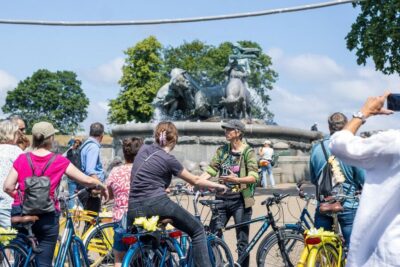
Highlights 3 Hour Bike Tour with a Local Guide
Read our review →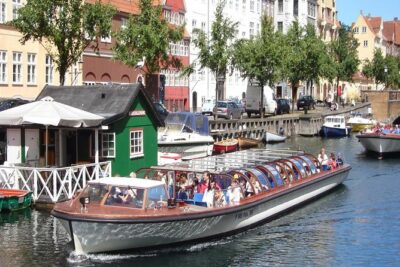
Copenhagen Sightseeing Classic Canal Tour With Live Guide
Read our review →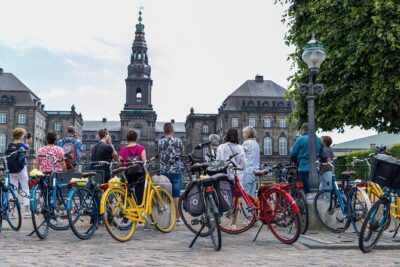
Copenhagen Highlights 3 Hour Bike Tour with local Guide
Read our review →


Guided Party Pub Crawl with 4 Shots and 1 Drink
Read our review →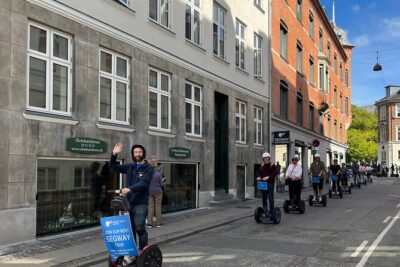
Segway Tours Copenhagen w. Guide & Concierge Service. 2 Hours+
Read our review →