Reviewed · COPENHAGEN TOURS
Copenhagen Bicycle Adventure
Copenhagen by bicycle is one of the easiest ways to get oriented fast. This tour starts in the middle of the action at Axel Torv 1, right by Tivoli, so you can drop in and start moving without a long commute. You also get a clear, low-stress plan for seeing royal sights, canals, and squares in a short window.
What I like most is the human scale and the guide help. I especially enjoyed hearing stories from guides like Arthur and Marc, who explain what you are looking at in plain language, and the ride ties together more than just landmarks, it connects them. The route also hits 10+ stops, so you feel like you covered real neighborhoods, not just posed for photos at the famous spots.
One thing to consider: not every stop is fully covered. Rosenborg Castle is extra since admission is not included, and helmets are not provided (not mandatory, but recommended), so plan accordingly if you want to be fully prepared.
Key highlights you will feel right away

- Easy start at Axel Torv 1, with clear meeting and end back at the same central spot
- A local guide (offered in English) who adds context to the big sights
- 10+ stops with mostly free entry, so your money goes to time, not tickets
- Copenhagen’s bike-friendly feel, with dedicated cycle infrastructure that makes the ride practical
- Royal sights + classic Copenhagen icons in a tight 1 to 3 hour loop
- Breakdown support for your bike, including a quick replacement if something happens
Why riding Copenhagen by bike makes sense
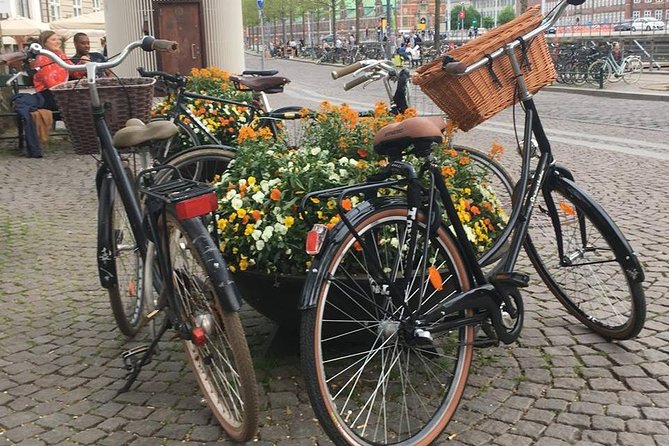
Copenhagen is built for movement. Once you are rolling, you stop fighting for parking, you skip the stress of waiting for slow crosswalk timing, and you get that smooth city flow that cars just do not offer. A bicycle tour also gives you something walking tours often miss: the sense of linkages between places, like how one square, park, and waterfront area connects into a single city story.
This particular outing is also structured in a way that keeps it fun. You are not stuck in a museum for hours or trying to speed through a dozen paid attractions. Most stops are quick and free, then you get a focused moment at each highlight, like City Hall Square, the Little Mermaid area, and Nyhavn.
If you like efficient travel, this is your kind of plan. The duration is listed as 1 to 3 hours (approx.), so it works well if you want one active block in the middle of your day rather than a full half-day commitment.
A few more Copenhagen options worth comparing
- Copenhagen Card-Discover: 80+ Attractions & Public Transport
★ 4.6 · 5,351 reviews - Copenhagen: Hop-On Hop-Off Bus Tour with Boat Tour Option
★ 3.9 · 4,122 reviews - Private Walking Grand Tour of Copenhagen
★ 5.0 · 3,953 reviews
Price and value: what you are actually paying for
At $74.02 per person, the value is mostly about what is included. You get bicycle rental as part of the price, plus a local guide. If you have a bike issue like a flat tire, the provider states they will bring a new one without an additional charge, which matters more than people think when you are trying to keep your day on schedule.
Another value factor: most admissions are free on the stops. Rosenborg Castle is the main paid item mentioned, since its admission is not included. There is also a food stop at Seaside Toldboden, but consumption is not included, so you can treat it as a warm-up, window-shopping, or a snack if you want.
So where does your money go? Mostly into guided time and transportation. Instead of spending extra on bike rental and paying for your own map puzzle, you get a set route through central Copenhagen with interpretation along the way.
Meeting at Axel Torv 1, then riding into the center of it all
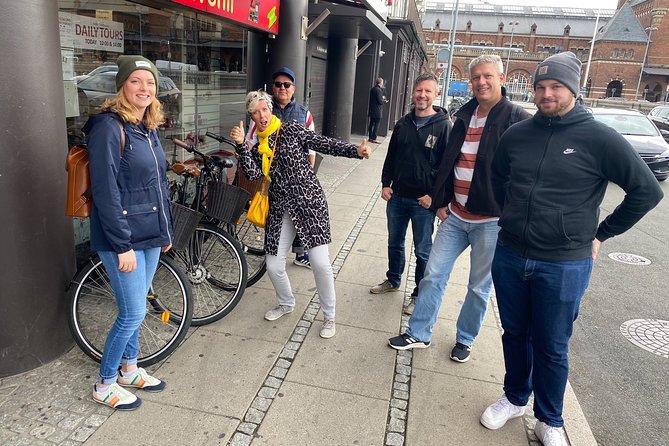
You meet at Axel Torv 1, 1608 København, Denmark, with the bike parking area in the square in front of the Tivoli park main entrance. The tour plan also has the Axel Tower buildings as a key landmark, and it ends back at the same meeting point.
This matters because you can easily connect it with your other plans. You are in a transit-friendly, central area, and you do not need a complicated start point. You also start at 10:00 am, which is a solid time if you want daylight and an easier rhythm through the city.
The group size limit is 15 travelers, which is small enough to feel personal. It is not so big that you are always waiting for people to catch up. You will also likely feel the benefit of being near public transportation, since that makes it easier to adjust if your day plans change.
Stop-by-stop: the royal, classic, and photo-famous Copenhagen loop
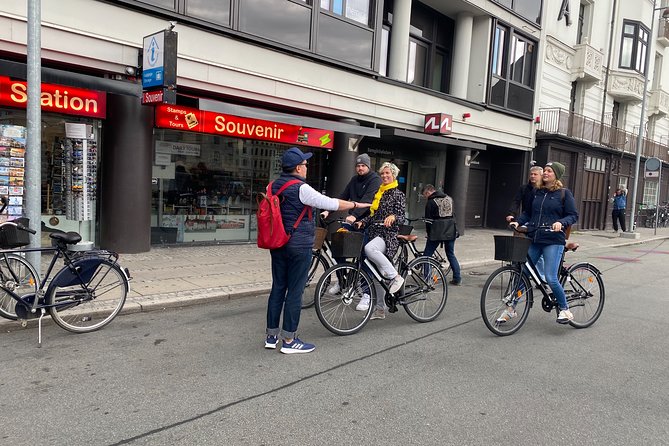
Below is what you will experience as you move through the city. The time at each stop is short, so think of this ride as a guided highlights sampler where the guide helps you notice details quickly.
A different shape of day in Copenhagen:
- From Copenhagen: Lund and Malmö 2-Country Tour
★ 4.7 · 3,807 reviews - Copenhagen Highlights Walking Tour
★ 5.0 · 2,324 reviews - Copenhagen: Highlights 3 Hour Bike Tour with a Local Guide
★ 4.8 · 2,312 reviews - Hamlet and Sweden Tour – Two Countries in one day !
★ 5.0 · 2,223 reviews
City Hall Square (Rådhuspladsen): the easy way to feel Copenhagen’s pulse
Your ride begins by moving to City Hall Square, a major public space in central Copenhagen in front of the City Hall. This square is also the start of Strøget, the well-known shopping street, and it is used for large events and demonstrations.
For you, this is a good first anchor. It gives you an immediate sense of where the city gathers. In a bike tour, that early orientation is gold. You stop, look around, and your brain starts building a map.
Rosenborg Castle: what to see if you choose to go inside
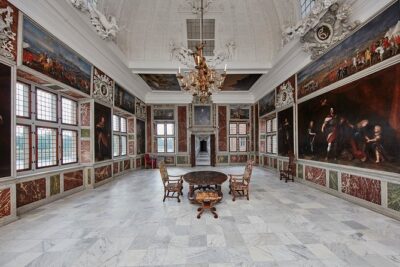
Next is Rosenborg Castle, built as King Christian IV’s summer residence (1606 to 1634). The castle is tied to some of Denmark’s best-known royal treasures.
Key interior details mentioned include the basement display of the Danish crown jewels and royal crowns, plus the Knights’ Hall with thrones. You will also hear about the three life-size silver lions that stand guard around the thrones.
This stop is interesting because it is not only about the building. The interiors are described as well-preserved, and there is mention of spaces like the king’s private writing room and even a bathroom, plus wax figures of former royal figures. The Royal throne details are specific too, including that the royal throne is made on a narwhal stand with gilded figures, while the queen throne is in silver.
Drawback to note: admission is not included here, so if you want to go in, you will pay separately. Also, the time at the stop is brief, so decide in advance whether you want a quick exterior look or you plan to enter.
Kongens Have: the Renaissance royal garden break
After the castle area, you move to Kongens Have, the oldest royal garden in Denmark. It was laid out in Renaissance style by Christian IV in the early 17th century, and it has been open to the public since the 1770s.
The garden is described as a major breathing space in central Copenhagen, with around three million visitors every year. The alley layout is part of what makes it special, including the Cavalier Hallway ending at the Hercules Pavilion, and the Ladies Hallway ending at a statue of H.C. Andersen, with a corridor across those two.
This stop works well on a bike day because it is a pause without feeling like you are losing momentum. You get greenery and calm, and the guide context helps it feel less like a random park and more like a designed royal landscape.
Nyboder and Christian IV: characterful housing history in the middle of town
You will pass through Nyboder, a historic row house district built as housing for Royal Danish Navy personnel and their families, created when Christian IV planned and built these barracks-area residences.
There is also a stop for a statue of King Christian IV. For me, this is the kind of place where a guide makes a big difference. From the street, it could look like ordinary city housing. With context, it becomes a real slice of how the city functioned beyond the palaces.
The Little Mermaid: the landmark you came for, plus the story behind it
Then you ride to the Little Mermaid area, Copenhagen’s most famous statue. The story is tied to Hans Christian Andersen’s fairy tale and a wave of arts interest in the early 1900s.
In 1909, Carl Jacobsen, founder of Carlsberg beer, attended a ballet based on the story and was impressed. He then asked Danish sculptor Edvard Eriksen to create the sculpture. It was unveiled in 1913 at the harbor, and the date August 23 is commemorated as the mermaid’s birthday.
This stop is short, and you will be close to other visitors, so I recommend treating it like a quick signature moment. Spend a minute or two soaking in the details the guide mentions, then roll on. You get more value from keeping the pace and seeing what comes after.
The Citadel area: a different feel, built for defense and sea power
Next you shift to the Citadel area. This zone is described as part adventure, part history, part nature, and part recreation. It was a military area for centuries, a link in Copenhagen’s defense against attack from the sea.
You approach from the city center by crossing the moat and entering through an old, stately royal gate, so the experience feels like stepping back toward the 1660s era.
For you, this is a great contrast. After palaces and statues, you get a broader sense of how Copenhagen protected itself, and how built geography shaped the city.
Seaside Toldboden: a food-market stop without pressure to eat
After more sightseeing on foot and bike, you make a warm-up stop at Seaside Toldboden, described as a famous Danish gastronomic market in the port area.
It is specifically tied to seven internationally recognized chefs, and it sits at the port where the queen arrives on a royal ship. Admission is free, but consumption is not included, so you can go in for a look and a drink or choose to skip spending.
This is a smart mid-to-late stop because it gives your body a chance to reset without breaking the tour plan.
Gefion Fountain: big monument energy near the waterfront
Then you visit Gefion Fountain in Churchill Park near the Langelinie waterfront. It is one of Copenhagen’s large monuments, featuring naturalistic oxen pulling a plough tied to the Norse goddess Gefion.
The sculptor is Anders Bundgaard, and the fountain is described as a gift connected to the Carlsberg Foundation, linked to Carlsberg’s 50 year anniversary in 1897. The fountain figures were created between 1897 and 1904 in rented facilities at the Danish Cryolite Company.
I like this stop because you can see the scale from a bike and immediately understand why it became a city monument. It also gives you a moment to look toward the waterfront area without having to commit to a longer walk.
Frederiks Church (Frederiks Kirke): a church built to mark a royal milestone
You finish up the central royal cluster with Frederiks Church. The plan mentions that in 1749, King Frederik V celebrated the tercentenary of ruling Denmark and Norway, and he decided to build a church in the new town in honor of God and absolute monarchy.
Both the church and town are named after him, Frederiks Kirke and Frederiksstad. The master planner and builder is listed as court architect Nicolai Eigtved, who is also noted as the architect of the Marble Church.
This is a stop that can feel quick, but the guide context makes it easier to understand why the building looks the way it does and why it is tied to power and ceremony.
Amalienborg: changing of the guard at noon, then the palace museum
You then get two related experiences around Amalienborg Castle.
First is the changing of her Majesty’s guard. The plan states you can experience it daily when guards march from barracks in 100 Gothersgade (by Rosenborg Castle) through Copenhagen and end at Amalienborg. The changing itself is at 12:00 noon.
Second is Amalienborg Palace Museum. Amalienborg is described as Denmark’s royal family residence, with a palace square where you watch the guard and the royal guard called Den Kongelige Livgarde.
The palace is made up of four identical buildings: Christian VII’s Palace (Moltke’s Palace), Frederik VIII’s Palace (Brockdorff’s Palace), Christian IX’s Palace (Schack’s Palace), and Christian VIII’s Palace (Levetzau’s Palace). The Amalienborg Museum is located in one of the buildings.
This section is the most ceremonial part of the day. If you care about how royal pageantry shapes city life, this is your moment. Timing matters here, because the changing happens at a set hour.
Nyhavn: the canal postcard ending that still feels human
Finally, you reach Nyhavn, the famous 17th-century waterfront district. It is a canal and entertainment area lined with brightly colored historic townhouses, plus cafes, bars, and restaurants.
The route description notes that Nyhavn runs from Kongens Nytorv to the harbor front just south of the Royal Playhouse. This stop is perfect for photos, yes, but also for a last little atmosphere hit, because it is an actual lively area rather than a dead museum zone.
After Nyhavn, the tour ends back at the meeting point at Axel Torv 1.
What to wear and how to plan your day for a smooth ride
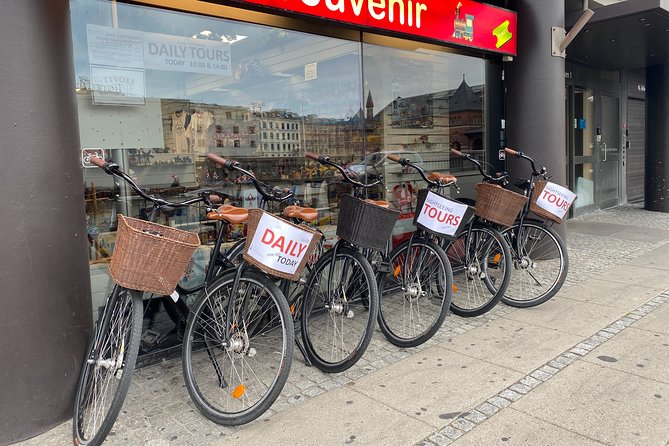
This is an all-weather operation, meaning you should dress appropriately. Copenhagen weather can shift, and you will want to be comfortable enough to ride between stops.
Helmets are not mandatory, but they are recommended, and they are not included. If you have your own, bring it. If you do not, at least wear something that makes you feel steady, like secure shoes and a light layer that works in rain or wind.
Also, remember that stop times are short, especially for big ticket areas. So go in with the mindset of fast recognition, quick learning, and then a plan for what you might return to later if a stop grabs you.
Who this Copenhagen bike adventure fits best
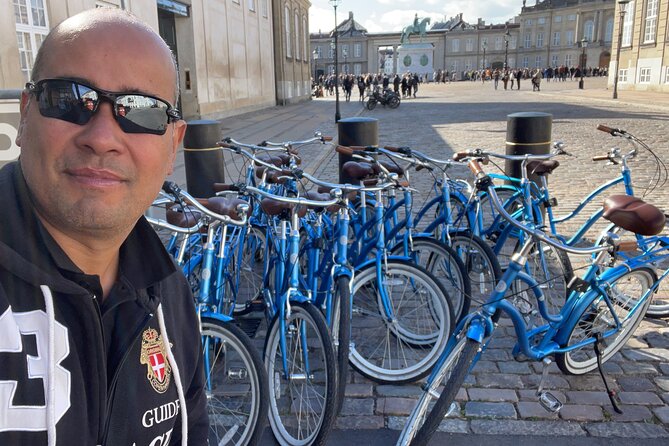
This tour is a strong match if you want a guided tour but hate spending your whole day waiting in lines or figuring out logistics. The route hits central Copenhagen favorites like the City Hall area, Rosenborg, Kongens Have, the Little Mermaid, Amalienborg, and Nyhavn, all in a single flow.
It is also ideal if you like being active and value local explanations. The bike helps you cover ground, while the guide helps you understand why each location matters, without drowning you in long lectures.
Minimum age is 14 years, so it is not a kid-only ride for younger children. And with a max group size of 15, it stays manageable for most people who can ride a bike confidently.
Should you book this Copenhagen bicycle adventure?
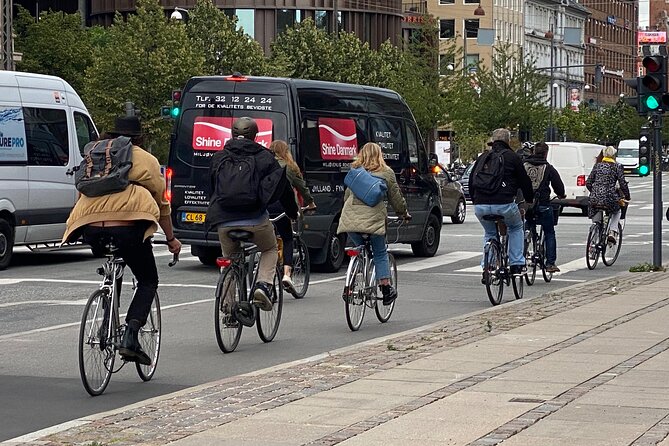
If you want to see a greatest-hits version of Copenhagen with a local guide and bike rental included, I think this is worth booking. The pricing feels fair because so many stops are free and your transportation is handled, plus you are not stuck with a massive group.
I would skip or rethink it if you strongly prefer long time inside museums, since multiple major sights are timed for quick viewing. Also, if you hate the idea of extra costs, plan for Rosenborg Castle as the main admission item not included.
Overall, this is a practical, centralized way to get a real feel for Copenhagen by bike, with just enough royal pageantry and classic landmarks to make the ride feel complete.
Recently reviewed around Copenhagen
- The Forgotten Giants Private Tour★ 5.0 · 3 reviews
- E-Scooter guided tours in Wonderful Copenhagen★ 5.0 · 3 reviews
- Explore Copenhagen in 60 minutes with a Local★ 5.0 · 3 reviews
- E Biking Adventure to Kronborg Castle★ 5.0 · 3 reviews
- Danish Design Classic and Modern Style Self-Guided Audio Tour★ 5.0 · 3 reviews
- Departure by Luxury Vehicule Copenhagen to Copenhagen airport CPH★ 5.0 · 3 reviews
- Mikkeller Tastings – The Unusual Story of Beer and Mikkeller★ 5.0 · 3 reviews
- Copenhagen: Self Guided Scavenger Hunt and Tour★ 4.0 · 3 reviews
Copenhagen Tours, compared.
Copenhagen Card-Discover: 80+ Attractions & Public Transport
Read our review →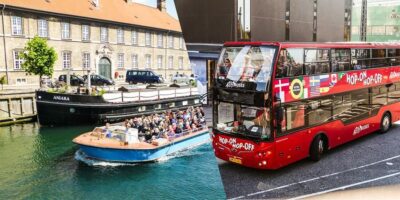
Hop-On Hop-Off Bus Tour with Boat Tour Option
Read our review →

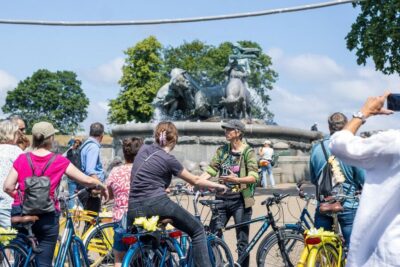
Highlights 3 Hour Bike Tour with a Local Guide
Read our review →
Hamlet and Sweden Tour – Two Countries in one day !
Read our review →