
Reviewed · CITY TOURS
Copenhagen: A guided walk for first-timers in the city
Copenhagen’s old streets are only half the story. This guided walk is interesting because you get the city’s big picture fast, from why everyone bikes to how Copenhagen rose during the Middle Ages. You’ll cover the core sights in a tight 2-hour loop that feels made for first timers.
I love two things about it right away. First, the headset system keeps the guide audible even when the group moves and sidewalks get busy. Second, you’re in a small group size that makes questions actually work, not just get saved for later.
One possible drawback is that this is an outdoor-only walk. You won’t go inside any sights, and it’s not suitable for wheelchair users or people with low fitness, since you’ll be walking about 3 km in total.
Key highlights worth your time
- Headset audio all the way, so you’re not shouting to hear the guide
- Small group size, usually under 16 and limited to 10 participants
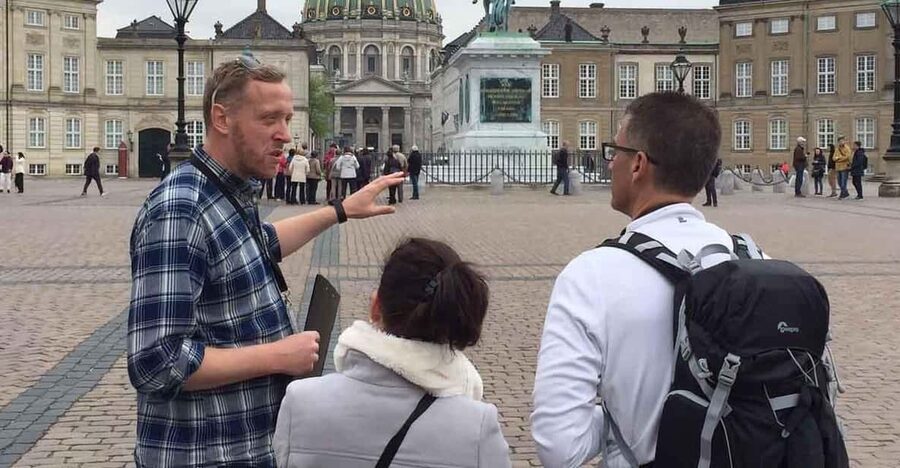
- Expert guide with Q and A, covering both history and modern Copenhagen
- 3 km route paced for orientation, not marathon sightseeing
- Map at the end, plus practical suggestions for what to do next
Why this Copenhagen first-timers walk makes sense
If you’ve got limited time, Copenhagen can feel like it has two personalities. There’s the postcard part, with classic buildings and waterways. Then there’s the practical part, where cycling rules, buildings have layers of purpose, and the city’s past keeps showing up in the present.
This walk helps you connect those dots quickly. You’re not just looking at monuments. Your guide puts the meaning behind them, so you start recognizing patterns as you move from one landmark to the next. The best part is how smoothly it sets you up to explore on your own afterward, without you needing to become an expert overnight.
And yes, you’ll still enjoy the scenery. But the real value is getting a framework for the city’s story, in plain language you can remember later.
More walking tours in Copenhagen:
- Private Walking Grand Tour of Copenhagen
★ 5.0 · 3,953 reviews - Copenhagen Highlights Walking Tour
★ 5.0 · 2,324 reviews - Politically Incorrect Private Highlights Walking Tour
★ 5.0 · 1,244 reviews
Starting at Andersen’s statue, then to City Hall fast
The tour meets at the statue of Andersen, then you head straight into the heart of the walk. This is a smart start point because it’s central and easy to orient yourself from. Once you’re moving, the guide keeps the pace steady, with short stops where everyone can see the key views.
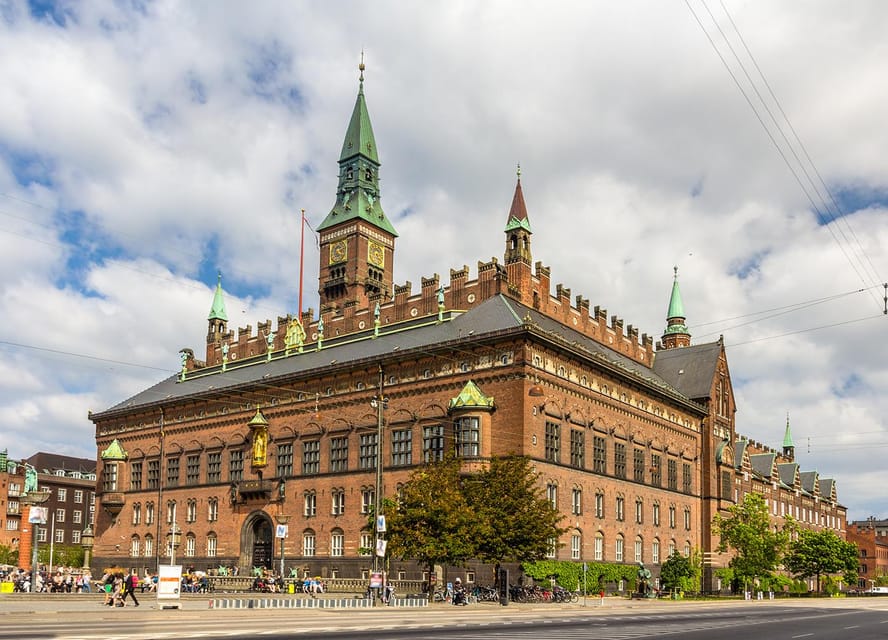
The first major stop is Copenhagen City Hall. You get a quick look, then the guide gives context so it stops being just another impressive building. From here, the walk turns from “where am I?” into “why does this matter?”
You’ll notice how the tour is designed for first timers. There’s enough structure to keep you from wandering aimlessly, but not so much that you feel stuck.
Copenhagen City Hall to Christiansborg: power, buildings, and purpose
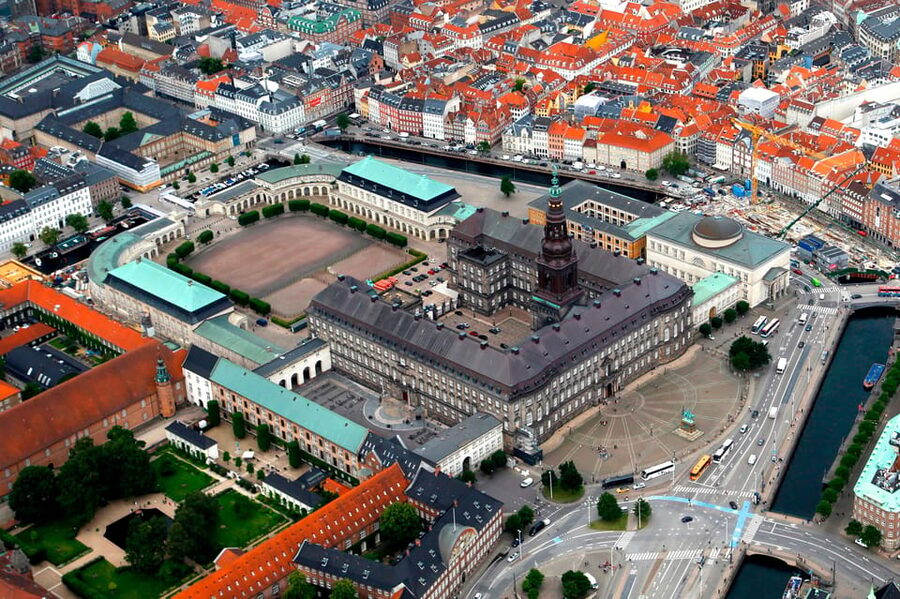
After City Hall, the route moves toward Christiansborg Palace. You’ll pause briefly for sightseeing, then again for a slightly longer explanation. That double stop format is useful. It gives you a first glance, then a second moment to actually process what you’re looking at.
Christiansborg matters because it represents Copenhagen’s layers of civic power. Even without entering the palace, you can still read the city’s priorities in how the buildings sit and how the space is used. The guide helps you connect those visual cues with historical roles, so you don’t just memorize names.
From there you walk toward Biskop Absalon, Copenhagen and keep building the story outward. Absalon is one of those names you’ll hear often if you keep digging into Danish history, and this walk gives you a starting point for why. Short stop, clear explanation, then onward.
Børsen and the Church of Holmen: quick stops, strong takeaways
Next up is Børsen, another place where the exterior view is enough to learn from. The guide uses these stops to explain how Denmark’s commercial and political life shaped Copenhagen over time. You’re not getting a lecture you have to endure. You’re getting small doses that click because you can look right at what the guide is referencing.
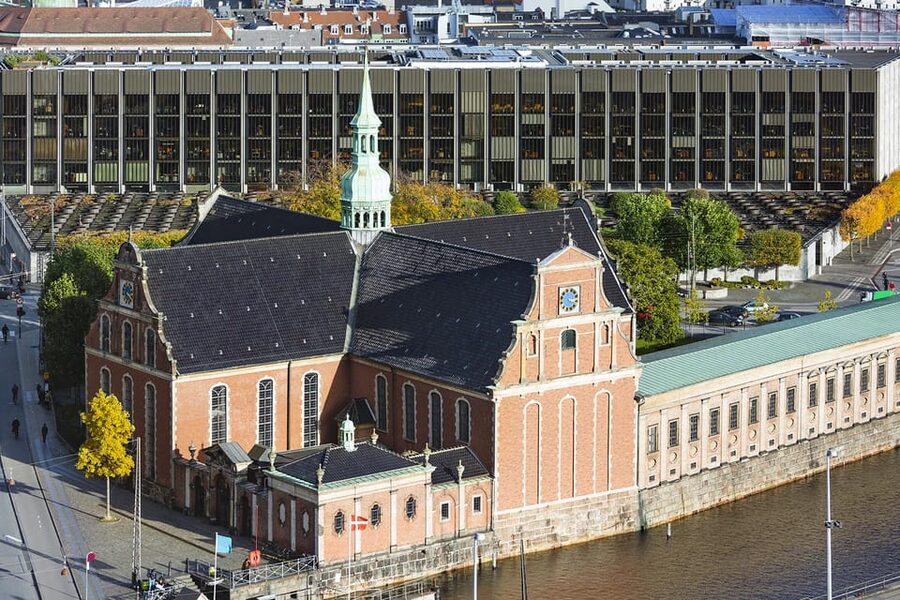
Then the walk continues to Church of Holmen. Churches can be tricky on tours if you don’t know what you’re meant to notice. Here, the guide keeps it practical. Even in a short window, you learn what to watch for and how the building fits into the broader city story.
If you’re someone who usually rushes past religious buildings because they feel similar, this stop is the one that can surprise you. The guide’s explanations are the difference between sightseeing and learning.
A few more Copenhagen options worth comparing
- Copenhagen Card-Discover: 80+ Attractions & Public Transport
★ 4.6 · 5,351 reviews - Copenhagen: Hop-On Hop-Off Bus Tour with Boat Tour Option
★ 3.9 · 4,122 reviews - From Copenhagen: Lund and Malmö 2-Country Tour
★ 4.7 · 3,807 reviews - Copenhagen: Highlights 3 Hour Bike Tour with a Local Guide
★ 4.8 · 2,312 reviews
Christian IV’s Brewhouse and the Black Diamond: old industry meets modern Denmark
One of my favorite parts of this walk is how it refuses to treat Copenhagen’s past like it’s frozen in time. You’ll get a stop at Christian IV’s Brewhouse, and you’ll talk about how Copenhagen’s growth involved practical industry, not just royal palaces and castles.
Breweries are also a good lesson in daily life history. You can imagine the city at work, not just the city on display. That angle makes the stories easier to remember.
Then you’ll reach the Black Diamond. This contrast is part of the value. After industrial and historic references, the modern cultural presence hits you immediately. The guide ties these together so you understand Copenhagen as a living city, not a museum with good lighting.
Even though you do not enter any sights, the stops are long enough to let you absorb the contrast and ask questions. With the headset, it’s easy to stay engaged instead of mentally drifting while you walk.
King’s New Square, Royal Danish Theatre, and the city’s rhythm
At King’s New Square, the walk shifts again. This is where you can feel how Copenhagen’s center is organized for movement, gathering, and daily flow. The guide’s commentary helps you interpret what you’re seeing at street level, so the space doesn’t feel like an empty “square photo opportunity.”
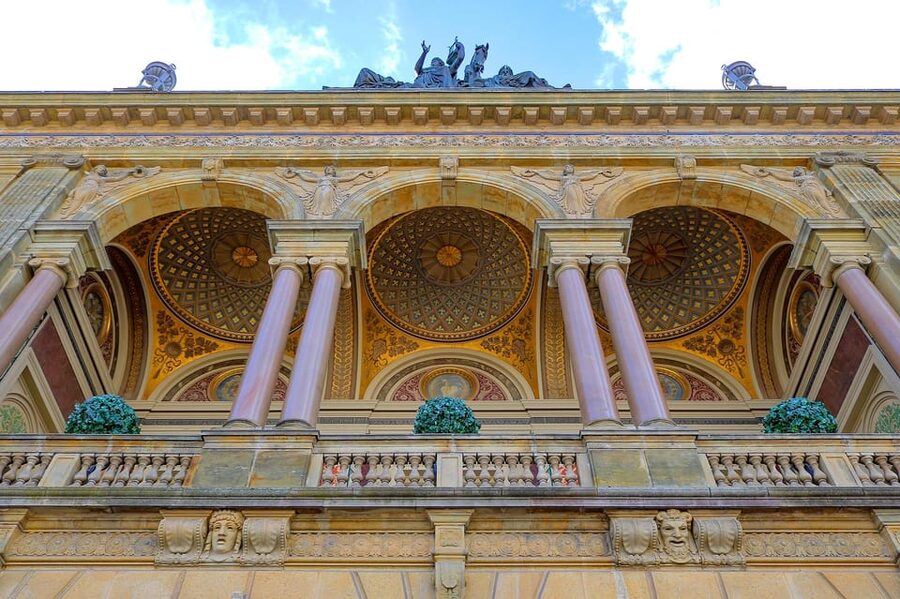
Next comes the Royal Danish Theatre. The quick sightseeing stop works well here because it’s mostly about recognizing the landmark and understanding why it matters culturally. If you like architecture and civic life, you’ll find this section especially helpful because it explains the theater as part of the city identity, not just as a big building on a route.
This is also a good point to ask questions. The small group setup makes it realistic to get answers that actually apply to what you care about, like whether certain areas are best at different times of day.
Nyhavn and Amalienborg: your final stretch and what to do next
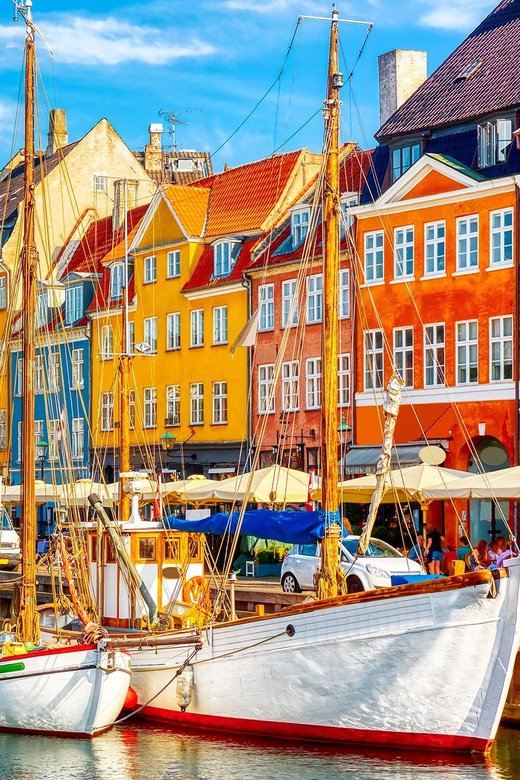
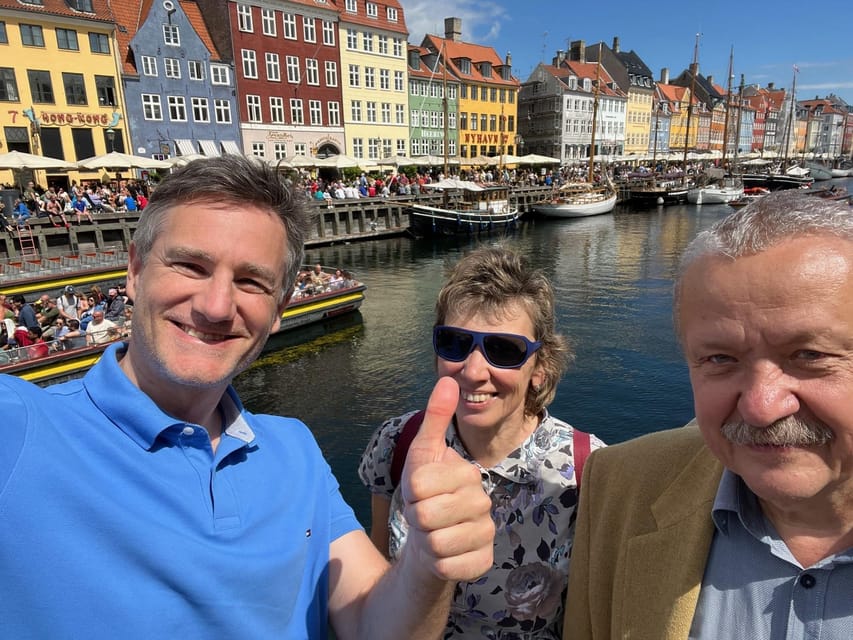
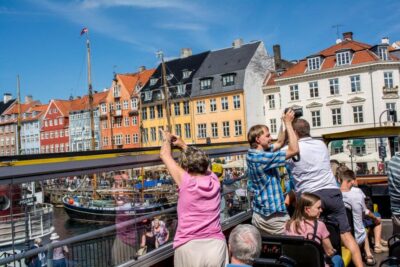
The walk reaches Nyhavn, where the mood changes quickly. You’ll spend about 10 minutes here, including walking time through the area. Nyhavn is famous for a reason: it looks like Copenhagen is posing for postcards. But your guide’s background info makes it more than just a pretty canal scene.
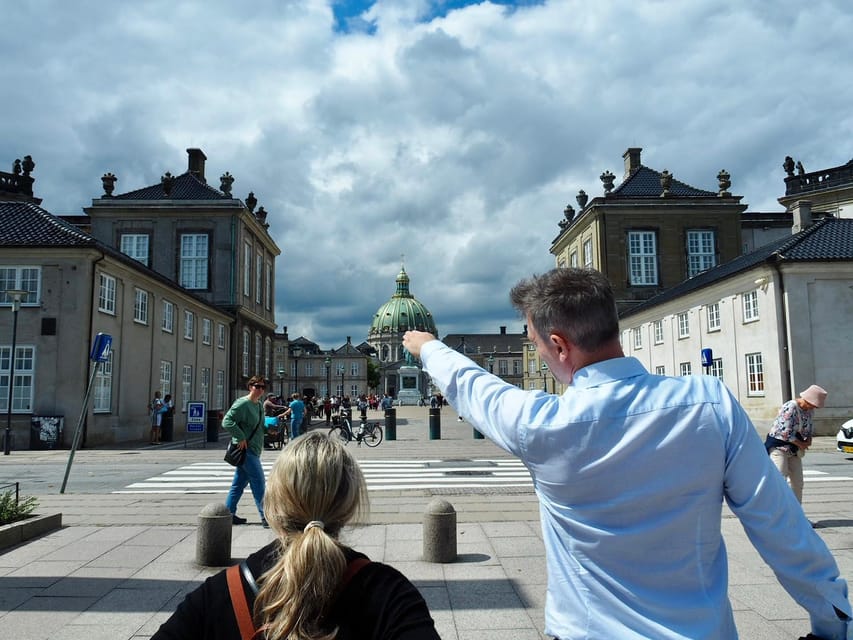
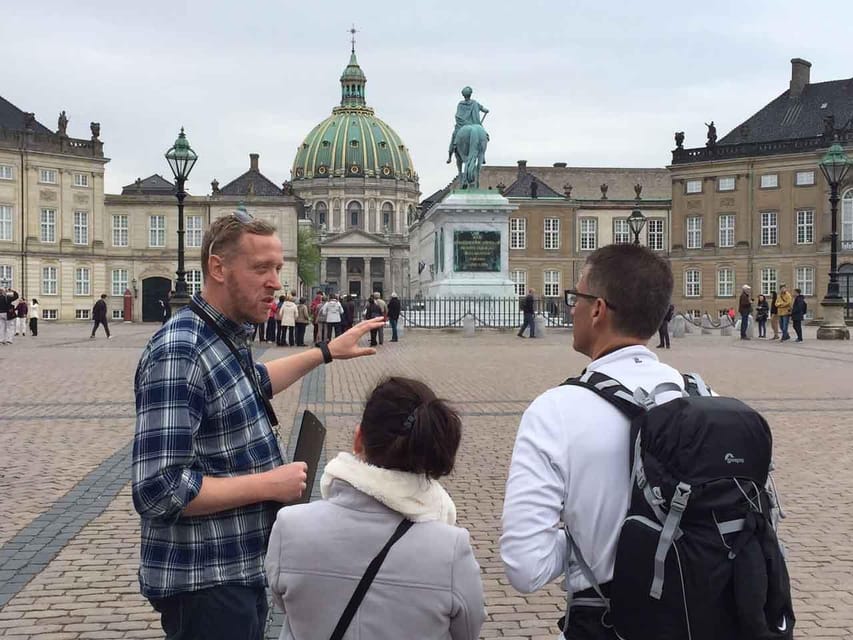
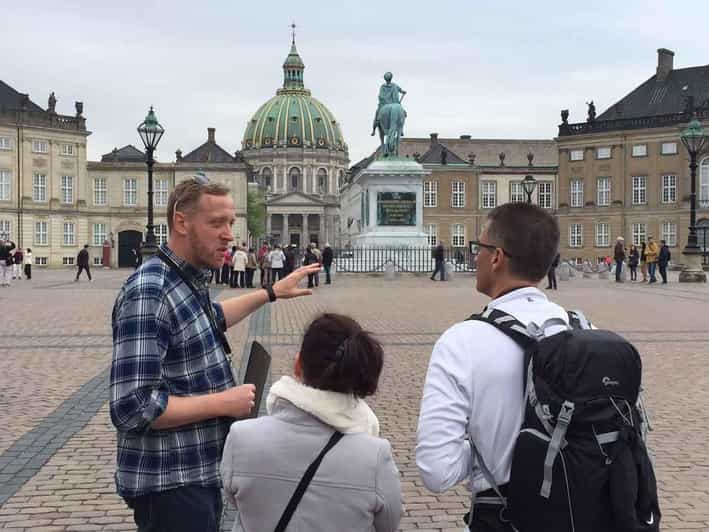
Then you move to Amalienborg Palace. You’ll walk for a bit, and the final section is your payoff. Amalienborg is a natural end point because it feels like you’ve arrived at the heart of the city’s ceremonial identity.
Even though you finish the tour at Amalienborg, the experience doesn’t end there. The guide provides you with a map of Copenhagen and suggested routes for what to do next, whether you want to return to your hotel or keep exploring. If you’re thinking about a canal tour and grabbing a drink later around Nyhavn, this walk sets you up to make those plans with confidence.
What you actually learn, beyond the photo stops
The guide covers both history and modern Copenhagen, and that balance is the reason the tour works. You’re not asked to care about random facts. You’re given explanations that help you “read” the city as you go.
Two examples mentioned by the guide’s theme: you’ll learn about why bicycling is so common and what helped Copenhagen dominate Scandinavia during the Middle Ages. Those topics aren’t just trivia. They teach you what drives the city now (cycling culture) and what shaped it then (regional power and influence).
You’ll also hear why certain places look the way they do, and how those design choices reflect changing priorities. That’s what turns sightseeing into orientation, and orientation is what first timers need most.
And if you’re lucky with timing, you might be with a guide known for specific storytelling. I’ve seen names like Jens and Thomas come up as guides who pack in details without turning it into a dry lecture. The consistent pattern is clarity, plus answers when you ask.
Headsets and small groups: the comfort advantage you’ll feel
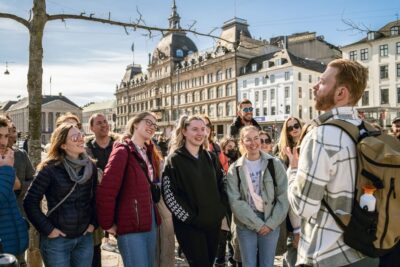
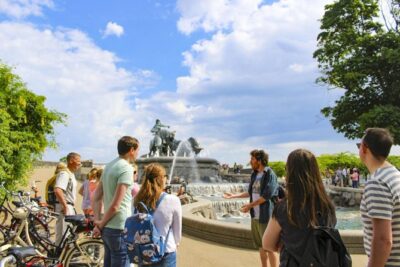
This is not a “herding cats” situation. The tour is set up for a small group (limited to 10 participants) and often stays below that upper bound. When the group is small, you stop together, listen together, and ask questions without feeling rushed.
The headset system is a quiet winner. It means you don’t lose the story every time you walk past a louder street, cross a plaza, or pause for a photo. You also spend less energy trying to catch up with the guide. That keeps the experience fun, not tiring.
For first timers, that matters. If you start your trip feeling stressed, your city walk becomes another chore. This one keeps things light and organized.
Walking distance and pace: who it suits best
This is a 3 km walk over about 2 hours, so it’s short enough to be manageable for many people, but it still adds up if you’re not used to city walking.
It’s not suitable for wheelchair users. It also isn’t a match for low fitness, since you’ll be moving steadily through central Copenhagen and making several short stops.
If you can handle an easy to moderate walk, this tour is ideal. It’s also good if you’re traveling solo, a couple, or with friends who want structure without feeling confined.
Price and value: is $46 a good deal?
At $46 per person for a 2-hour guided walk, the price is competitive when you factor in what you’re getting. You’re paying for more than movement through a few streets. You’re paying for:
- a guide who can answer questions in real time
- headset equipment that improves the experience immediately
- a small group setup that supports interaction
- a map and suggested routes after the walk
If your alternative is trying to figure things out with a phone app while you wander, this costs less in mental effort and often saves time. For first timers, saving time in the city center can be worth a lot. You’ll leave with a clearer sense of where you are and where you want to go next.
Practical tips for getting the most from the walk
These are simple things that make a big difference.
Wear shoes you’re comfortable walking in for an extended stretch, since the route is continuous between stops. Keep your phone ready for photos, but try not to turn every stop into a long photo hunt. The guide’s explanations are short and timed to where you are, so listen first, then snap.
If you have specific interests, bring them up early. Questions about cycling culture, the medieval story, or what areas pair best with a canal tour are exactly the kind of topics your guide can answer on the spot.
Finally, use the map at the end. That’s where the tour turns into your personal itinerary. Don’t let it become a souvenir. Pick one suggested route and commit, so you carry the value forward.
Should you book Copenhagen’s first-timers walk?
Book it if you want a fast, friendly way to get your bearings in central Copenhagen. This is a strong choice when you value clear explanations, real interaction with the guide, and a walk that leaves you ready to explore on your own.
Skip it if you need wheelchair access or you want to go inside major sights. This walk is designed for exterior viewing and orientation, not full admission experiences.
If you’re the kind of traveler who likes cities with stories you can actually use, this tour is a great starting move. You’ll finish with the map in hand and a smarter sense of what to see next, especially around Nyhavn and Amalienborg.
FAQ
How long is the guided walk?
It lasts 2 hours.
How far do you walk during the tour?
The route covers about 3 kilometers, which is about 1.8 US miles.
Where does the tour start?
You meet at the statue of Andersen.
What is the guide language?
The live tour guide speaks English.
How big is the group?
It is a small group, limited to 10 participants.
Do you enter any sights during the walk?
No, the tour does not enter any of the sights.
What is included in the price?
A guide is included, along with headset audio so you can hear the guide, plus a map of Copenhagen for further exploration.
Is the tour wheelchair accessible?
No, it is not suitable for wheelchair users.
Recently reviewed around Copenhagen
- The Forgotten Giants Private Tour★ 5.0 · 3 reviews
- Explore Copenhagen in 60 minutes with a Local★ 5.0 · 3 reviews
- E-Scooter guided tours in Wonderful Copenhagen★ 5.0 · 3 reviews
- Departure by Luxury Vehicule Copenhagen to Copenhagen airport CPH★ 5.0 · 3 reviews
- E Biking Adventure to Kronborg Castle★ 5.0 · 3 reviews
- Danish Design Classic and Modern Style Self-Guided Audio Tour★ 5.0 · 3 reviews
- Copenhagen: Self Guided Scavenger Hunt and Tour★ 4.0 · 3 reviews
- Mikkeller Tastings – The Unusual Story of Beer and Mikkeller★ 5.0 · 3 reviews
City Tours, compared.
Group Walking Tour – City Highlights – 2 Hours
Read our review →
City Sightseeing Copenhagen Hop-On Hop-Off Bus Tour
Read our review →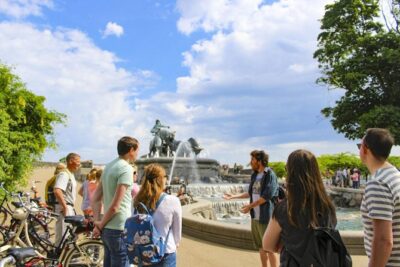

City Card with 40+ Attractions & Hop-On/Off Bus
Read our review →
Browse the lists this tour appears in